Plant Overview
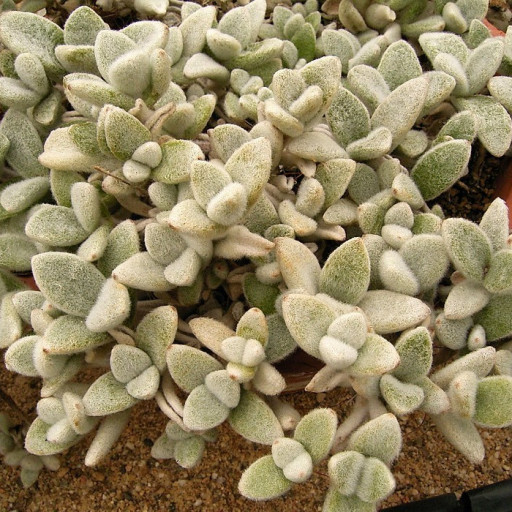
Known affectionately as the "Snow White Panda Plant" or "White Velvet," this Madagascan succulent looks like it has been dusted with fresh winter frost. It is a standout member of the Crassulaceae family, prized by collectors for its soft, tactile leaves that invite a gentle touch. This slow-growing gem adds a dreamlike, silver-white texture to any indoor garden or succulent arrangement.
🔍 How to Identify
- ❄️ The Foliage: The most striking feature is its thick, fleshy leaves which are entirely covered in a dense coating of fine, white, felt-like hairs (trichomes).
- 🧶 Growth Habit: It typically grows in a low, branching shrub-like formation, rarely exceeding 4 inches in height but spreading out to form a soft, silvery cushion.
- 🌸 The Blooms: In the early spring, you might see small, four-petaled flowers. These usually appear in shades of pale pink or lilac with bright yellow centers, providing a beautiful contrast to the white leaves.
🏡 In Your Garden
- ☀️ The Sunscreen Effect: Those white hairs aren't just for looks; they act as a natural sunscreen. To keep the plant looking "snowy," it needs very bright, indirect light. In low light, the plant will stretch out and the white coating will become thin and green.
- 💧 Watering Nuance: This plant is a master of drought resistance but hates "wet feet." When watering, avoid getting the fuzzy leaves wet, as the hairs can trap moisture and lead to rot or fungal issues. Always aim for the soil, and ensure it is bone-dry before adding more water.
⚠️ Safety & Toxicity
- 🐾 Status: Toxic to pets.
- ✋ Details: Like many members of the Kalanchoe genus, Eriophylla contains cardiac glycosides. If ingested by cats or dogs, it can cause upset stomachs, drooling, or more serious heart rhythm issues. It is best kept on high shelves out of reach of curious paws or children.
✨ Fun Fact
The name Eriophylla is derived from the Greek words erion (wool) and phyllon (leaf), which literally translates to "woolly leaf." In its native Madagascar, those hairs help the plant survive by reflecting intense sunlight and trapping a layer of moisture against the leaf surface!

Detailed Care Instructions
To grow Kalanchoe Eriophylla plant, also known as the Woolly Kalanchoe, follow these steps:
- Obtain a healthy Kalanchoe Eriophylla plant or propagate it from a leaf cutting or division. You can get it from a nursery or garden center.
- Choose a well-draining pot with a drainage hole to avoid waterlogging. Use a potting mix suitable for succulents or cacti. Alternatively, if you are planting it in the ground, ensure the soil is well-draining and amended with organic matter.
- Place the plant in bright indirect sunlight, preferably near a window facing east or west. This plant thrives in bright light but should be protected from intense, direct sunlight.
- Water the Kalanchoe Eriophylla moderately. Allow the soil to dry out between waterings, as overwatering can lead to root rot. Stick your finger about an inch into the soil, and if it feels dry, then water thoroughly. Remember, this plant is drought-tolerant, so it's better to underwater than overwater.
- Provide adequate humidity. Kalanchoe Eriophylla prefers dry air, so avoid placing it in a humid location or close to a humidifier.
- Maintain a relatively cool temperature of around 60-75°F (15-24°C). Avoid extreme temperature fluctuations, drafts, or cold snaps, as they can harm the plant.
- Fertilize the plant sparingly. Use a balanced succulent or cactus fertilizer once every two to three months during the growing season (spring and summer). Follow the instructions on the fertilizer for the recommended dosage.
- Trim or pinch back the plant regularly to maintain its shape and encourage branching. This also prevents the plant from becoming too leggy.
- Keep an eye out for any pests like mealybugs or spider mites. If you notice any, use an appropriate organic or chemical pest control method to eliminate them.
- Kalanchoe Eriophylla may produce small, bell-shaped, pink or reddish flowers during its blooming season in late winter or spring. Enjoy the attractive blooms!
By following these care tips and providing suitable conditions, your Kalanchoe Eriophylla plant should thrive and grow successfully.

Place in a bright room that is sun drenched almost all day. Or directly in a south-facing window.

To water this plant, first assess the soil moisture level by inserting a finger into the soil about an inch deep. If it feels dry to the touch, it is time to water. Use room temperature water and pour it slowly around the base of the plant, avoiding getting water on the leaves or flowers. Allow the water to fully penetrate the soil until it starts to drain out the bottom of the pot. Discard any excess water that accumulates in the saucer beneath the pot. Water more frequently during hot, dry weather and less frequently during cooler, moist weather. Do not overwater, as this can lead to root rot and other issues.
To fertilize this plant, use a well-balanced fertilizer with equal amounts of nitrogen, phosphorus, and potassium. During the growing season, fertilize the plant every two weeks with a diluted solution of the fertilizer. Avoid over-fertilizing as it can lead to leaf burn and damage to the plant. Additionally, make sure the soil is moist before fertilizing and avoid fertilizing when the soil is dry.
Kalanchoe Eriophylla prefers well-draining soil that is rich in nutrients. It is best to use a soil mix that is specifically formulated for cacti and succulents, as they require a soil that is aerated and not too dense. A good soil mix usually contains a combination of perlite, sand, peat moss or coconut coir, and a few organic matter nutrients. Make sure to choose a soil with a pH level between 6-7 and avoid using regular garden soil as it can contain pathogens and pests that can harm this plant. You may also add fertilizer to the soil approximately once a month during the growing season to encourage better growth and flowering.
To propagate this plant, first choose a healthy mature plant with several stems. Then, prepare a well-draining potting mix and select a pot that is slightly larger than the current pot of the plant.
Next, cut off a stem from the mature plant using a sharp and sterilized knife or scissors. The stem should be at least 3 inches long with a few leaves. Remove the bottom set of leaves from the stem to expose a node where roots will grow.
Dip the cut end of the stem into rooting hormone powder and plant it into the potting mix. Bury the stem up to the first set of leaves and compress the soil gently.
Water the newly planted stem generously and cover the pot with a plastic bag or a clear plastic container to create a humid environment. Place the pot in a bright, indirect light location and avoid direct sunlight.
After two to three weeks, remove the plastic cover and check for new root growth. If new roots have formed, the stem has successfully rooted. Gradually reduce watering frequency and increase light exposure to acclimate the plant to its new environment.
Common pests of the fuzzy cactus include Scale insect, mealybugs, aphids, thrips. Make a habit of checking your fuzzy cactus frequently for pests so that any infestations can be caught and managed early.








