Plant Overview
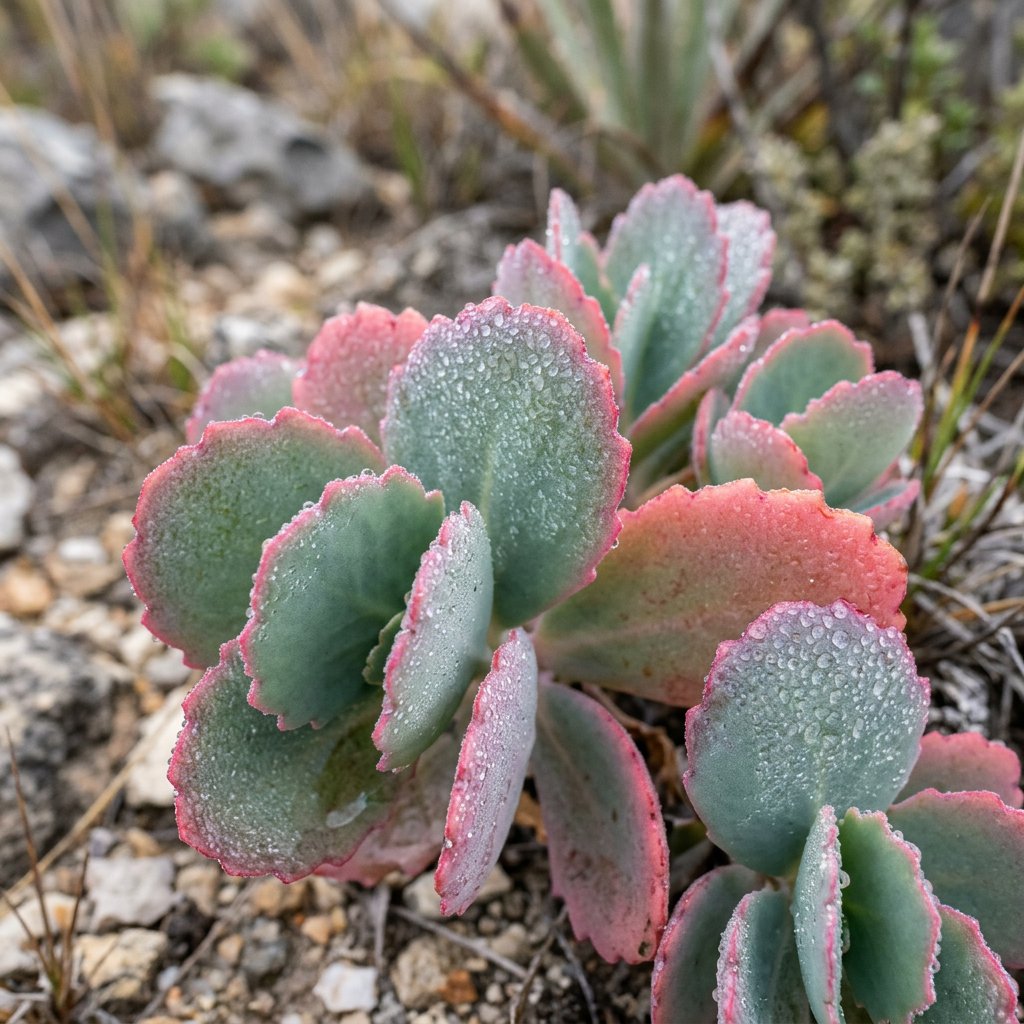
Known affectionately as "Lavender Scallops," this Madagascar native is a favorite for gardeners who love a "dreamy" or ethereal aesthetic. Its dusty, pastel hues look as if they were painted with soft watercolors, shifting from blue-green to lavender depending on the light. It is a resilient succulent that brings architectural interest to rock gardens and sunny windowsills alike.
🔍 How to Identify
- 🍃 Scalloped Foliage: The most striking feature is the oval, fleshy leaves with distinctively notched or "scalloped" edges, which often turn a bright pink or cream when the plant is "stressed" by sun or cool temperatures.
- 🎨 Powdery Bloom: The leaves are covered in a fine, waxy powder called farina, giving them a soft, matte, lavender-grey finish that helps the plant reflect intense sunlight.
- 🔔 Bell-Shaped Blooms: In late winter or early spring, the plant sends up a tall stalk bearing clusters of nodding, chandelier-like flowers in shades of coral, orange, or reddish-pink.
🏡 In Your Garden
- ☀️ Light for Color: While it can survive in partial shade, the "lavender" in its name only truly appears with plenty of bright, indirect sunlight. Without enough light, the plant will "stretch" (become leggy) and lose its vibrant pink margins.
- 🪴 Drainage is Key: This Kalanchoe is a survivor but has one major weakness: "wet feet." It requires porous, gritty soil. If you are growing it in a pot, ensure there are ample drainage holes to prevent root rot.
- 🌱 The "Hitchhiker" Method: Similar to its cousins, this plant can grow tiny "plantlets" along its leaf margins. If a leaf falls to the ground, it often takes root exactly where it lands, making it incredibly easy (and fun) to propagate.
⚠️ Safety & Toxicity
- 🐾 Toxic to Pets: Like most members of the Kalanchoe family, this plant contains cardiac glycosides. It is toxic to dogs, cats, and livestock if ingested, potentially causing drooling, vomiting, or heart rhythm issues.
- 👶 Keep Out of Reach: While not typically fatal to humans, it can cause stomach upset in children if the leaves are chewed. It is best kept on high shelves or in hanging baskets.
✨ Fun Fact
- 🧚 Self-Cloning Magic: The Kalanchoe fedtschenkoi is considered "sub-viviparous." This means it has the amazing ability to produce miniature, fully-formed clones of itself on the tips of its leaves, which eventually drop off to start a life of their own!

Detailed Care Instructions
| Humidity | Normal |
| Lighting | Full Sun |
| Toxicity | Poisonous |
| Difficulty | Medium |
| Hibernation | Cold Period |
| Temperature | 50°C - 60°C |
| Hardiness Zones | 9 - 11 |
To grow a Kalanchoe Fedtschenkoi plant, also known as the Lavender Scallops or South African Air Plant, you can follow these steps:
- Choosing a suitable location: Select an area that receives bright but indirect sunlight for the majority of the day. This plant does well in bright, indirect light and is easily scorched by direct sunlight.
- Preparing the soil: Use a well-draining soil mix suitable for succulents or cacti. You can either purchase a premixed one or make your own by combining equal parts potting soil, perlite, and coarse sand. This will ensure proper drainage as this plant is prone to root rot.
- Selecting a container: Choose a container with drainage holes to prevent waterlogging of the roots. The size of the container should be appropriate for the size of your plant, allowing enough space for growth.
- Planting process: Gently remove the Kalanchoe Fedtschenkoi from its nursery pot and transfer it to the new container, ensuring that the root ball is intact. Add a layer of fresh soil to the bottom of the container, place the plant in it, and fill the sides with soil, gently pressing it down. Leave some space at the top to prevent overflow while watering.
- Watering: Water the plant sparingly, allowing the soil to dry out between waterings. Overwatering can lead to root rot and other issues. During the dormant winter period, reduce watering frequency even further.
- Fertilizing: Feed your Kalanchoe Fedtschenkoi with a balanced, water-soluble fertilizer during the growing season (spring and summer) about once every three to four weeks. Follow the instructions on the fertilizer packaging for dosage.
- Propagation: This plant is easily propagated through stem cuttings. Take a healthy stem cutting, let it sit and dry for a few days until the cut end calluses over, then plant it in well-draining soil mix. Keep the soil slightly moist until roots develop.
- Pruning: Prune your plant as needed to maintain its desired shape and size. Pinching back the stems can encourage bushier growth.
- Repotting: As your Kalanchoe Fedtschenkoi grows, you may need to repot it into a larger container every 1-2 years. Choose a container that is slightly larger than the current one to allow for growth.
Remember to protect your plant from extreme temperatures and avoid exposing it to cold drafts or frost. With proper care and attention to its watering needs, your Kalanchoe Fedtschenkoi should thrive and grow lush.

Place in a window with dappled sun or a spot in the middle of a room. Or directly in a window facing west or east.

To water this plant, it is important to check the soil moisture level before watering. Insert a finger about an inch deep into the soil and if it feels dry to the touch, it's time to water. Use a watering can or a pitcher to gently pour water around the base of the plant until the soil is moist but not soaked. Avoid getting water on the leaves to prevent them from developing any fungal diseases. Water this plant only when the topsoil has dried out since overwatering can lead to root rot.
When fertilizing the plant, use a balanced fertilizer with equal parts nitrogen, phosphorus, and potassium. Apply the fertilizer every 2-3 months during the growing season, but avoid fertilizing during the plant's dormant period. Be sure to dilute the fertilizer to the appropriate strength recommended on the label, and apply it to moist soil near the plant's base. Avoid getting the fertilizer on the leaves or stem, as it may cause damage or burning.
Kalanchoe Fedtschenkoi prefers soil that is well-draining and has good fertility. A sandy loam soil with organic matter such as compost or aged manure added to the mix is ideal. It is important for the soil to have good drainage to prevent the roots from becoming waterlogged, which can lead to root rot. The plant also benefits from occasional feeding with a balanced fertilizer to promote healthy growth. To ensure the soil stays moist but not waterlogged, water the plant thoroughly and allow the top inch of soil to dry out before watering again.
To propagate this plant, select a healthy stem with several leaves and remove it from the parent plant using a sharp, sterile knife or pair of scissors. Allow the cutting to dry for several hours to a day to prevent rotting.
Fill a small pot with well-draining soil mix and water lightly. Then, make a hole in the soil, about an inch deep, with a pencil or your finger.
Dip the cut end of the stem in rooting hormone powder, which can be found at most garden centers, to speed up the process of rooting.
Place the stem cutting into the hole in the soil and gently press the soil around the base of the stem to secure it. Water the cutting lightly to settle the soil around the stem.
Place the pot in bright, indirect light and keep it moist, not soaked, until new growth appears. Once new growth appears, reduce the watering frequency to only when the soil is dry to the touch.
In a few weeks, you'll have a new Kalanchoe Fedtschenkoi plant that you can care for and watch grow.
Common pests of the lavender scallops include Scale insect, mealybugs, aphids, thrips. Make a habit of checking your lavender scallops frequently for pests so that any infestations can be caught and managed early.








