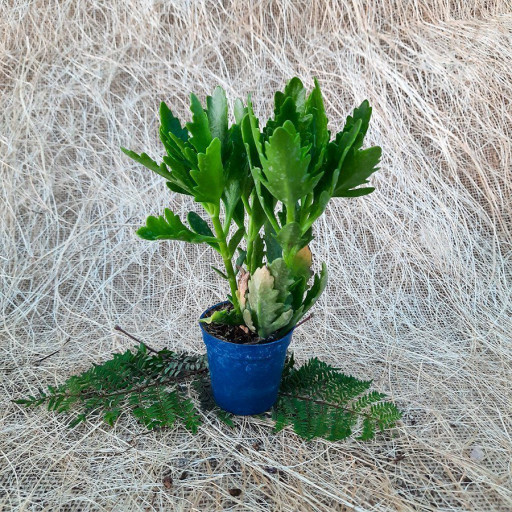
Plant Overview
Commonly known as the Christmas Tree Plant or Lace-leaf Kalanchoe, this succulent is a standout for its architectural, deeply lobed foliage that mimics the jagged branches of a fir tree. Native to parts of Africa and the Arabian Peninsula, it has traveled the world as a rugged houseplant prized for its unique "laciniate" (slashed or torn) leaves. In some cultures, it is even nicknamed "Yerba de Bruja" (Witch’s Herb) due to its historical use in traditional folk medicine.
🔍 How to Identify
- 🌿 Lacy Leaves: Unlike many flat-leaved succulents, its foliage is deeply divided into narrow, pointed lobes, giving it a delicate, lace-like appearance.
- 🌼 Tubular Blooms: When it flowers, it sends up tall stalks topped with clusters of small, four-petaled flowers that are usually a vibrant yellow or pale orange.
- 📏 Upright Habit: It grows in a bushy, upright fashion, often reaching 2–3 feet in height if given enough room and light.
🏡 In Your Garden
- ☀️ Light Balance: While it loves bright light, the "lace" on its leaves can actually scorch in intense, direct afternoon sun. It prefers a spot with "bright indirect" light to keep its color vibrant.
- 💧 The "Soggy Foot" Rule: Because it has a shallow root system, it is extremely prone to root rot. It’s better to let it go bone-dry for a week than to water it one day too early.
- ✂️ Leggy Growth: If it doesn't get enough light, it will stretch toward the window and lose its "Christmas tree" shape. Don't be afraid to prune the tops to encourage a bushier, fuller look.
⚠️ Safety & Toxicity
- 🐾 Toxic to Pets: Like most members of the Kalanchoe family, this plant contains cardiac glycosides.
- 🚫 Ingestion Risks: If nibbled by cats or dogs, it can cause vomiting, diarrhea, and in rare cases, abnormal heart rhythms. It is best kept on high shelves or in hanging baskets away from curious pets and toddlers.
✨ Fun Fact
The name laciniata comes from the Latin word for "fringed" or "cut into narrow segments." If you look closely at the leaves, they look exactly like a piece of paper that has been artistically cut with jagged craft scissors!

Detailed Care Instructions
| Humidity | Dry |
| Lighting | Full Sun |
| Difficulty | Easy |
| Hibernation | Cold Period |
| Temperature | 18°C - 25°C |
| Hardiness Zones | Min 10A |
To grow Kalanchoe Laciniata, also known as 'Chocolate Soldier' or the 'Panda Plant,' you can follow these steps:
- Choose a suitable location: Find a spot indoors where the plant can receive bright, indirect sunlight for a few hours each day. It can also tolerate some direct sunlight but avoid placing it in intense, hot sunlight.
- Select the right soil: The Kalanchoe Laciniata prefers well-draining soil. A mix of potting soil and perlite or sand can ensure good drainage.
- Watering: Water the plant thoroughly when the top inch of soil feels dry. Ensure that the pot has drainage holes to prevent waterlogging, which can cause root rot. During the growing season (spring and summer), watering once a week is usually sufficient. Reduce water during the dormant period in fall and winter.
- Temperature and humidity: Kalanchoe Laciniata prefers average room temperatures of 65-75°F (18-24°C). It can tolerate slightly cooler temperatures, but below 45°F (7°C) may cause damage. It appreciates a moderate level of humidity.
- Fertilizer: Feed the plant every two to four weeks during the growing season with a balanced, water-soluble fertilizer. Follow the package instructions for proper dosage.
- Pruning: Prune the plant to maintain its shape or control its size. You can pinch off the growing tips to encourage bushiness.
- Propagation: You can propagate Kalanchoe Laciniata by stem or leaf cuttings. Allow the cuttings to dry out for a few days, then plant them in well-draining soil. Keep the soil slightly moist until roots develop.
- Pests and diseases: Fortunately, Kalanchoe Laciniata is relatively resistant to pests and diseases. However, watch out for common houseplant pests like mealybugs and aphids. Treat any infestations promptly with insecticidal soap or neem oil.
Remember to provide your Kalanchoe Laciniata with enough space to grow, allowing its spectacular foliage to flourish. Regular care and attention to its watering and light needs will help promote healthy growth.

Place in a bright room that is sun drenched almost all day. Or directly in a south-facing window.

1. Check the soil: Before watering your Kalanchoe Laciniata plant, make sure to check the soil for moisture. Stick your finger into the soil up to knuckle length to check if it is dry.
2. Use room temperature water: Use room temperature water to water your Kalanchoe Laciniata plant. Cold water or hot water can cause stress on the plant, leading to leaf drop.
3. Water from the base: Water your Kalanchoe Laciniata plant from the base to avoid getting water on the leaves. Wet leaves can lead to fungal and bacterial diseases.
4. Avoid overwatering: Do not overwater your Kalanchoe Laciniata plant as it can cause root rot. Water the plant when the top inch of the soil is dry.
5. Use a well-draining pot: Make sure to plant Kalanchoe Laciniata in a well-draining pot to prevent waterlogging. This will help in preventing root rot, which is the most common problem caused by overwatering.
6. Water sparingly in winter: In winter, water your Kalanchoe Laciniata sparingly as the plant goes dormant during this period. Overwatering can cause the plant to rot or die.
7. Don't let it sit in water: Make sure to drain out the excess water from the saucer after watering and never let your Kalanchoe Laciniata sit in water.
To fertilize this plant, use a balanced liquid fertilizer once a month during the growing season. Dilute the fertilizer to half strength and apply directly to the soil. Avoid getting fertilizers on the leaves or stems as this can cause burning. Water the plant before and after fertilizing to prevent any root damage.
Kalanchoe Laciniata is a type of succulent plant that is best grown in well-draining soil. It is important to use a soil mix that is specifically formulated for succulent plants as this type of soil will allow for proper drainage and aeration, which is crucial for the health of the plant.
When selecting a soil mix for Kalanchoe Laciniata, look for a mix that contains a high proportion of perlite or sand, as well as organic matter such as compost or peat moss. These materials will help to prevent the soil from becoming compacted and allow for proper water absorption and air circulation around the plant roots.
Avoid using heavy garden soils or potting mixes that are designed for houseplants as these will retain too much moisture and can lead to root rot and other issues. It is also important to ensure that the soil is slightly acidic to neutral in pH, with a range of around 6.0-7.0 being ideal.
Overall, the best soil for Kalanchoe Laciniata is a well-draining, fast-draining soil mix that is designed specifically for succulent plants and contains a high proportion of perlite, sand, and organic matter.
To propagate this plant, you can take stem cuttings in the spring or summer months. Choose a healthy stem and cut a piece that is around 3-4 inches long, making sure to cut at a 45-degree angle. Remove the lower leaves and allow the cutting to dry out for a few hours.
While the cutting is drying, prepare a small pot with well-draining soil. You can mix perlite or sand into the soil to improve drainage. Make a hole in the soil using your finger, and dip the cut end of the stem in rooting hormone powder. Place the stem in the hole and gently firm the soil around it.
Water the cutting lightly to settle the soil and encourage growth. Place the pot in a bright, but indirect light location, and be sure to keep the soil moist but not waterlogged. After a few weeks, you should begin to see new growth, which indicates that the cutting has rooted and is beginning to grow.
Once the new plant has reached a manageable size, you can repot it into a larger container or transplant it into your garden.
Common pests of the christmastree plant include Scale insect, mealybugs, aphids, thrips. Make a habit of checking your christmastree plant frequently for pests so that any infestations can be caught and managed early.








