Plant Overview
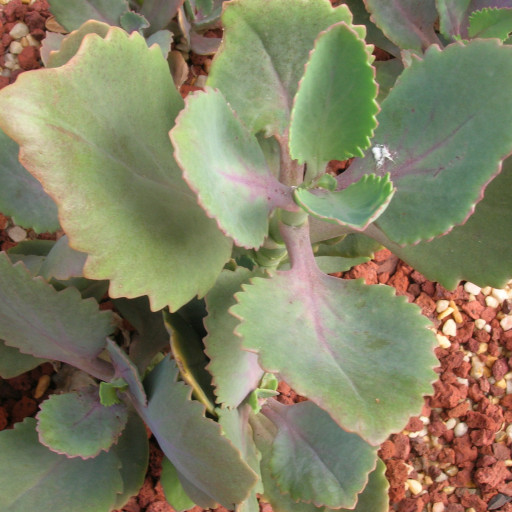
Commonly known as the Tugela Cliff-kalanchoe, this South African native is a master of disguise. In the shade, it presents humble, sea-foam green foliage, but when "stressed" by the sun or cool weather, it blushes into a spectacular display of deep crimson and burnt orange. It is a hardy, shrubby succulent that adds both architectural interest and a shifting palette of colors to any collection.
🔍 How to Identify
- 🍃 Chameleon Foliage: The leaves are fleshy, shell-shaped, and feature distinctively scalloped (toothed) edges. They transition from a dusty blue-grey to intense red depending on environmental conditions.
- 🧊 Geometric Stems: One of its most unique features is its stems, which are notably four-angled or "square" in cross-section, rather than round.
- 🌼 Tubular Blooms: During its flowering season, it sends up elongated stalks topped with clusters of small, pale-yellow, four-petaled flowers.
🏡 In Your Garden
- ☀️ The Beauty of Stress: To achieve its famous sunset colors, this plant requires "benevolent neglect." Keeping it in bright, direct sunlight triggers the protective pigments that turn the leaves red; without enough light, it will remain a simple green.
- 🌱 Sprawling Habit: Because it has a naturally sprawling and decumbent growth habit, it works beautifully as a colorful groundcover in rock gardens or as a "spiller" in mixed succulent containers.
- 💧 Drainage is Key: It is highly susceptible to root rot if left in standing water. It prefers gritty, fast-draining soil and a "soak and dry" watering routine to mimic its arid cliffside origins.
⚠️ Safety & Toxicity
- 🐾 Toxic to Pets: Like most members of the Kalanchoe genus, this plant contains cardiac glycosides. It is toxic to cats, dogs, and livestock if consumed.
- 🤢 Human Sensitivity: While not usually fatal to humans, ingestion can cause significant digestive upset, including nausea and vomiting. It is best kept on high shelves away from curious toddlers.
✨ Fun Fact
In its native habitat, Kalanchoe longiflora is found almost exclusively clinging to the sheer shale cliffs of the Tugela River valley. Its ability to turn bright red is actually a biological "sunscreen" (anthocyanin) that protects its internal cells from being damaged by high-altitude UV rays!

Detailed Care Instructions
| Humidity | Dry |
| Lighting | Full Sun |
| Difficulty | Easy |
| Temperature | 20°C - 35°C |
| Hardiness Zones | Min 10A |
To grow Kalanchoe longiflora, also known as the Mother of Thousands, follow these steps:
- Obtain a healthy Kalanchoe longiflora plant: You can purchase one from a local nursery, online plant store, or propagate a new plant from the offsets of an existing one.
- Choose the right container: Select a well-draining pot with drainage holes to prevent waterlogging. The pot should be slightly larger than the root ball of the plant.
- Soil preparation: Kalanchoe longiflora prefers well-draining soil. Use a commercial cactus and succulent potting mix or create your own by mixing equal parts of potting soil, perlite, and sand.
- Planting: Gently remove the plant from its current container and place it in the chosen pot. Add the prepared soil mix around the root ball, ensuring the plant is at the same level it was previously.
- Watering: Kalanchoe longiflora is a drought-tolerant plant that prefers to dry out between waterings. Water the plant thoroughly but allow the top inch of soil to dry out before watering again. Avoid overwatering.
- Light requirements: Place the plant in a location with bright, indirect sunlight. A few hours of direct morning or evening sun are also beneficial. However, protect the plant from intense afternoon sun, as it can scorch its leaves.
- Temperature and humidity: Kalanchoe longiflora thrives in average room temperatures between 60°F and 75°F (15°C to 24°C). It can tolerate higher temperatures, but avoid extreme cold or frost.
- Fertilizing: Feed the plant once every two weeks during the growing season (spring and summer) with a balanced, water-soluble houseplant fertilizer. Follow the package instructions for proper dilution.
- Propagation: Kalanchoe longiflora produces small plantlets along the edges of its leaves. These can be gently removed and planted in a separate container to grow new plants. Alternatively, you can start new plants from stem cuttings.
- Pruning: Trim back any leggy or overgrown stems to maintain a compact and bushy appearance. Pruning can also encourage the growth of new offsets.
- Pests and diseases: Monitor your plant for common pests like mealybugs or aphids. If necessary, treat infestations with an appropriate insecticidal soap or an organic pest control method.
Remember, Kalanchoe longiflora is a relatively low-maintenance plant, but it’s important to observe and provide suitable care to ensure its successful growth.

Place in a bright room that is sun drenched almost all day. Or directly in a south-facing window.

To water this plant, ensure that the soil is completely dry before watering again. Water the plant thoroughly, allowing the water to soak deep into the soil. Avoid getting water on the leaves or flowers, as this can cause damage. Allow any excess water to drain away, and do not let the plant sit in standing water as this can lead to root rot. Water less frequently in the winter months when the plant is dormant, and increase watering in spring and summer when it begins to grow more actively.
To fertilize this plant, use a balanced fertilizer with equal amounts of nitrogen, phosphorus, and potassium. Apply the fertilizer at half strength, once every two weeks during the growing season, which is typically spring and summer. Do not fertilize during the dormant season, which is typically fall and winter. Water the plant before fertilizing to avoid chemical burn on the roots. Use caution when fertilizing, as over-fertilization can damage the plant.
The Kalanchoe Longiflora plant prefers well-draining soil with adequate organic matter and moisture retention. It benefits from a soil pH between 6 to 7.5 and requires a nutrient-rich medium. A mix of potting soil, sand, and perlite in equal parts can be an appropriate choice. The sand helps with drainage, while perlite increases aeration. Additionally, adding compost or organic matter to the soil mix can help with moisture retention and nutrient availability. It is important to ensure that the soil is not compacted, as it can lead to root suffocation and hinder plant growth. Overall, a well-draining, nutrient-rich, and slightly acidic soil mix is ideal for Kalanchoe Longiflora plant growth.
To propagate this plant, take stem cuttings from the mother plant that are about 4-6 inches long and contain at least two nodes. Remove the lower leaves and dip the bottom end of the cutting in rooting hormone powder. Plant the cutting in moist well-draining soil and water thoroughly. Place the cutting in indirect sunlight and keep the soil moist but not soggy. In about 2-3 weeks, roots should begin to form and new growth will appear. Once the new plant has established a strong root system, it can be transplanted into a larger pot.
Common pests of the tugela cliff-kalanchoe include Scale insect, mealybugs, aphids, thrips. Make a habit of checking your tugela cliff-kalanchoe frequently for pests so that any infestations can be caught and managed early.








