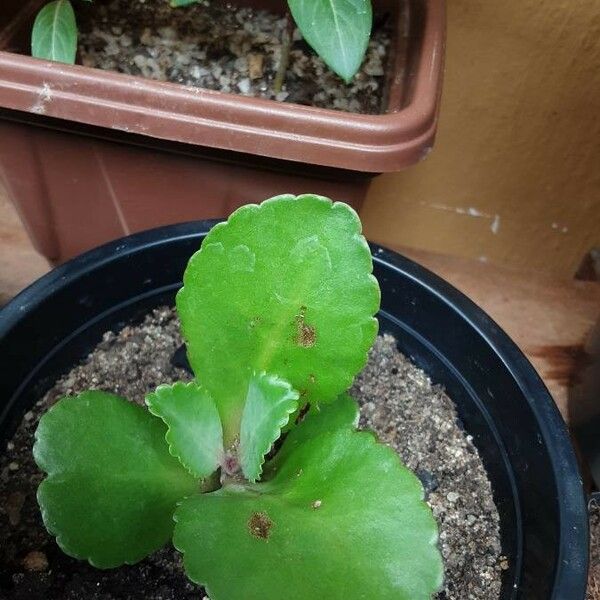
Plant Overview
Known for its sculptural, jagged leaves and dramatic hanging blooms, Kalanchoe mortagei is a Madagascan treasure often nicknamed "Mortimer’s Kalanchoe." It looks like something straight out of a prehistoric landscape, bringing a rugged, "unpolished" beauty to succulent collections. While it isn't as common as its cousin, the "Mother of Thousands," it shares the same resilient spirit and fascinating reproductive habits.
🔍 How to Identify
- 🍃 Jagged Leaves: The leaves are large, elliptical, and fleshy, featuring distinct "saw-tooth" or serrated edges that give the plant a fierce look.
- 🎨 Red Edging: When grown in bright light, the leaf margins develop a striking deep red or maroon tint, contrasting beautifully with the dusty green center.
- 🔔 Pendulous Flowers: It produces tall, upright stalks that hold clusters of lantern-like, orange-to-red bell flowers that dangle gracefully toward the ground.
🏡 In Your Garden
- ☀️ Light & Color: This plant is a sun-worshipper. The more light it receives, the more intense the red "lipstick" on the leaf edges becomes; however, in scorching desert climates, a bit of afternoon shade prevents the foliage from scorching.
- 💧 The "Drought" Habit: Because it stores a massive amount of water in its thick leaves, it thrives on a "soak and dry" cycle. It hates "wet feet," so using a gritty cactus mix is non-negotiable to prevent the roots from suffocating.
⚠️ Safety & Toxicity
- 🐾 Toxic to Pets: This species is considered toxic to cats, dogs, and livestock. It contains cardiac glycosides that can affect the heart if eaten in large quantities.
- 🚫 Keep Out of Reach: Ingestion can lead to drooling, vomiting, or lethargy. It is best kept on high shelves or in hanging baskets if you have curious nibblers at home.
✨ Fun Fact
🌱 A Living Nursery: Kalanchoe mortagei belongs to the Bryophyllum group, a name derived from the Greek words for "sprouting leaf." It has the incredible ability to grow tiny, fully-formed "baby" plantlets directly along the notches of its leaf margins, which eventually drop off to start a new life in the soil below.

Detailed Care Instructions
To grow Kalanchoe mortagei, follow these steps:
- Choose a well-draining pot or container with drainage holes. This will prevent waterlogged roots which can cause rot.
- Fill the container with a well-draining succulent or cactus soil mix. This type of soil will ensure adequate drainage.
- Take the Kalanchoe mortagei cutting or offsets if available. If using a cutting, allow it to callus over for a few days before planting.
- Make a small hole in the soil and place the cutting or offset into it, gently pressing the soil around it to secure it in place.
- Water the plant thoroughly, but allow the soil to dry out completely between waterings. Overwatering can lead to root rot.
- Place the plant in a location that receives bright, indirect sunlight. Kalanchoe mortagei prefers bright light, but direct sunlight can scorch the leaves.
- Monitor the plant for any signs of pests or diseases. Common pest problems for Kalanchoe mortagei include mealybugs and aphids. Treat with an appropriate pesticide if necessary.
- Feed the plant once a month during the growing season with a balanced, water-soluble fertilizer. Follow the instructions on the fertilizer label for dosage.
- Propagate the plant by taking stem cuttings or offsets in the spring. Allow the cuttings to callus over before placing them in well-draining soil.
- If desired, prune the plant to maintain its shape and encourage bushiness. Cut back leggy or overgrown stems to promote new growth.
With proper care, your Kalanchoe mortagei plant should grow and thrive. Remember to adjust watering and light conditions if necessary, as different environments may require slightly different care.

Place in a bright room that is sun drenched almost all day. Or directly in a south-facing window.

1. Assess the soil moisture level by sticking your finger about an inch deep into the soil.
2. Water only when the top inch of soil is dry to the touch.
3. Use room temperature water to avoid shocking the roots.
4. Pour water slowly around the base of the plant, avoiding the leaves to prevent rot.
5. Stop watering when you see water come out of the drainage holes at the bottom of the pot.
6. Do not allow the plant to sit in standing water as it can lead to root rot.
7. Adjust watering frequency depending on the temperature, humidity, and light conditions in your plant's environment.
- Choose a suitable fertilizer: Look for a balanced water-soluble fertilizer with an N-P-K ratio of around 10-10-10. This means the fertilizer contains equal proportions of nitrogen (N), phosphorous (P), and potassium (K), providing a well-rounded nutrient mix.
- Dilute the fertilizer: Follow the instructions on the fertilizer packaging to prepare the appropriate dilution rate. Typically, this involves mixing a certain amount of fertilizer with a specified volume of water.
- Water the plant beforehand: Before applying fertilizer, ensure that the soil is evenly moist. This allows for better nutrient absorption and prevents the roots from burning.
- Apply the fertilizer: Pour the diluted fertilizer solution evenly over the soil around the base of the Kalanchoe mortagei plant. Avoid getting the fertilizer on the leaves, as it may cause damage. Take care not to over-fertilize, as this can lead to nutrient build-up or burning of the roots.
- Frequency of fertilization: Fertilize the Kalanchoe mortagei plant every two to four weeks during the growing season, which typically occurs from spring to early fall. Reduce or stop fertilization during the plant's dormant period, which usually occurs in winter.
- Monitor the plant's response: Pay attention to how the plant reacts to the fertilizer. If the leaves become pale, it may indicate over-fertilization, and you may need to adjust the dilution rate or frequency of application.
- Rinse the soil occasionally: To prevent salt build-up in the soil, periodically flush the soil with plain water. This helps to remove excess nutrients and maintain a healthy growing environment for the Kalanchoe mortagei plant.
Remember to always read the specific instructions provided with the fertilizer you choose, as different brands may have slightly different application rates and recommendations.
Kalanchoe mortagei, commonly known as Velvet Leaf, is a unique succulent plant that requires specific soil conditions for optimal growth. When selecting soil for this plant, there are several factors to consider:
- Well-Draining: Kalanchoe mortagei prefers soils that are well-draining to prevent excess moisture buildup. This helps prevent root rot and other water-related issues. Choose a soil mix that allows water to flow through easily, such as a cactus or succulent soil mix.
- Porous: The soil should be porous to allow for proper aeration around the roots. This promotes healthy root development and overall plant growth. Soils that are too dense or compacted can hinder root growth and could potentially suffocate the plant.
- Nutrient-Rich: Kalanchoe mortagei benefits from a nutrient-rich soil mix. Look for a soil that contains a good balance of organic matter and nutrients to support the plant's growth and overall health. Consider adding some organic compost or slow-release fertilizers to provide a steady supply of nutrients over time.
- pH Level: The ideal soil pH for Kalanchoe mortagei is slightly acidic to neutral (around 6.0 to 7.0). It's advisable to test the soil pH and adjust it if necessary using soil amendments or pH-adjusting products.
- Sterile: It is crucial to use sterile soil to minimize the risk of introducing pathogens or pests to the plant. Sterilized soil can be purchased from garden centers or prepared at home through baking or microwaving moist soil to kill any potential harmful organisms.
Remember to regularly check the moisture levels of the soil, allowing it to dry out slightly between watering sessions. Additionally, it's important to select an appropriately-sized pot that provides enough drainage holes to prevent waterlogging.
By using a well-draining, porous, nutrient-rich, slightly acidic to neutral, and sterile soil mix, you can help promote healthy growth and ensure the long-term well-being of your Kalanchoe mortagei plant.
Propagation of Kalanchoe mortagei (without using its common names) can be achieved through various methods such as leaf and stem cuttings. Here are the detailed steps for each method:
- Leaf Cuttings:
a. Select a healthy, mature leaf from the plant. Ensure it is free from any diseases or damages.
b. Using a clean, sharp knife or scissors, cut the leaf from the main stem at a 45-degree angle.
c. Set the leaf aside in a dry, shaded place for a few days to allow the cut end to callous over and prevent rotting.
d. Fill a small pot with a well-draining soil mix, such as a cactus or succulent mix.
e. Insert the calloused end of the leaf into the soil mix, ensuring that about half of the leaf is buried in the soil while the other half is exposed.
f. Water the soil lightly, ensuring it remains moist but not waterlogged.
g. Place the pot in a warm, bright location but avoid direct sunlight.
h. After a few weeks, small plantlets should start to develop from the base of the leaf. These can be potted up once they have grown a few inches tall.
i. Continue to care for the new plants as you would for mature Kalanchoe mortagei plants.
- Stem Cuttings:
a. Choose a healthy, non-flowering stem from the plant to propagate.
b. Using clean, sharp pruners, cut a section of the stem that is approximately 3-4 inches long.
c. Allow the cutting to dry out and callous over for a few days in a dry, shaded location.
d. Fill a pot with well-draining soil mix.
e. Dip the calloused end of the stem cutting into a rooting hormone powder to enhance root development (optional step).
f. Insert the cutting into the soil mix, burying about 1-2 inches of the stem.
g. Gently firm the soil around the cutting to ensure stability.
h. Water the soil lightly, keeping it moist but not overly saturated.
i. Place the pot in a warm, bright location, avoiding direct sunlight.
j. After a few weeks, roots should start to develop from the buried portion of the stem. You can gently tug on the cutting to check for resistance, indicating root growth.
k. Once the cutting has established a good root system, it can be potted up into a larger container or planted outdoors.
Remember to provide proper care, including adequate light, water, and well-draining soil, to ensure successful propagation and growth of the Kalanchoe mortagei plant.








