Plant Overview
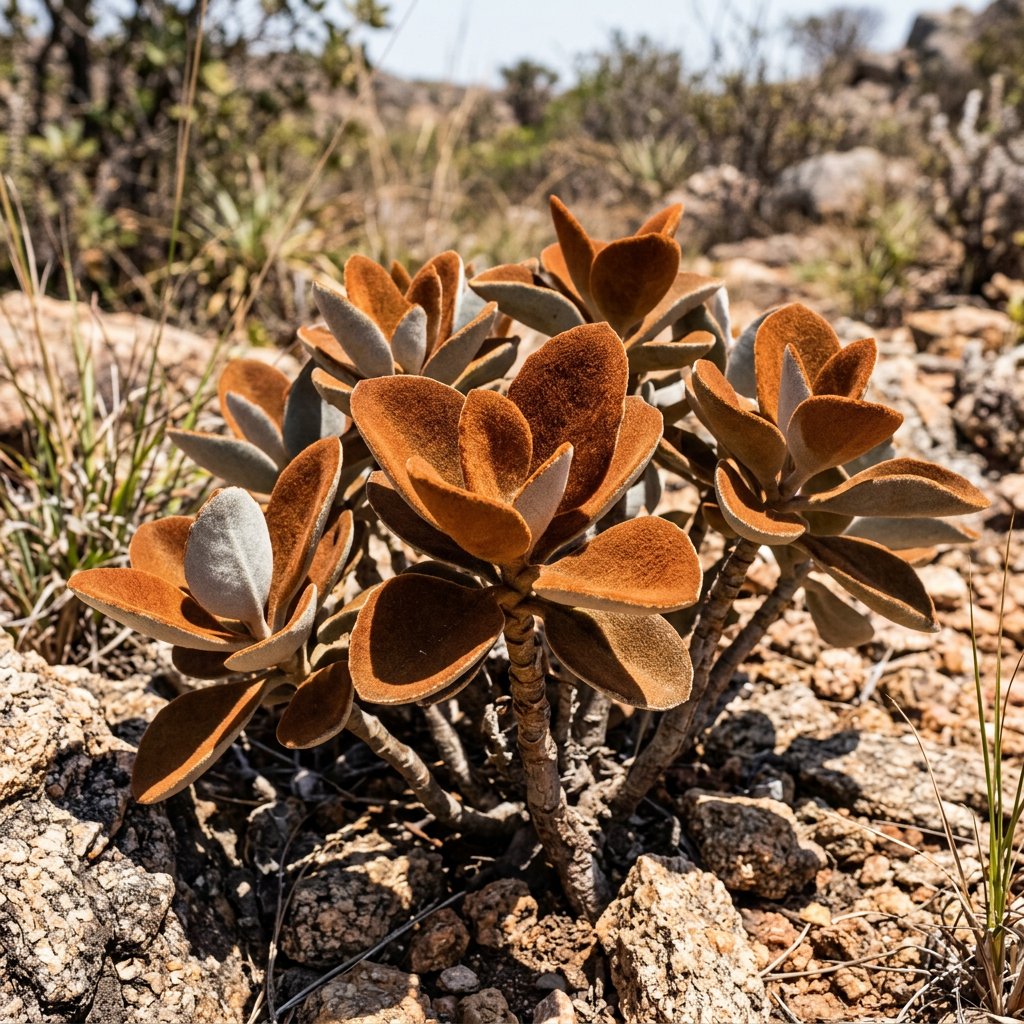
Commonly known as Copper Spoons, this striking succulent is a slow-growing masterpiece from the dry forests of Madagascar. It earns its name from its distinctively cupped, oval leaves that look as though they’ve been dipped in molten cinnamon or weathered bronze. It is a favorite among collectors who want a "living sculpture" that provides year-round color without the need for constant blooms.
🔍 How to Identify
- 🥄 The Leaf Shape: Each leaf is shaped like a wide, slightly curved spoon or spatula, tapering to a point.
- 🧶 Velvety Texture: The foliage is covered in tiny, fine hairs (stellate hairs) that feel like felt or soft suede to the touch.
- 🎨 Dual-Tone Color: Young leaves at the top of the plant appear a vibrant, metallic copper or rusty orange, while the undersides and older leaves fade to a sophisticated silvery-gray.
🏡 In Your Garden
- ☀️ Sun for Color: To keep those "spoons" looking richly copper, the plant needs plenty of bright, indirect light; in low light, the bronze pigment will fade, and the plant will turn a duller olive green.
- 🪴 A Patient Grower: Unlike many leggy succulents, Copper Spoons grows as a sturdy, multi-stemmed shrub. It won’t outgrow its pot overnight, making it a perfect long-term resident for sunny windowsills or rock gardens.
- 💧 Dry Feet Only: Because of its thick, fleshy leaves and hairy coating, it is exceptionally drought-tolerant. It is far more likely to suffer from "kindness" (overwatering) than neglect, as it is highly prone to root rot in soggy soil.
⚠️ Safety & Toxicity
- 🚫 Status: Toxic to pets and humans.
- 🐾 Details: Like many members of the Kalanchoe family, this plant contains cardiac glycosides. If ingested by cats or dogs, it can cause drooling, vomiting, or, in rare cases, heart rhythm abnormalities. Keep it on a high shelf away from curious nibblers.
✨ Fun Fact
The "fuzz" on the leaves isn't just for decoration! These microscopic hairs serve as a sophisticated survival tool, reflecting intense sunlight to keep the plant cool and trapping a layer of moisture against the leaf surface to reduce water loss in its native arid climate.

Detailed Care Instructions
Here are some steps to help you grow a Kalanchoe Orgyalis plant:
- Lighting: Place the plant in a location that receives bright, indirect sunlight. A few hours of direct sunlight in the morning or evening is also beneficial.
- Temperature: The plant prefers warm temperatures between 65-80°F (18-27°C). It is important to keep it away from cold drafts or sudden temperature fluctuations.
- Soil: Use well-draining soil such as cactus or succulent mix. These types of soil allow excess moisture to drain away and prevent waterlogged roots.
- Watering: Allow the soil to dry out partially between waterings. Overwatering can lead to root rot, so it is better to underwater than overwater. Water thoroughly but avoid letting the plant sit in standing water.
- Humidity: Kalanchoe Orgyalis is tolerant of average room humidity levels. However, if your home is very dry, increasing humidity through methods like placing a tray of water nearby or using a humidifier can be beneficial.
- Fertilizer: Feed the plant with a balanced, diluted succulent or cactus fertilizer during the growing season (spring and summer). Follow the manufacturer's instructions for application rates.
- Propagation: Kalanchoe Orgyalis can be propagated through stem or leaf cuttings. Allow the cuttings to callus for a few days before planting them in well-draining soil. Keep the soil barely moist until roots develop.
- Pruning: Trim the plant as necessary to maintain its shape and appearance. Pruning can also help to encourage branching and a more compact growth habit.
Remember, every plant has specific preferences and requirements, so it's good to observe your Kalanchoe Orgyalis closely and make adjustments as needed.

Place in a bright room that is sun drenched almost all day. Or directly in a south-facing window.

Kalanchoe Orgyalis is a succulent plant that requires careful watering to prevent overwatering or underwatering. To water this plant, avoid pouring the water into the center of the plant, which can cause the plant to rot. Instead, water around the edges of the pot, letting the water soak in slowly. Do not water again until the soil is completely dry. It is also important to ensure that the pot has good drainage to prevent water from accumulating in the bottom. In addition, Kalanchoe Orgyalis requires less frequent watering during the winter months when it is in its resting phase.
To fertilize this plant, you should use a balanced, water-soluble fertilizer. Dilute the fertilizer to half strength, and apply it monthly during the growing season, avoiding applying it during periods of dormancy. Be sure to water the plant thoroughly before and after fertilizing, and avoid getting any fertilizer on the leaves as it may burn them.
The Kalanchoe Orgyalis plant prefers well-draining soil with a mix of organic matter such as compost or peat moss. It is best to use a porous, sandy soil mix to ensure proper drainage and prevent waterlogging. Additionally, the soil should not be overly nutrient-rich, as this can cause the plant to grow too quickly and become susceptible to disease. A pH level of 6.0-7.0 is ideal for this plant. Regular watering is necessary, but be sure to let the soil dry out slightly between each watering to prevent root rot. Adding perlite or sand to the soil mix also helps with drainage and aeration.
To propagate this plant, select a small stem with a few leaves and remove the bottom leaves. Dip the cut end into rooting hormone and place it in a well-draining soil mix. Water the soil and cover the cutting with a plastic bag to create a humid environment. Place it in bright, indirect light and keep the soil moist. After a few weeks, roots should begin to form, and the plant can be carefully transferred to a larger pot.
Common pests of the copper spoons include Scale insect, mealybugs, aphids, thrips. Make a habit of checking your copper spoons frequently for pests so that any infestations can be caught and managed early.








