Plant Overview
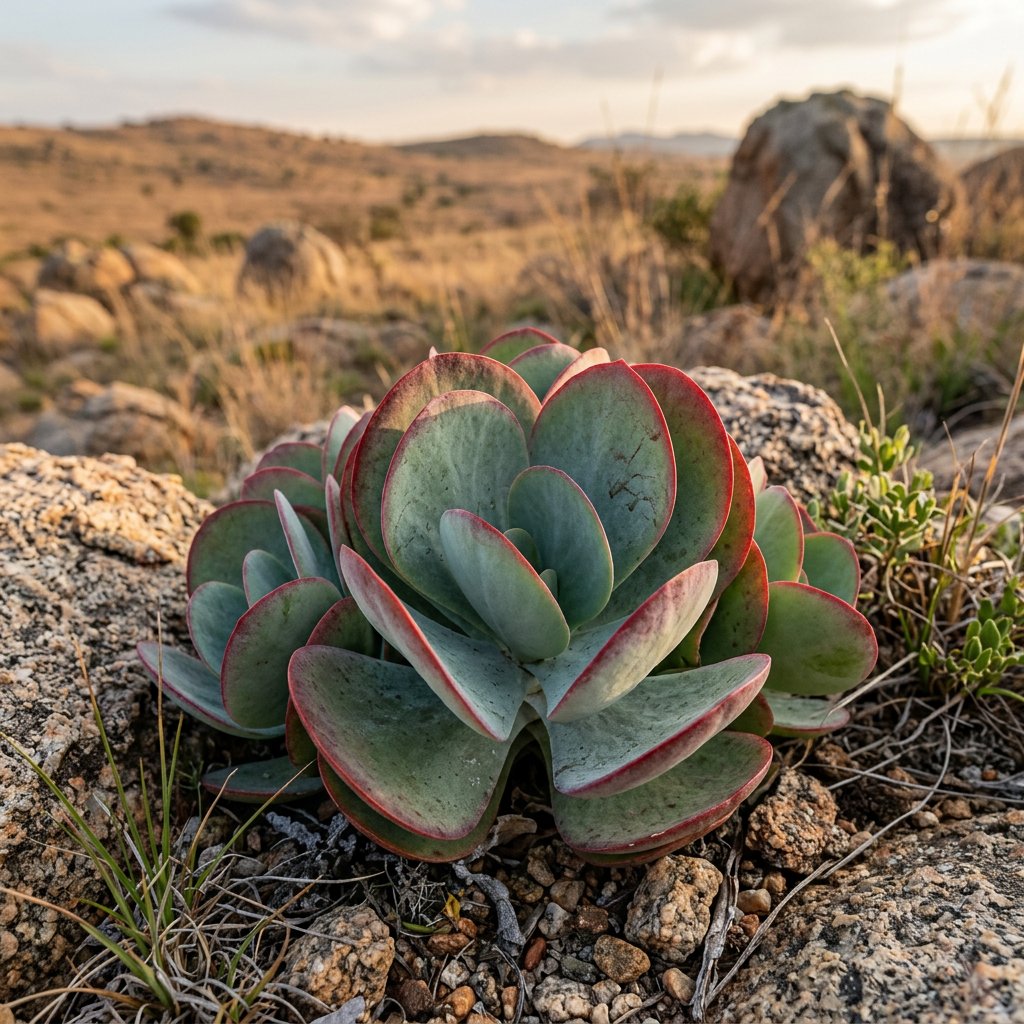
Often called the "Flapjack Plant" or "Paddle Plant," this South African beauty looks like a stack of succulent pancakes arranged in a desert-ready bouquet. It is a favorite among minimalist decorators and succulent collectors for its architectural shape and dramatic color shifts. In its native habitat, it clings to rocky slopes, showing off its bold, "blushing" edges to the sun.
🔍 How to Identify
- 🥞 The Paddles: Features large, flat, and circular leaves that grow in pairs, often stacked vertically like plates in a drying rack.
- 🎨 The Blush: While the base color is a powdery grey-green, the leaf margins turn a brilliant, fiery crimson when exposed to direct sunlight or cool temperatures.
- ❄️ The Frosting: The entire plant is covered in a fine, white powdery coating (epicuticular wax) that looks like flour but acts as a natural sunscreen.
🏡 In Your Garden
- ☀️ Light for Color: To achieve those famous red edges, this plant needs "light stress." In shaded spots, the plant will remain entirely green and may become "leggy" as it stretches toward the sun.
- 💧 Drought Specialist: Because of its thick, water-storing leaves, it is highly susceptible to root rot. It thrives on neglect—only water when the soil is bone-dry to the touch and the leaves feel slightly flexible.
⚠️ Safety & Toxicity
- 🚫 Toxic Status: Highly toxic to pets. Like many in the Kalanchoe family, it contains cardiac glycosides that can affect the heart.
- 🐾 Risk Level: If cats or dogs nibble on the leaves, it can cause vomiting, diarrhea, or in rare cases, abnormal heart rhythms. It is best kept on high shelves or in hanging pots away from curious animals.
✨ Fun Fact
- 🕯️ The Grand Finale: The Flapjack is "monocarpic," meaning it blooms only once at the end of its life cycle. After several years, it sends up a massive, 3-foot tall golden flower spike; once the flowers fade, the mother plant dies, but not before leaving behind several "pups" or offsets at the base to start the cycle over again.

Detailed Care Instructions
To grow Kalanchoe Tetraphylla (also known as paddle plant or flapjack), follow these steps:
- Location: Choose a spot that receives ample sunlight, preferably 4-6 hours of direct sunlight per day. This plant can tolerate partial shade, but it thrives in bright light.
- Soil: Use well-draining soil to prevent waterlogging and root rot. A combination of cactus or succulent mix and perlite or coarse sand works well. Avoid heavy clay soils.
- Potting: Select a shallow pot with drainage holes to ensure excess water can escape. Choose a pot that is slightly larger than the plant's root system.
- Watering: Water infrequently, allowing the soil to dry out between waterings. Over-watering can lead to root rot, so err on the side of underwatering. Water directly at the base of the plant rather than splashing water on the leaves.
- Temperature: Kalanchoe Tetraphylla thrives in temperatures between 60-75°F (15-24°C). Protect it from freezing temperatures during winter, as it is sensitive to cold.
- Fertilizer: Use a balanced, water-soluble succulent fertilizer once every 2-3 months during the growing season (spring and summer). Follow the package instructions for dosage.
- Propagation: Kalanchoe Tetraphylla can be propagated through stem or leaf cuttings. Allow the cut ends to dry for a day or two before planting them in a well-draining potting mix.
- Pruning: Pinch off or trim any leggy or damaged growth to maintain a compact and healthy appearance. This will also encourage the plant to produce more offsets.
- Pests and diseases: Watch out for common succulent pests such as mealybugs and scale insects. Treat infestations promptly with insecticidal soap or neem oil.
Remember to research specific care requirements for Kalanchoe Tetraphylla and adjust your care routine accordingly based on your plant's needs.

Place in a bright room that is sun drenched almost all day. Or directly in a south-facing window.

When watering this plant, it is important to make sure the soil is completely dry before giving it any water. Overwatering can cause root rot and is very harmful to the plant. When watering, use room temperature water and pour it around the base of the plant, being careful not to get any water on the leaves or flowers. Allow the soil to absorb the water and then discard any excess water that may have accumulated in the saucer or pot. Additionally, it is important to avoid getting water on the leaves or flowers during watering as this can cause damage or encourage mold growth.
To fertilize this plant, mix a balanced, water-soluble fertilizer in a watering can with water according to the label instructions. Apply the diluted fertilizer to the soil around the plant once a month during the growing season (spring and summer). Be sure not to over-fertilize, as this can cause burning of the roots and damage to the plant.
When growing this plant species, it is important to use well-draining soil that is rich in nutrients. The soil should be slightly acidic to neutral in pH and should contain a mixture of organic matter and minerals. It is recommended to use a combination of peat moss, perlite, and sand to create a suitable soil mix for this plant. In addition, it is important to avoid overwatering as this species prefers to be grown in drier conditions.
To propagate this particular plant, you will need a sharp, sterilized cutting tool. Take a cutting from a mature, healthy stem that is at least 5 inches long. Make sure to take a clean cut just below a leaf node.
Next, remove the bottommost leaves from the stem, leaving only the topmost few. This will allow the plant to focus its energy on developing roots rather than supporting excess foliage.
To aid in root growth, dip the cut end of the stem in rooting hormone powder. This will encourage the development of new roots.
Next, plant the stem cutting in a well-draining potting mix. Ensure that the soil is moist but not waterlogged, and place the pot in a bright, indirect light location. Keep the plant warm and moist, checking on it periodically to ensure it is growing well.
Within a few weeks, your plant should begin to develop new roots and foliage. Once the plant has established itself, you can transplant it into a larger pot or outdoors in a suitable location.
Common pests of the flapjack include Scale insect, mealybugs, aphids, thrips. Make a habit of checking your flapjack frequently for pests so that any infestations can be caught and managed early.








