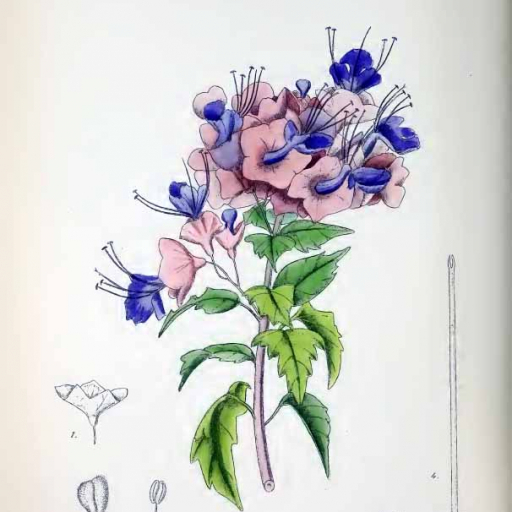
Plant Overview
Often called the Wild Parasol Flower or Mauve Chinese Lantern, Karomia speciosa is a hidden gem from the dry woodlands of Southern Africa. This deciduous shrub is famous for its "flowers" that aren't quite what they seem; the most colorful part is actually a papery, saucer-shaped leaf structure that holds the true flower in its center. It brings a touch of whimsical, Victorian-era charm to any sun-drenched garden.
🔍 How to Identify
- 🌂 The "Parasols": The most striking feature is the large, circular, mauve-to-pink calyx. It looks like a tiny, delicate umbrella or a flat parasol.
- 🍇 The True Bloom: In the center of the mauve parasol sits a small, two-lipped flower in a deep violet or royal purple hue.
- 🍃 Velvety Foliage: The leaves are light green, slightly fuzzy to the touch, and usually have bluntly toothed or scalloped edges.
🏡 In Your Garden
- ☀️ Sun Seeker: This plant thrives in heat and bright light. Because it originates from rocky hillsides, it is incredibly drought-tolerant once established and perfect for xeriscaping.
- 💧 Drainage is Key: It "breathes" through its roots and is prone to root rot if left in soggy soil. Use a sandy or loamy mix and avoid heavy clay.
- ✂️ Pruning Needs: Left to its own devices, it can become a bit "leggy" or sparse. A light prune after flowering helps maintain a bushy, rounded shape.
⚠️ Safety & Toxicity
- ✅ Safe Status: Karomia speciosa is generally considered non-toxic to humans and common household pets.
- 🧤 Garden Safety: While not poisonous, the stems can be a bit brittle. It is always best practice to keep curious pets from chewing on ornamental foliage to avoid minor stomach upset.
✨ Fun Fact
The papery "parasols" of this plant are remarkably persistent. Even after the true violet flower has died and fallen away, the colorful mauve calyx remains on the branch for weeks, eventually turning a beautiful papery tan color—making it a favorite for dried floral arrangements!

Detailed Care Instructions
To grow Karomia Speciosa plant, also known as African beautyberry or Christmasberry, follow these steps:
- Climate: Ensure you have a suitable climate for the plant. Karomia Speciosa is native to tropical regions and requires warm conditions with temperatures around 70-85°F (21-29°C). It is generally not frost-tolerant and prefers high humidity.
- Location: Select a suitable location for planting. Karomia Speciosa prefers partial shade to full sun. Choose an area with well-draining soil and good air circulation.
- Soil: Prepare the soil by mixing organic matter such as compost or well-rotted manure to improve fertility and drainage. Karomia Speciosa prefers slightly acidic soil with a pH level of 5.5 to 6.5.
- Planting: Dig a hole twice as wide and deep as the root ball. Place the plant in the hole and backfill it with soil, gently firming it around the roots. Water thoroughly after planting to settle the soil.
- Watering: Karomia Speciosa requires regular watering to keep the soil consistently moist, but not waterlogged. Water deeply when the top 1-2 inches of soil feel dry. Reduce watering during winter or dormant periods.
- Mulching: Apply a layer of organic mulch around the base of the plant to conserve moisture, suppress weeds, and regulate soil temperatures. Keep the mulch away from the plant's stem to prevent rot.
- Fertilizer: Feed the Karomia Speciosa plant with a balanced, slow-release fertilizer or organic fertilizers such as compost or fish emulsion during the growing season. Follow the package instructions for application rates.
- Pruning: Prune the plant as desired to maintain its shape and size. Remove dead, damaged, or overgrown branches. Pruning also helps improve air circulation and sunlight penetration.
- Pests and diseases: Watch for common pests like aphids or spider mites. Treat with appropriate organic insecticides if necessary. Ensure good air circulation to prevent fungal diseases, and promptly treat any signs of disease with fungicides.
- Propagation: Karomia Speciosa can be propagated through stem cuttings or seeds. If propagating from seeds, sow them in a well-draining seed-starting mix and provide the necessary warmth and humidity for germination.
Remember to research specific care requirements for your particular variety of Karomia Speciosa, as some variations may have specific needs.

Place in a bright room that is sun drenched almost all day. Or directly in a south-facing window.

To properly water this plant, you should first check the soil moisture level before each watering session. Insert your finger about an inch into the soil to feel if it is dry to the touch. If the soil is still damp, wait a few more days before watering.
When it is time to water, do so slowly and evenly across the soil surface until you see water draining out from the bottom drainage holes. This ensures that the water reaches all parts of the root system and prevents waterlogging.
You should also avoid getting water on the leaves and stems of the plant, as this can lead to fungal diseases. Watering in the morning or early evening when the sun is not as strong is best, as this allows the plant to absorb the water before it evaporates.
During the winter months, when the plant is in its dormant period, it will require less water. You can reduce watering frequency to once every two to three weeks.
Overall, the key to successfully watering this plant is to ensure that the soil is evenly moist but not waterlogged.
To fertilize Karomia Speciosa, use a balanced fertilizer that contains equal amounts of nitrogen, phosphorus, and potassium. Apply the fertilizer once a month during the growing season (spring to fall) and every other month during the dormant season (winter). Dilute the fertilizer to half strength and apply it to the soil around the plant. Avoid getting the fertilizer on the leaves or stems as it may cause burning. Water the plant thoroughly after fertilizing.
Karomia Speciosa plant requires a well-draining soil that is rich in organic matter. The ideal pH range for this plant is neutral to slightly acidic. It is recommended to mix the soil with coarse sand and perlite to improve drainage and prevent waterlogging. Additionally, adding peat moss or compost to the soil can help improve its fertility and water-holding capacity. It is important to avoid using heavy clay soils or soils with poor drainage, as they can cause root rot and other issues. Proper soil choice is crucial to the health and growth of Karomia Speciosa, ensuring a strong root system and healthy foliage.
Karomia Speciosa is a type of plant that can be propagated in several ways, including stem cuttings, division, and seed propagation.
Stem cuttings are the easiest way to propagate this plant. To do this you will need to take cuttings from healthy stems that are approximately 4-6 inches in length. Cut the stem at an angle and make sure it has at least two leaves attached, then remove all the bottom leaves.
Next, dip the end of the stem in rooting hormone powder and place it in a pot filled with moist soil mix. Keep the soil moist and in a warm room, but out of direct sunlight. After a few weeks, roots will start to grow from the bottom of the stem. At this point, the plant can be transferred to a larger pot or planted outside.
Division can also be used to propagate Karomia Speciosa. To do this, remove the plant from its pot and divide it into smaller sections. Each section should have roots and a few leaves. Plant the divided sections in new pots and keep them moist and warm until they establish new roots.
Lastly, Karomia Speciosa can be propagated using seeds. The seeds should be harvested from a mature plant and planted in a pot filled with moist soil mix. The pot should be kept in a warm, bright location but out of direct sunlight. After a few weeks, the seeds should start to germinate. Once the seedlings have a few leaves, they can be transferred to individual pots or planted outside.








