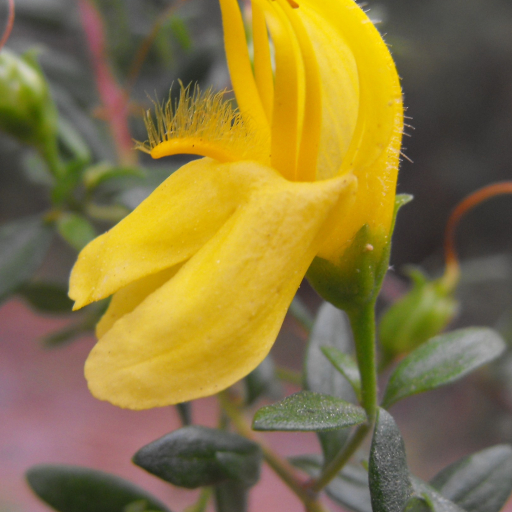
Plant Overview
Known affectionately as the Yellow Bush Snapdragon, this California native is a true survivor of the golden hillsides and chaparral. While it isn't a true snapdragon, its cheerful, two-lipped yellow flowers mimic that classic "dragon mouth" shape perfectly. It’s a favorite for "dry" gardens because it brings a burst of sunshine to rocky landscapes where other plants might struggle to find a foothold.
🔍 How to Identify
- 🌼 The Flowers: Bright lemon-yellow blooms with a distinct upper and lower lip, often featuring delicate "hair" inside the throat to help pollinators land.
- 🌿 The Leaves: Small, narrow, and lance-shaped leaves that are a soft grayish-green, arranged oppositely along the stems.
- 🪵 The Structure: A woody, multi-stemmed shrub that typically grows into a rounded mound about 3 to 6 feet tall.
🏡 In Your Garden
- ☀️ Summer Dormancy: This plant has a unique survival trick; it is "drought-deciduous," meaning it may drop its leaves and look a bit twiggy during the peak of summer to save water. Do not mistake this for a dead plant!
- 🐝 Wildlife Hub: It is a high-value plant for local ecology, specifically evolved to accommodate the weight of large bumblebees and the long beaks of hummingbirds.
- 🏜️ Drainage Matters: It hates "wet feet." To keep it happy, mimic its hillside home by using very well-draining, rocky, or sandy soil and avoiding heavy mulch near the base.
⚠️ Safety & Toxicity
- ✅ Non-Toxic: There are no known toxic effects for humans, dogs, or cats, making it a safe choice for family-friendly landscapes.
- 🧤 Pruning Care: While not poisonous, the older stems can become very brittle and sharp. Wear garden gloves when shaping the bush to avoid minor scrapes or splinters.
✨ Fun Fact
The genus name Keckiella was named in honor of David D. Keck, a famous American botanist who helped pioneer the study of how plants adapt and evolve across different elevations and climates!

Detailed Care Instructions
To grow Keckiella Antirrhinoides, also known as snapdragon bush, you can follow these steps:
- Obtaining seeds or transplants: You can purchase Keckiella Antirrhinoides seeds or transplants from a local nursery or online seed suppliers.
- Site selection: Choose a well-draining location that receives full sun or partial shade. Keckiella Antirrhinoides prefers a Mediterranean climate with mild winters.
- Soil preparation: Prepare the soil by removing any weeds or grass. Loosen the soil and amend with organic matter like compost to improve drainage and fertility.
- Planting seeds/transplants: If using seeds, sow them directly into the prepared soil, following the package instructions. For transplants, dig a hole that accommodates the root ball, place the plant, and backfill the hole, firming the soil gently around the base.
- Watering: Water the newly planted Keckiella Antirrhinoides deeply after planting, and then water regularly to keep the soil consistently moist during the growing season. However, avoid overwatering, as excessive moisture can lead to root rot.
- Mulching: Apply a layer of organic mulch around the plant, leaving a gap around the stem to prevent rot. Mulch helps retain moisture, suppresses weeds, and insulates the soil.
- Pruning: Keckiella Antirrhinoides can be pruned lightly to maintain its shape or remove dead or damaged branches. Pruning is typically done after flowering, ensuring new growth has ample time to develop flower buds for the next season.
- Fertilization: Fertilize the plant in spring with a slow-release, balanced fertilizer according to the package instructions. Avoid over-fertilization, as it can lead to excessive leaf growth at the expense of flowering.
- Pest and disease control: Monitor the plant regularly for pests like aphids or snails and address them promptly. Provide adequate spacing between plants to promote airflow and reduce the risk of fungal diseases.
- Winter care: In areas with frost or freezing temperatures, Keckiella Antirrhinoides may require additional winter protection. Mulch around the base of the plant to insulate the roots from cold. If severe winter conditions are expected, consider covering the shrub with a frost cloth or burlap.
By following these steps, you can successfully grow Keckiella Antirrhinoides and enjoy its beautiful, snapdragon-like flowers.

Place in a bright room that is sun drenched almost all day. Or directly in a south-facing window.

The Keckiella Antirrhinoides plant should be watered thoroughly, allowing the soil to become moist but never waterlogged. It is important to not let the soil dry out completely between watering, as this can cause stress and damage to the plant. The amount of water required will depend on environmental factors such as temperature and humidity, so it is important to monitor the soil moisture regularly and adjust watering accordingly. It is also recommended to avoid getting water on the leaves of the plant, as this can lead to fungal diseases. Overall, a consistent and careful watering schedule is crucial for the health and growth of the Keckiella Antirrhinoides plant.
To fertilize this plant, use a balanced fertilizer with equal amounts of nitrogen, phosphorus, and potassium. Apply the fertilizer every four to six weeks during the growing season, which typically runs from spring through summer. Do not fertilize during the winter dormant period. Be careful not to over-fertilize, as this can lead to root damage and poor growth. Always follow the instructions on the fertilizer package and water the plant thoroughly after fertilizing.
Keckiella antirrhinoides plants prefer well-draining soil with a neutral to slightly acidic pH level. A mixture of equal parts sandy loam, perlite, and peat moss or coconut coir is a suitable soil mix. The soil should be kept moist but never soggy, as the plant is susceptible to root rot. It is also important to amend the soil with organic matter, such as compost or well-rotted manure, to improve soil fertility and help retain moisture. Overall, a well-draining, slightly acidic soil with good fertility and moisture retention is ideal for Keckiella antirrhinoides plants.
Propagation of this plant can be done using either stem cuttings or seeds. To propagate using stem cuttings, select a healthy stem and cut it just below a node. Remove any leaves from the lower part of the stem, leaving only a few at the top. Dip the cut end of the stem in rooting hormone and plant it in well-draining soil. Keep the soil moist and in a partially shaded area until the cutting roots.
Propagation using seeds is also an option. Sow the seeds indoors in a seed tray or directly in the ground after the last frost. Cover the seeds with a thin layer of soil and keep the soil moist until they germinate. Once the seedlings reach a suitable size, they can be transplanted to their final location in the garden.
It is important to note that this plant prefers well-draining soil and moderate watering. It also requires regular pruning to maintain its shape and encourage healthy growth.








