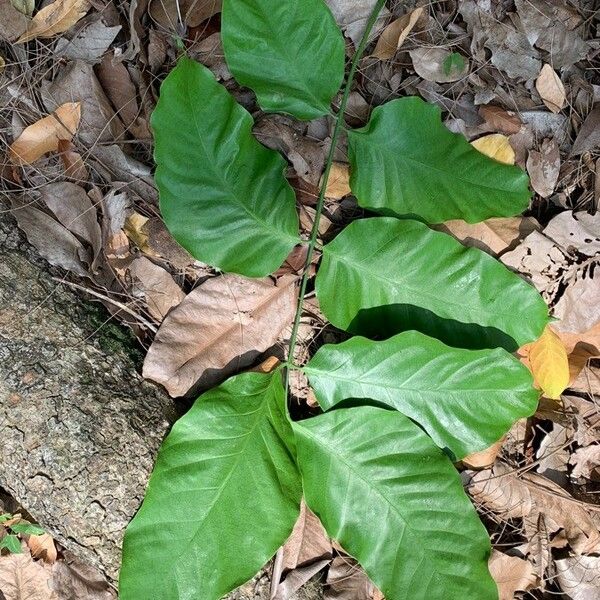
Plant Overview
Known as the African Mahogany or the "Big-Leaf Khaya," Khaya grandifoliola is a regal giant of the West African rainforests. In its native lands, it is often referred to as the "King of the Woods" due to its massive trunk and the high value of its rich, reddish-brown timber. While it begins its life as a graceful, leafy sapling, it eventually matures into a towering canopy tree that can live for centuries.
🔍 How to Identify
- 🍃 The Foliage: True to its name (grandifoliola means "large leaves"), it features oversized, glossy green pinnate leaves. Each leaf is composed of several pairs of leaflets that feel leathery to the touch.
- 🪵 The Bark: On mature trees, the bark is a distinctive grey-brown and develops a "scaly" or "scalloped" appearance as it flakes off in thick patches, often revealing a reddish tint underneath.
- 📦 The Seed Pods: It produces woody, globe-shaped fruit capsules about the size of a billiard ball. When ripe, these pods split into four or five sections to release thin, winged seeds that "helicopter" to the forest floor.
🏡 In Your Garden
- 🌳 The Space Requirement: This is not a plant for a small backyard. Because it develops a massive, deep-reaching taproot to support its eventual height, it hates being grown in pots for long and needs a permanent "forever home" in deep, well-drained soil.
- ☀️ Sun & Growth: As a "pioneer species," it loves basking in full sunlight. In a garden or park setting, it acts as an incredible carbon sink and provides dense, cooling shade, but it requires plenty of vertical room to breathe.
⚠️ Safety & Toxicity
- ✅ Status: Generally safe and non-toxic to touch.
- 🐾 Details: While the tree is not considered poisonous to pets or children, the bark and leaves contain extremely bitter limonoids. In West African folk medicine, the bark is used to treat fevers, but it should never be ingested at home as it is incredibly potent and can cause stomach upset if prepared incorrectly.
✨ Fun Fact
In many West African cultures, the Khaya grandifoliola is considered a "spirit tree." Its bark is so central to traditional healing (specifically for treating malaria) that it is often found in local "apothecary" markets, where it is known by the Yoruba name Oganwo.

Detailed Care Instructions
Khaya grandifoliola, also known as African mahogany, is a tropical tree species native to Africa. Here are some tips on how to grow Khaya grandifoliola:
- Climate: Khaya grandifoliola thrives in tropical or subtropical climates with plenty of sunlight and high humidity. It can tolerate a range of soil types, but it prefers well-draining, loamy soil.
- Propagation: Khaya grandifoliola can be propagated from seeds or cuttings. Seeds should be planted in well-draining soil and kept moist until they germinate. Cuttings can be taken from mature trees and rooted in a soilless mix.
- Planting: Plant Khaya grandifoliola in a location with full sun and enough space for the tree to grow to its full mature size, which can reach up to 130 feet tall. Make sure the soil is well-drained and keep the tree well-watered, especially during dry periods.
- Fertilization: Khaya grandifoliola benefits from regular fertilization with a balanced, slow-release fertilizer. Apply fertilizer in the spring and summer months to promote healthy growth.
- Pruning: Prune Khaya grandifoliola to remove dead or diseased branches and to maintain a desired shape. Avoid heavy pruning, as this can stress the tree and reduce its overall health.
- Pest and disease control: Keep an eye out for common pests and diseases that can affect Khaya grandifoliola, such as scale insects, mites, and fungal infections. Use appropriate insecticides or fungicides as needed to keep your tree healthy.
By following these tips, you can successfully grow Khaya grandifoliola and enjoy its beautiful foliage and wood.
To water this plant, you should first check the soil to see if it is dry to the touch. If the top inch of soil feels dry, it is time to water the plant. Be sure to water the plant thoroughly, allowing water to soak into the soil until it starts to drain out of the bottom of the pot. Avoid overwatering, as this can lead to root rot. It is also important to water the plant at the base and avoid getting the leaves wet, as this can cause fungal issues. Depending on the environment and season, you may need to adjust the frequency of watering to ensure the plant has the right amount of moisture. Additionally, using room temperature water is recommended, as cold water can shock the plant's roots.
To fertilize Khaya Grandifoliola plants, apply a balanced fertilizer with an NPK ratio of 10-10-10 in the spring and summer months. Mix the fertilizer with water according to the manufacturer's instructions and apply around the base of the plant, avoiding direct contact with the trunk. Do not over-fertilize as it can lead to nutrient imbalances and damage the plant. Water the plant thoroughly after fertilizing to help nutrients penetrate the soil. Repeat the fertilization process every 4-6 weeks during the growing season.
Khaya Grandifoliola plant requires well-draining soil that is rich in organic matter. A loamy soil mixture is recommended, consisting of a combination of sand, silt, and clay. The pH level of the soil should ideally be slightly acidic to neutral, ranging from 6.0 to 7.0. It is important to ensure that the soil is consistently moist, but not waterlogged, as excessive moisture can lead to root rot. The plant also benefits from a regular application of fertilizer to promote healthy growth and development. Overall, providing the proper soil conditions is essential for the Khaya Grandifoliola plant to thrive and flourish.
Khaya grandifoliola can be propagated through several methods, including seed propagation, stem cuttings, air layering, and grafting.
- Seed Propagation: Collect seeds from mature fruits and sow them in well-draining soil. Keep the soil consistently moist and warm until germination occurs.
- Stem Cuttings: Take a 6-8 inch cutting from a healthy, mature plant and remove the lower leaves. Dip the cut end in rooting hormone and plant in a well-draining potting mix. Keep the soil moist and provide indirect light.
- Air Layering: Select a healthy branch and make a small incision in the stem. Apply rooting hormone to the cut area and wrap it with moist sphagnum moss and plastic wrap. Once roots have formed, cut the branch below the rooted area and plant in soil.
- Grafting: Take a healthy scion from a desired plant and graft it onto a rootstock of Khaya grandifoliola. Secure the graft with grafting tape and keep in a warm, humid environment until the graft has taken.
Whichever method you choose, it is important to provide the right environmental conditions, such as warmth, humidity, and proper care to ensure successful propagation of Khaya grandifoliola.








