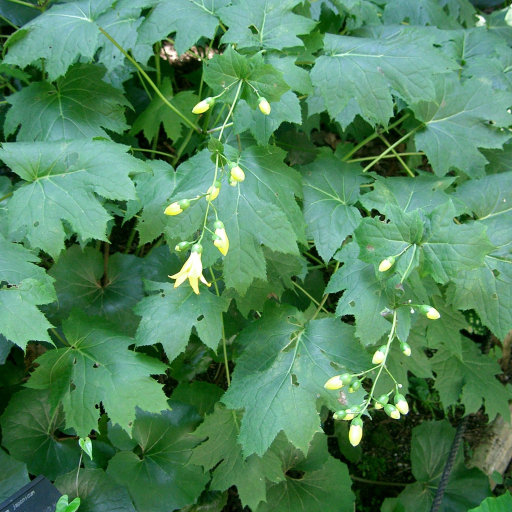
Plant Overview
Known affectionately as "Yellow Wax Bells," Kirengeshoma palmata is the ultimate aristocrat of the shade garden. Originating from the cool, mountainous woodlands of Japan and Korea, this architectural perennial brings an air of quiet sophistication to damp, dark corners. It is most beloved for its late-summer blooms that look like they’ve been hand-sculpted from heavy, butter-colored wax.
🔍 How to Identify
- 🍃 Maple-Like Leaves: The foliage is large, bright green, and palmate (hand-shaped), resembling the leaves of a sycamore or maple tree.
- 🔔 Waxy Blooms: In late summer, it produces nodding, pendulous bells that are creamy yellow. The petals are unusually thick and fleshy, giving them a "frozen" or waxy appearance.
- 🟣 Ebonized Stems: The plant features strong, upright stems that often sport a dark purple or maroon tint, providing a beautiful contrast to the lime-green leaves.
🏡 In Your Garden
- 💧 The Moisture Rule: This plant is a "thirsty" resident. It has a high transpiration rate through its large leaves, meaning it will wilt dramatically if the soil dries out even for a day. It thrives in rich, humusy soil that stays consistently damp.
- 🌳 Woodland Shelter: Because of its broad leaves and tall, mounding habit, it needs a spot sheltered from harsh winds, which can easily tear the foliage. It is the perfect companion for ferns and hostas in a deep-shade border.
⚠️ Safety & Toxicity
- 🐾 Pet Friendly: Good news for pet owners—Kirengeshoma palmata is generally considered non-toxic to cats, dogs, and horses.
- 👶 Child Safety: It is not known to be poisonous; however, like most ornamental plants, it is not edible and should not be ingested. It does not typically cause skin irritation upon contact.
✨ Fun Fact
The name Kirengeshoma is a linguistic puzzle! It comes from the Japanese word "ki" (yellow) and "rengeshoma," which is the Japanese name for the False Anemone (Anemonopsis). It literally translates to "Yellow False Anemone."

Detailed Care Instructions
To grow Kirengeshoma palmata, also known as yellow waxbells, follow these steps:
- Choose a suitable location: Kirengeshoma palmata prefers partial to full shade, sheltered from direct sunlight and wind. It prefers moist, well-draining soil.
- Prepare the soil: Ensure the soil is rich in organic matter, such as compost, to provide necessary nutrients. Improve drainage if needed by amending the soil with organic matter or creating raised beds.
- Planting: Dig a hole slightly larger than the plant's root ball. Place the plant in the hole and backfill with soil, gently firming it around the roots. Ensure the crown of the plant is level with the soil surface.
- Watering: Keep the soil consistently moist but not waterlogged. Irrigate deeply when the top inch of soil feels dry. Mulching around the plant can help retain moisture.
- Fertilizing: Apply a balanced organic fertilizer in spring, following package instructions. This will provide nutrients for healthy growth.
- Pruning: Prune in late winter or early spring to remove any dead or damaged wood. Also, thin out overcrowded growth to improve air circulation.
- Pest and disease control: Kirengeshoma palmata is generally pest and disease resistant. However, it may occasionally be affected by slugs or snails. Use organic slug/snail control methods or handpick them if necessary.
- Winter protection: In colder regions, protect the plant from harsh winter conditions by applying a layer of mulch around the base. This will insulate the roots and help prevent freezing.
- Division: Over time, Kirengeshoma palmata may become crowded. Every 3-4 years, divide the plant in early spring to rejuvenate it. Dig up the plant, carefully separate the clumps, and replant in prepared soil.
- Enjoy the blooms: Kirengeshoma palmata typically blooms in late summer to early autumn, producing bell-shaped, yellow flowers. Enjoy the unique beauty and fragrance it adds to your garden.
Remember to regularly monitor the plant's needs, provide adequate water, and promptly address any issues that may arise. With proper care, your Kirengeshoma palmata should thrive and grow well.

Place in a window with dappled sun or a spot in the middle of a room. Or directly in a window facing west or east.

Kirengeshoma palmata is a perennial plant that is native to the woodlands of Japan. It requires moderate watering to establish and maintain healthy growth. Here are some guidelines on how to water this plant:
1. Assess soil moisture: Before watering, it's important to check the moisture level of the soil around the plant. Insert your finger about 2-3 inches into the soil near the plant's base. If the soil feels dry at this depth, it's an indication that watering is needed. However, if the soil feels slightly moist, another day or two can be given before watering.
2. Water deeply: When watering Kirengeshoma palmata, it's crucial to ensure that the water reaches the roots. Instead of just sprinkling water on the surface, water the plant deeply and slowly. This allows the water to penetrate the root zone and encourages the roots to grow deeply into the soil.
3. Watering frequency: The frequency of watering depends on various factors such as the climate, soil type, and season. During hot summers, Kirengeshoma palmata may require watering every 2-3 days, whereas during cooler months, watering once every 5-7 days might be sufficient. Keep in mind that it's better to water deeply but less frequently rather than giving the plant frequent shallow waterings.
4. Consider rainfall: If there has been adequate rainfall, you may not need to water the plant immediately. Monitor the rainfall amounts and intensity in your area and adjust your watering schedule accordingly. However, during extended dry periods, supplemental watering may still be necessary to ensure the plant's moisture needs are met.
5. Mulching: Applying mulch around the base of the plant can help to conserve soil moisture. Spread a 2-3 inch layer of organic mulch, such as bark chips or straw, around the plant, leaving a gap between the mulch and the plant's stem. Mulch helps to prevent evaporation and keeps the soil cool, reducing water loss.
6. Avoid overwatering: While Kirengeshoma palmata requires regular watering, it is important not to overwater the plant. Overwatering can lead to root rot and other fungal diseases. Always allow the top layer of soil to dry out slightly before watering again and adjust the frequency depending on the plant's specific needs.
Remember, these watering guidelines serve as general recommendations. Its always essential to consider the specific conditions of your garden, such as climate, soil type, and the plant's overall health. Observe the plant closely and make adjustments to your watering routine as needed.
To properly fertilize the Kirengeshoma palmata plant, follow these instructions:
- Use a balanced, water-soluble fertilizer with an NPK ratio of 10-10-10 or 20-20-20. This will provide essential nutrients in equal proportions.
- Begin fertilizing in early spring when new growth starts to emerge. Avoid fertilizing during the dormant season.
- Dilute the fertilizer according to the instructions on the package. Generally, a ratio of 1 tablespoon of fertilizer mixed with 1 gallon of water is suitable. Adjust the ratio if necessary based on the size of your plant.
- Apply the diluted fertilizer around the base of the plant, ensuring it reaches the root zone. Avoid getting the fertilizer on the leaves or stems as it may cause burn damage.
- Repeat the fertilizer application every 4 to 6 weeks during the growing season, typically from spring to early fall. This will help provide a continuous supply of nutrients to support healthy growth.
- Water the plant thoroughly after each fertilizer application to help distribute the nutrients evenly and prevent any potential fertilizer burn.
- Monitor the plant's response to the fertilizer and adjust the frequency or strength of applications if needed. Avoid over-fertilizing as it can lead to nutrient imbalance and harm the plant.
Remember to read and follow the specific instructions on the fertilizer packaging as different brands may have varying recommendations. Regular fertilization, along with appropriate watering and care practices, will help ensure the health and vitality of your Kirengeshoma palmata plant.
When it comes to selecting the ideal soil for Kirengeshoma palmata, it is important to create a growing environment that meets its specific requirements. This perennial plant thrives in soil that is rich in organic matter, moist, and well-draining. Here are some key details on the soil preferences for Kirengeshoma palmata:
- pH level: Kirengeshoma palmata prefers slightly acidic to neutral soil, with a pH range between 5.5 and 7.0. This pH range ensures optimal nutrient availability to the plant roots.
- Texture: The soil should have a good balance of texture, with a loamy or sandy-loam consistency being ideal. This type of soil holds moisture without becoming waterlogged, yet still allows for adequate drainage.
- Organic matter: Kirengeshoma palmata thrives in soil enriched with organic matter such as compost or well-rotted manure. This helps to improve the soil's fertility, water-holding capacity, and overall structure.
- Moisture retention: It is important to choose a soil mix that retains moisture well without becoming excessively saturated. Kirengeshoma palmata prefers consistently moist soil rather than one that is allowed to dry out completely between waterings.
- Drainage: While moisture retention is crucial, it is equally important to ensure the soil offers good drainage. This prevents the plant's roots from staying overly wet, which can lead to root rot or other issues. Well-draining soil helps to maintain a healthy root environment.
- Aeration: Kirengeshoma palmata benefits from a soil mixture that provides good aeration to the roots. This allows for proper gas exchange and enhances nutrient uptake by the plant.
By providing Kirengeshoma palmata with a soil that meets these specifications, you will create an optimal growing environment for this beautiful perennial plant. Remember to monitor the soil moisture regularly and adjust your watering practices accordingly to maintain an ideal balance for the plant's well-being.
Kirengeshoma palmata, a flowering perennial plant native to Japan and Korea, can be propagated through various methods including division, stem cuttings, and seed propagation.
- Division: This method involves separating an established plant into multiple sections, each containing roots and shoots. Here's how to do it:
- Start by selecting a healthy mature plant with multiple shoots and a well-developed root system.
- Choose a suitable time for division, usually during the early spring or fall when the plant is dormant or actively growing.
- Dig around the base of the plant using a garden fork or shovel, carefully loosening the soil to avoid damaging the roots.
- Gently lift the plant out of the ground, taking care to keep the roots intact.
- Identify natural divisions or use a sharp knife or garden shears to separate the plant into smaller sections, ensuring that each section has its own roots and shoots.
- Plant the divided sections into prepared holes or containers filled with well-draining soil, making sure the crown of the plant (where the shoots emerge) is level with the soil surface.
- Water the newly divided plants adequately and provide the necessary care until they establish themselves.
- Start by selecting a healthy mature plant with multiple shoots and a well-developed root system.
- Stem Cuttings: This method involves taking cuttings from a healthy parent plant and encouraging them to develop roots. Here's how it's done:
- Select a healthy stem from the parent plant that is approximately 4-6 inches long. It should have at least 2-3 sets of leaves.
- Using a sharp and clean pair of garden shears or a knife, make a clean cut directly below a leaf node (where leaves emerge from the stem).
- Remove any leaves from the lower one-third to half of the cutting.
- Dip the cut end of the stem into a rooting hormone powder to enhance root development (optional).
- Insert the cutting into a container filled with well-draining soil or a mixture of peat moss and perlite.
- Place the container in a warm, shaded area with high humidity, such as under a plastic bag or in a propagator tray.
- Mist the cutting regularly to maintain moisture and prevent it from drying out.
- After several weeks, gently tug on the cutting to check for resistance, indicating that roots have developed. Once established, transplant the cutting into a larger pot or the desired planting location.
- Select a healthy stem from the parent plant that is approximately 4-6 inches long. It should have at least 2-3 sets of leaves.
- Seed Propagation: This method involves collecting and sowing seeds from mature Kirengeshoma palmata plants. Here's what you need to do:
- Harvest ripe seed pods from the plant when they have turned brown and started to split open.
- Remove the seeds from the pods and gently clean off any pulp or debris.
- Place the seeds in a container and stratify them to mimic the natural winter dormancy period. This can be done by mixing the seeds with a moist growing medium such as vermiculite or peat moss, sealing them in a plastic bag, and storing the bag in the refrigerator for 4-6 weeks.
- After stratification, sow the seeds into small pots or trays filled with a well-draining seed-starting mix, ensuring they are covered with a thin layer of soil.
- Moisten the soil and place the containers in a warm and well-lit area, but avoid direct sunlight.
- Keep the soil consistently moist but not waterlogged, using a misting spray bottle or bottom-watering method.
- Germination can take several weeks to a few months, so be patient. Once seedlings have developed true leaves and are large enough to handle, they can be transplanted into individual pots or directly into the garden.
Remember, propagating Kirengeshoma palmata may require experimentation and patience as success rates can vary. Adjust your methods accordingly based on the specific conditions and requirements of the plant.
- Harvest ripe seed pods from the plant when they have turned brown and started to split open.








