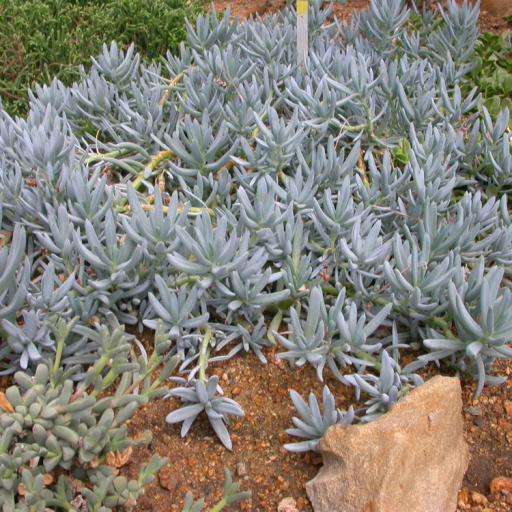
Plant Overview
Known affectionately as "Blue Chalksticks," Kleinia repens (formerly Senecio serpens) is a show-stopping succulent that looks like a cluster of cool-toned pencils reaching for the sky. Native to the rocky slopes of South Africa, it has become a darling of modern xeriscaping and minimalist indoor decor due to its ethereal, powder-blue hue. Its calming color and geometric structure make it a favorite for adding texture to rock gardens or contrasting with bright green plants.
🔍 How to Identify
- 🎨 The Blue "Chalk": The most striking feature is the glaucous, turquoise-blue color of the leaves. This isn't just a pigment; it is a powdery waxy coating called farina that protects the plant from the sun.
- 🖋️ Finger-like Foliage: The leaves are fleshy, cylindrical, and slightly curved, growing 1 to 3 inches long. They point upwards, resembling a bundle of blue fingers or sticks of chalk.
- 🌼 Subtle Blooms: While grown for its foliage, it occasionally produces small, pom-pom-like white or creamy flowers on short stalks during the summer.
🏡 In Your Garden
- ☀️ Sun-Kissed Blue: To keep its signature blue color, this plant craves bright light. If kept in too much shade, it will "stretch" toward the light and the leaves will revert to a dull green.
- 💧 The "Drought-is-Best" Rule: Like most South African succulents, it is highly susceptible to root rot. It prefers a "soak and dry" method—wait until the soil is completely bone-dry before watering again.
- 🏔️ Tough Terrain: It thrives in poor, sandy soil where other plants might struggle. It’s an excellent choice for fire-wise landscaping because its fleshy leaves hold significant water reserves.
⚠️ Safety & Toxicity
- 🐾 Toxic to Pets: Kleinia repens contains pyrrolizidine alkaloids, which are toxic if ingested. Keep this plant out of reach of curious cats and dogs, as it can cause lethargy, vomiting, or liver issues.
- 👶 Child Safety: While beautiful, the leaves should not be eaten. It is best placed on high shelves or in areas where toddlers cannot reach it.
- 🧤 Skin Sensitivity: The milky sap found inside the leaves may cause minor skin irritation for those with sensitive skin. It is wise to wear gloves when pruning or taking cuttings.
✨ Fun Fact
The powdery "chalk" on the leaves acts like a natural SPF 50 sunscreen! This coating, known as epicuticular wax, reflects UV rays and prevents the plant's internal moisture from evaporating in the scorching desert heat. If you rub the powder off with your finger, it usually won't grow back on that specific leaf!

Detailed Care Instructions
To successfully grow Kleinia Repens plants, also known as the trailing jade or ghost plant, follow these steps:
- Choose a suitable location: Choose a location that receives bright, indirect sunlight. These plants can also tolerate some direct sunlight, but avoid excessive heat or intense light, as it may scorch the leaves.
- Select the right container: Use a well-draining pot or hanging basket with drainage holes. The container can be made of plastic or clay, as long as it provides proper drainage.
- Soil preparation: Use well-draining soil specifically formulated for succulents or cacti. You can also create your own mix with equal parts of regular potting soil, sand, and perlite.
- Planting: Gently remove the plant from its nursery pot and loosen the roots if they appear tightly packed. Place the plant in the new container, covering the roots with the prepared soil mixture. Firmly press the soil around the base of the plant.
- Watering: Kleinia Repens is a succulent plant and requires infrequent watering. Allow the soil to dry out completely between watering sessions. Overwatering can lead to root rot and damage the plant. During the growing season (spring and summer), water deeply but infrequently. In winter, reduce watering further.
- Fertilization: Fertilize the plant once or twice during the spring and summer months. Use a balanced, water-soluble fertilizer, diluted to half strength. Avoid fertilizing during winter or when the plant is dormant.
- Pruning and maintenance: Kleinia Repens is a trailing plant that produces long, delicate stems. Tidying up the plant by removing any dead or damaged foliage will help maintain its appearance and overall health. You can also pinch back the stems to encourage bushier growth.
- Propagation: Propagate Kleinia Repens through stem cuttings. Cut a healthy stem with a sharp, sterile knife. Allow the cutting to callous for a few days before planting it in well-draining soil. Keep the soil slightly moist until roots develop.
- Temperature and humidity: These plants prefer warm temperatures between 60-85°F (15-29°C). They can tolerate lower temperatures for short periods but should be protected from frost. Normal room humidity is generally suitable for Kleinia Repens, but good airflow is essential to prevent fungal diseases.
By following these guidelines, you can successfully grow and care for your Kleinia Repens plant.

Place in a bright room that is sun drenched almost all day. Or directly in a south-facing window.

To water this plant, it is important to thoroughly wet the soil in the pot, allowing excess water to drain out of the bottom. It is recommended to wait until the soil is partially dry before watering again, as this plant does not tolerate consistently wet soil. When watering, it is best to avoid getting water on the leaves or stems, as this can lead to rot or other issues. Additionally, this plant may benefit from occasional misting to increase humidity around the plant.
To fertilize this plant, use a balanced fertilizer with a ratio of 10-10-10 or 20-20-20 during the growing season. Dilute the fertilizer to half strength and apply it every two weeks. Do not fertilize during the winter months as the plant is dormant. Make sure to water your plant thoroughly before applying the fertilizer to prevent burning the roots. Lastly, avoid overfertilizing as it can lead to salt buildup in the soil and ultimately harm the plant.
Kleinia Repens is a versatile plant that can be grown in a variety of soils. However, it thrives best in a well-drained, nutrient-rich soil that is mildly acidic to neutral in pH. The soil should be loose and airy, allowing for oxygen and water to flow easily through it. Using sand or perlite in the soil mix can help improve drainage.
When choosing a soil mix, it is important to avoid heavy, clay soils that can retain too much moisture and lead to root rot. Likewise, soils that are too sandy may dry out too quickly and not hold enough moisture to sustain the plant.
A good soil mix for Kleinia Repens may include a blend of potting soil, peat moss, and perlite or sand to improve drainage. Some growers also include small amounts of organic matter, such as compost or worm castings, to improve soil fertility. It is also a good practice to avoid using soils that contain chemical fertilizers, which may harm the plant's root system over time.
Overall, Kleinia Repens is a relatively easy plant to care for, and with the right soil conditions, it can grow into a lush and vibrant addition to any indoor or outdoor garden.
To propagate this plant, one can take a healthy stem cutting with a clean and sharp pair of pruning shears. The stem should be about 3-4 inches long and have at least two sets of leaves attached. Remove the bottom set of leaves and dip the cut end in rooting hormone powder to encourage healthy root growth. Plant the stem in a well-draining potting mix and place it in a warm, bright location with indirect sunlight. Keep the soil lightly moist and in a few weeks, the plant should start to root and grow new leaves. Once it has established a healthy root system, it can be transplanted into a larger pot or directly into the garden.
Common pests of the snake ragwort include Scale insect, mealybugs, spider mites, thrips. Make a habit of checking your snake ragwort frequently for pests so that any infestations can be caught and managed early.








