Plant Overview
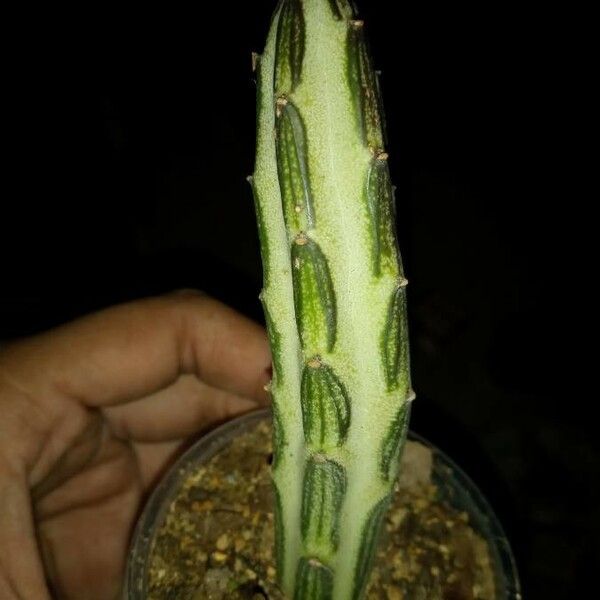
Often called the Pickle Plant or Candle Plant, Kleinia stapeliiformis is a master of architectural camouflage. Hailing from the arid regions of South Africa, this succulent looks less like a typical garden inhabitant and more like a collection of prehistoric candles or strange sea creatures. Its striking, pencil-like stems make it a prized "living sculpture" for modern interior enthusiasts.
🔍 How to Identify
- 🌵 The Stems: The most striking feature is the fleshy, cylindrical stems that grow upright. They are decorated with intricate, silver-grey and dark green patterns that look like scales or fish skin.
- 🍂 Vestigial Leaves: You will notice tiny, soft, pointed bumps along the stem. These are actually "vestigial" leaves—evolutionary leftovers that the plant has minimized to prevent water loss in the desert heat.
- 🖌️ The Flowers: In the late summer or autumn, the plant surprises growers with a dramatic "paintbrush" bloom. These are brilliant scarlet or fiery orange and sit atop long, slender stalks.
🏡 In Your Garden
- 🪴 Subterranean Secrets: This plant is a traveler! It spreads via underground rhizomes. Don’t be surprised if a new "pickle" suddenly sprouts several inches away from the original plant; it’s simply exploring its pot.
- 💧 The Rot Factor: Because the stems are designed to hold massive amounts of water, the plant is highly susceptible to root rot. It requires gritty, fast-draining cactus soil. If the stems begin to look shriveled, it’s thirsty, but if they feel "squishy," it has likely had too much to drink.
⚠️ Safety & Toxicity
- 🚫 Mildly Toxic: The sap of Kleinia species contains compounds that can be irritating to the skin and mucous membranes.
- 🐾 Pets & Children: It is considered toxic if ingested. Keep it on a high shelf away from curious cats or dogs, as consumption can lead to lethargy, drooling, or digestive distress.
✨ Fun Fact
The name stapeliiformis literally means "shaped like a Stapelia." This is a classic example of convergent evolution, where the plant has evolved to look almost identical to the Stapelia (Starfish Flower) genus to survive similar environments, despite not being closely related!

Detailed Care Instructions
To grow Kleinia stapeliiformis, also known as the pencil cactus or candlestick plant, follow these steps:
- Choose a suitable location: Kleinia stapeliiformis thrives in bright, indirect sunlight, so place it near a window that receives filtered light. It can also tolerate some direct sunlight, but too much can cause sunburn.
- Prepare the soil: Use a well-draining potting mix suitable for cacti and succulents. You can buy a commercial mix or create your own by mixing equal parts of coarse sand, perlite, and potting soil.
- Select a container: Choose a pot with drainage holes to prevent waterlogging. The size of the pot should be proportionate to the size of your plant, allowing some room for growth.
- Planting process: Carefully remove the Kleinia stapeliiformis plant from its nursery container and gently loosen the roots. Place it in the new pot, ensuring that the base of the stem is level with the soil surface. Fill the remaining space with the prepared potting mix, gently pressing it down.
- Watering: Kleinia stapeliiformis is a succulent, so it prefers dry conditions. Water the plant thoroughly when the top inch of soil feels dry. Allow excess water to drain out completely, as waterlogged soil can lead to root rot. During winter, reduce watering frequency.
- Fertilization: During the growing season (spring and summer), you can add a diluted, balanced liquid fertilizer to the soil once a month. However, excessive fertilization can cause leggy growth, so be cautious.
- Pruning: If your plant starts to become leggy or out of shape, you can trim it back to encourage bushier growth. Use clean, sharp scissors or pruning shears to remove the desired portions, and allow the cuttings to dry for a few days before planting them in well-draining soil.
- Repotting: Kleinia stapeliiformis requires repotting every 1-2 years to provide enough space for growth. Choose a slightly larger pot and follow the same planting process mentioned earlier.
- Protection from cold temperatures: This plant is not frost-tolerant, so if you live in a region with cold winters, it's best to keep it indoors or provide protection when temperatures drop below 50°F (10°C).
- Propagation: Kleinia stapeliiformis can be propagated through stem cuttings. Take healthy, non-flowering cuttings and allow them to dry for a couple of days. Then, place the cut end into well-draining soil or water until roots develop, which usually takes a few weeks.
With proper care and attention to its specific needs, Kleinia stapeliiformis can grow and thrive as a beautiful and unique addition to your plant collection.

Place in a bright room that is sun drenched almost all day. Or directly in a south-facing window.

One method to water this plant is to wait until the top inch of soil is completely dry before watering. When it is time to water, give the plant a good soak but do not let it sit in standing water. The soil should be moist but not waterlogged. It is important to make sure the water drains out of the pot completely to prevent root rot. Additionally, this plant prefers well-draining soil, so it may be helpful to mix perlite or sand into the soil to improve drainage.
To fertilize this plant, you should use a balanced, water-soluble fertilizer with an N-P-K ratio of 20-20-20. Dilute the fertilizer to half strength and apply it to the soil around the base of the plant every two weeks during the growing season. Be sure to water the plant thoroughly before and after fertilizing to prevent fertilizer burn. Avoid fertilizing during the winter months when the plant is dormant.
Kleinia Stapeliiformis plant prefers a well-draining soil mix. It is recommended to use a mixture of coarse sand, perlite, and peat moss. This type of soil mix will allow excess moisture to drain out quickly, preventing root rot and other soil-borne diseases. It is also essential to ensure that the soil is not too compacted, allowing the roots to breathe and receive adequate nutrients. Additionally, adding organic matter such as compost and worm castings can provide additional nutrients to the soil. Overall, the ideal soil for Kleinia Stapeliiformis plant should be a well-draining mixture of sand, perlite, and peat moss.
Propagating Kleinia Stapeliiformis plants can be done through stem cuttings. First, choose a healthy stem with no signs of damage or disease. Cut the stem with a sharp, clean knife or scissors, making sure the cutting is at least 4 inches long. Allow the cutting to dry and callus for a few days.
After the cutting has callused, plant it in a well-draining soil mix. Water the soil lightly and place the cutting in a bright spot in indirect sunlight. Keep the soil moist, but avoid overwatering.
Within a few weeks, the cutting should start to develop roots and new growth. Once the new growth is established, the plant can be transplanted into a larger pot with fresh soil.
Common pests of the pickle plant include Mealybugs, thrips. Make a habit of checking your pickle plant frequently for pests so that any infestations can be caught and managed early.








