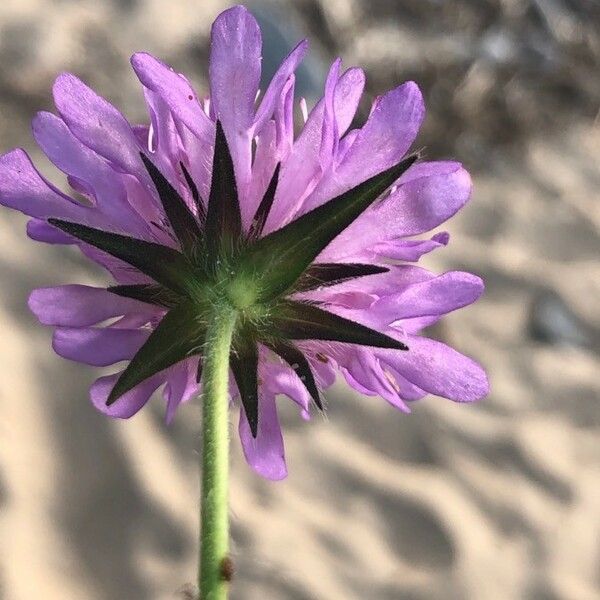
Plant Overview
Known affectionately as the Hill Scabious, this charming perennial looks like a collection of delicate lilac pincushions bobbing on the breeze. It is a staple of European hillsides and dry meadows, favored by gardeners who want to bring a touch of rustic, "cottage-core" beauty to their landscapes. Historically linked to ancient herbalism, it is now celebrated primarily as a champion for local biodiversity.
🔍 How to Identify
- 🌸 The Bloom: Small, individual florets are tightly packed into a flat-topped, circular flower head that resembles a pincushion, typically appearing in shades of soft lilac, mauve, or pale purple.
- 🌿 The Foliage: The leaves are highly variable; those at the base are often simple and oblong, while the leaves further up the stem become deeply lobed and feathery.
- ☁️ The Texture: Both the stems and leaves are covered in fine, stiff hairs, giving the plant a matte, slightly greyish-green appearance and a rough feel.
🏡 In Your Garden
- ⛰️ The Minimalist: This plant is a specialist in "tough" spots. It thrives in poor, alkaline, or limestone-heavy soils where other perennials might wilt. Because it develops a deep taproot, it is exceptionally drought-tolerant once it finds its footing.
- 🦋 Pollinator Runway: The flat shape of the flower provides the perfect landing platform for butterflies and hoverflies. It is often buzzing with activity from mid-summer through early autumn.
- ✂️ Care Nuance: While it loves the sun, it hates "wet feet." Ensure your soil drains quickly, as stagnant winter water can cause the crown to rot. Deadheading (removing spent blooms) will encourage the plant to produce a second flush of flowers.
⚠️ Safety & Toxicity
- ✅ Safe Status: Knautia collina is considered non-toxic to humans, cats, and dogs.
- 👐 Skin Sensitivity: Although not poisonous, the bristly hairs on the stems can be a bit scratchy. If you have very sensitive skin, you might want to wear gloves when pruning or dividing the plant to avoid mild mechanical irritation.
✨ Fun Fact
The name "Scabious" comes from the Latin word scabere (to scratch). In medieval medicine, the plant was widely used to treat "the itch"—a term used for various skin ailments, including scabies—because of its supposed healing properties.

Detailed Care Instructions

Place in a bright room that is sun drenched almost all day. Or directly in a south-facing window.

Some plants require more regular watering than others, which should be done every few days. It's critical to maintain the soil moist all of the time. The water requirements of the same plant placed in pots with varying sizes will differ. Because the water in the smaller pot evaporates faster than the water in the larger pot, it will require more watering. Regardless of pot size, the surface should constantly be maintained moist.








