Plant Overview
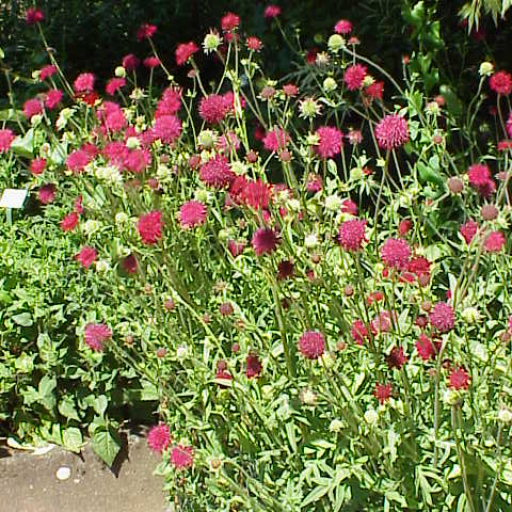
Known as the Macedonian Scabious, this perennial is a favorite for those seeking a touch of "wild elegance." Its deep, wine-red blossoms look like tiny velvet pincushions floating on invisible wires. Native to the Balkan Peninsula, it is the perfect choice for a cottage garden, bringing a romantic, airy feel to any landscape from early summer through the first frost.
🔍 How to Identify
- 🌸 The "Pincushion" Bloom: Small, rounded flower heads (about 1 inch wide) made up of dozens of tiny, dark crimson florets with protruding stamens that look like pins.
- 🌿 Dual-Style Foliage: It features a base of fuzzy, grey-green leaves that are deeply lobed, while the leaves higher up the stems are much narrower and simpler.
- 📏 Wiry Stature: The plant produces tall, slender, and branched stems that can reach up to 3 feet, giving the flowers a "see-through" quality in a garden bed.
🏡 In Your Garden
- 🦋 Pollinator Superstar: This plant is a nectar-rich magnet for bees and butterflies. If you plant it, expect a constant parade of winged visitors all summer long.
- 🌱 Resilient Roots: Once established, it is remarkably drought-tolerant thanks to its deep root system. It prefers well-draining soil and can actually flop over if the soil is too rich or fertilized.
- ✂️ Self-Seeding Habit: While it isn't invasive, it loves to "wander." It will happily drop seeds to create new plantlets nearby, though you can prevent this by deadheading (cutting back) the faded flowers.
⚠️ Safety & Toxicity
- ✅ Pet & Child Safe: Knautia macedonica is generally considered non-toxic to humans, dogs, and cats. It is a "worry-free" addition to family gardens.
- 🧤 Mild Irritation: Some gardeners find the fine, bristly hairs on the stems slightly irritating to sensitive skin; wearing gloves while pruning is a good idea.
✨ Fun Fact
Despite looking almost identical to the common Scabiosa (Pincushion Flower), you can tell the two apart by counting. Knautia florets have 4 lobes, while Scabiosa florets have 5! This tiny mathematical difference is the easiest way to impress your fellow plant lovers.

Detailed Care Instructions
To grow Knautia Macedonica, commonly known as Macedonian scabious or perennial scabious, follow these steps:
- Choose the right location: Knautia Macedonica thrives in full sun or partial shade. Select a location in your garden that receives at least 6-8 hours of sunlight per day.
- Prepare the soil: Ensure the soil is well-draining and rich in organic matter. Add compost or well-rotted manure to improve the soil structure. The soil pH should be neutral to slightly alkaline.
- Sow seeds or plant nursery-grown seedlings: You can grow Knautia Macedonica from seeds or purchase young plants from a nursery. If sowing seeds directly into the ground, do so in early spring or late summer. Sow the seeds on the soil surface and cover them lightly with a thin layer of soil. Keep the soil moist until germination occurs. If using seedlings, plant them at the same depth they were growing in their containers.
- Watering: Keep the soil consistently moist, especially during the plant's establishment period. Water deeply but avoid overwatering, as Knautia Macedonica is fairly drought-tolerant once established.
- Mulch: Add a layer of organic mulch around the plant to help retain moisture, suppress weeds, and regulate soil temperature.
- Pruning: Deadhead spent flowers regularly to promote continuous blooming and prevent self-seeding. Cut back the plant after the first flush of flowers to encourage reblooming.
- Fertilization: Knautia Macedonica does not require heavy feeding. However, you can provide a balanced, slow-release fertilizer during the early spring or mid-summer if desired.
- Pest and disease control: This plant is generally resistant to pests and diseases. However, keep an eye out for aphids and powdery mildew. Treat these issues with organic or chemical controls as necessary.
- Divide the plant: After a few years, Knautia Macedonica may become overcrowded. Dividing the plant every 3-4 years in early spring or fall will help rejuvenate it and maintain its vigor.
By following these steps, you should be able to successfully grow Knautia Macedonica in your garden. Enjoy its vibrant blooms and the benefits it brings to pollinators!

Place in a bright room that is sun drenched almost all day. Or directly in a south-facing window.

To water this particular plant, it is important to use good quality water. The soil should be evenly moist but not waterlogged. Watering should be done regularly and deeply to ensure that the plant receives sufficient hydration. It is best to water early in the morning or late in the evening to avoid evaporation during hot periods. It is important to monitor the soil moisture level and adjust watering frequency as needed based on the weather conditions. Overwatering can lead to root rot, so it is important to not let the plant sit in water. Additionally, it is important to avoid getting water on the leaves, as this can lead to fungal growth.
To fertilize Knautia Macedonica, apply a balanced fertilizer in early spring before the plant begins to actively grow. Use a slow-release fertilizer or a liquid fertilizer diluted to half strength every two weeks during the growing season. Be careful not to over-fertilize as it can lead to excessive vegetative growth and reduced flowering.
The ideal soil for the Knautia Macedonica plant should be a well-draining, loose, and crumbly loam soil with a pH level between 6.0 and 7.5. It should be enriched with organic matter, such as compost, to improve soil fertility and water retention. The texture should be slightly sandy to provide good drainage while retaining moisture for a sufficient period. The plant prefers soil that is moderately moist, but not overly wet or soggy. It should also be able to retain moisture but not be waterlogged to prevent root rot. The soil should also be nutrient-rich and supply the plant with balanced trace elements. It should not contain any chemical fertilizers or pesticides, as these can be harmful to the plant.
To propagate the plant species commonly known as Knautia Macedonica, one should identify healthy stems from the parent plant during its dormant phase and carefully dig around its root system to separate the stem and its attached roots. The stem should be cut just below a node, and any lower leaves should be removed. The stem should then be planted in a moistened mix of soil, compost, and sand and kept in a cool, shaded area for several weeks until new growth appears. As the new plant grows, it can be gradually exposed to more light and watered regularly. It may take several months for the plant to become mature enough for transplanting into its permanent setting.








