Plant Overview
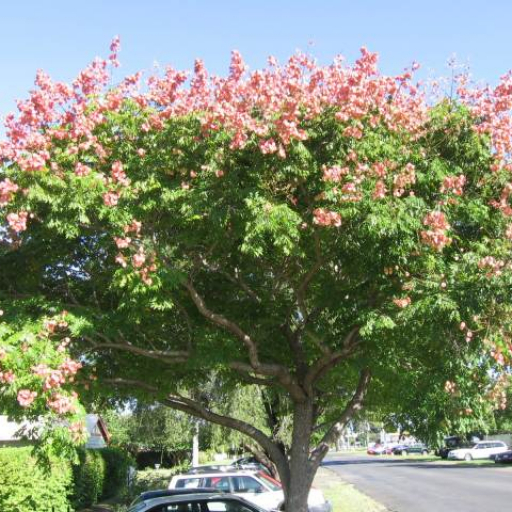
The Koelreuteria elegans, more affectionately known as the Flamegold Tree or Formosan Rain Tree, is a botanical showstopper that transforms throughout the seasons. Native to Taiwan, it is celebrated for its "second flowering"—a stunning display where its yellow blossoms give way to vibrant, papery seed pods that look like clusters of tiny Chinese lanterns. In many tropical and subtropical landscapes, it is the go-to tree for homeowners who want a dramatic splash of color without constant pampering.
🔍 How to Identify
- 🌿 Double-Feathered Leaves: Unlike many trees, its leaves are "bipinnate," meaning the leaflets are further divided into smaller leaflets, creating a delicate, lacy, and fern-like canopy.
- 🌼 Golden Panicles: In late summer, the tree erupts in large, upright clusters of tiny, star-shaped yellow flowers that often carpet the ground like "gold rain" when they fall.
- 🎈 Lantern Pods: The most iconic feature is the fruit—three-angled, papery capsules that turn from a creamy green to a brilliant rosy-pink or burnt orange as they mature.
🏡 In Your Garden
- ☀️ Sun Seeker: This tree is a sun-worshipper and needs a wide-open space to develop its characteristic umbrella-shaped crown. It is highly drought-tolerant once its roots are settled, making it perfect for "set it and forget it" landscaping.
- 🌱 The "Volunteer" Problem: While beautiful, the Flamegold is a prolific self-seeder. You may find "baby" trees popping up in your flower beds after a windy day, so be prepared for a little bit of weeding to keep its spread in check.
- 🧱 Root Awareness: It possesses a strong, deep root system. While this makes it wind-resistant during storms, it’s best to plant it away from sidewalks or pipes to avoid any long-term lifting or cracking.
⚠️ Safety & Toxicity
- 🐾 Mildly Toxic: The seeds and bark contain saponins. While not typically life-threatening, ingesting the "lanterns" or seeds can cause digestive upset (nausea or vomiting) in curious dogs, cats, or toddlers.
- 🧤 Skin Sensitivity: Some gardeners report mild skin irritation after pruning the branches. It is always a good idea to wear gloves when performing heavy maintenance.
✨ Fun Fact
The Flamegold is often called the "Bougainvillea Tree" because, from a distance, its papery pink seed pods look exactly like the colorful bracts of a blooming Bougainvillea vine!

Detailed Care Instructions
To grow a Koelreuteria Elegans plant, also known as the Chinese flame tree or Bougainvillea golden-rain tree, you can follow these steps:
- Choose a suitable location: Select a sunny spot in your garden or yard where the plant can receive full sun to partial shade. Ensure that the soil is well-drained.
- Prepare the soil: Koelreuteria Elegans prefer moderately fertile, loamy soil. Amend your soil with organic matter like compost or well-rotted manure to improve its fertility and drainage.
- Planting: Dig a hole roughly twice as wide and deep as the root ball of the plant. Place the plant in the hole, making sure the top of the root ball is level with or slightly above the soil surface. Backfill the hole with soil, gently firming it around the roots.
- Watering: After planting, water the tree thoroughly to settle the soil around the roots. For the first year, water regularly to establish a strong root system. Once established, Koelreuteria Elegans is relatively drought-tolerant and only requires occasional watering during prolonged dry periods.
- Mulching: Apply a layer of mulch around the base of the plant, leaving a gap near the trunk to prevent moisture accumulation. Mulching helps suppress weeds, retain soil moisture, and improve overall soil health.
- Pruning: Prune your Koelreuteria Elegans in late winter or early spring before new growth emerges. Remove any damaged, dead, or crowded branches. Additionally, you can shape the tree by selectively trimming or thinning branches as needed.
- Fertilizing: Apply a balanced, slow-release fertilizer in early spring before new growth begins. Follow the instructions on the fertilizer package for the appropriate application rate. Avoid over-fertilizing, as it can lead to weak growth or damage to the plant.
- Pests and diseases: Koelreuteria Elegans is generally resistant to pests and diseases. However, occasional issues with aphids, scale insects, or fungal diseases may arise. Monitor the plant regularly, and if necessary, treat any pest or disease problems promptly using appropriate organic or chemical controls.
Remember, different regions and climates may have specific growing conditions, so it's essential to adapt these instructions according to your local conditions. Consult local gardening resources or nurseries for more specific advice.

Place in a bright room that is sun drenched almost all day. Or directly in a south-facing window.

The best way to water this plant is to ensure that the soil around it is always moist but not too wet. It is important to avoid over-watering as this can lead to root rot. One method of checking the moisture level of the soil is to stick your finger into the soil up to about an inch deep. If the soil feels dry, it is time to water the plant. It is recommended to water the plant once a week during the growing season and less frequently during the winter months, when the plant is dormant. When watering, it is best to avoid getting water on the leaves and flowers, as this can cause damage or disease. It is also important to make sure that the plant has good drainage, as standing water can be detrimental to its health.
To fertilize the Koelreuteria Elegans plant, you can follow these instructions:
- Choose a balanced fertilizer with a ratio of nitrogen (N), phosphorus (P), and potassium (K), such as 10-10-10 or 20-20-20.
- Dilute the fertilizer according to the manufacturer's instructions. Usually, it is recommended to mix the fertilizer with water at a specific ratio.
- Apply the diluted fertilizer around the base of the plant, making sure to avoid direct contact with the stems or leaves.
- Use a watering can or a hose with a gentle spray attachment to evenly distribute the fertilizer solution around the plant's root zone.
- Water the plant thoroughly after applying the fertilizer to help it absorb the nutrients effectively.
- Repeat the fertilization process every 4-6 weeks during the growing season, typically from early spring to late summer.
- Monitor the plant's response to the fertilizer and adjust the frequency and amount as needed. Avoid over-fertilizing, as it can lead to nutrient burn or other issues.
Remember to always read and follow the instructions provided by the specific fertilizer brand you choose, as the application rates and guidelines may slightly vary.
Koelreuteria Elegans plant requires a well-draining soil with a pH level of slightly acidic to neutral. The ideal soil mixture for this plant should consist of equal parts of peat moss, perlite, and coarse sand. It is crucial to ensure that the soil does not become waterlogged, and a good drainage system is maintained to prevent root rot. The plant also prefers fertile soil with a good amount of organic matter, which can be provided by adding compost or well-rotted manure to the soil. Above all, it is essential to select a soil mixture appropriate for the plant's growth requirements to ensure optimal health and growth.
To propagate Koelreuteria Elegans plants, you can follow these steps:
- Start by collecting seeds from mature Koelreuteria Elegans plants. Look for seed pods that have turned brown and are fully ripe. This usually occurs in late summer or early fall.
- Extract the seeds from the seed pods and remove any debris or residue. You can do this by gently cracking the seed pods open and collecting the seeds inside.
- Once cleaned, soak the seeds in water for 24 hours. This helps soften the seed coat and improves germination rates.
- Fill a seed tray or small pots with well-draining potting soil. Make sure the soil is moist but not overly wet.
- Sow the Koelreuteria Elegans seeds on the soil surface. Press them lightly into the soil, but do not bury them too deep.
- Cover the seeds with a thin layer of additional soil or vermiculite to provide some insulation and keep them moist.
- Place the seed tray or pots in a warm, bright location with indirect sunlight. Avoid direct sun exposure as it may dry out the soil too quickly.
- Maintain consistent moisture levels by misting the soil whenever it starts to dry out. Do not overwater, as excessive moisture can lead to fungal growth or rot.
- Germination typically takes 2-4 weeks, but it may vary. Once the seedlings have emerged and developed their first set of true leaves, they can be transplanted into individual pots filled with well-draining soil.
- As the Koelreuteria Elegans plants grow, provide them with bright but indirect sunlight. Gradually acclimate them to outdoor conditions before transplanting them into the garden.
Remember to be patient, as propagating Koelreuteria Elegans from seeds may take some time to achieve successful results.








