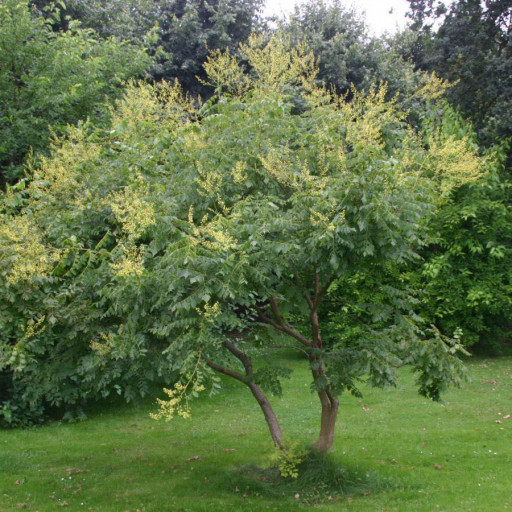
Plant Overview
Often called the "Pride of India" or the "Chinese Lantern Tree," Koelreuteria paniculata is a landscape showstopper that earns its name in midsummer. When its massive clusters of yellow blossoms begin to drop, they carpet the ground in a shimmering layer, looking exactly like a fallen "Golden Rain." It is a rare beauty that offers visual interest in every single season.
🔍 How to Identify
- 🍃 Feathery Foliage: The leaves are "pinnate" (feathery), featuring 7 to 15 leaflets with deeply lobed or "toothed" edges that give the tree an airy, delicate texture.
- 🌼 Golden Panicles: In July, the tree produces upright, 12-inch long clusters of tiny, vibrant yellow flowers, each marked with a small orange-red spot at the base.
- 🏮 Papery Lanterns: By late summer, the flowers turn into triangular, bladder-like seed pods that resemble miniature Chinese lanterns, changing from lime green to a toasted bronze.
🏡 In Your Garden
- 🏙️ Urban Resilience: This is a true "urban warrior." It is highly tolerant of air pollution, heat, wind, and even road salt, making it a favorite for city parkways and tough suburban spots.
- 🌱 Self-Seeding Spirit: While beautiful, be aware that it is a prolific seeder. In some warmer climates, it can become "weedy" as dozens of tiny saplings may sprout in your lawn or flower beds the following spring.
- ☀️ The Sun Requirement: To get that spectacular "rain" of flowers, it must be planted in full sun. In the shade, the tree becomes leggy and the flowering is sparse.
⚠️ Safety & Toxicity
- 🟢 General Safety: This tree is widely considered non-toxic to humans, cats, and dogs.
- 🥜 Seed Caution: Although not considered poisonous, the seeds contain saponins (natural soap-like compounds). While they aren't life-threatening, ingestion by curious pets or toddlers might cause mild stomach upset or nausea.
✨ Fun Fact
In ancient China, the Goldenrain Tree was one of five trees designated to be planted specifically on the tombs of high-ranking scholars and officials, symbolizing their "flowering" knowledge and status.

Detailed Care Instructions
| Color | Brown Truck And Branches With Green Leaves And Yellow Flowers |
| Soil Ph | 6.0-8.0 |
| Humidity | Normal |
| Lighting | Full Sun |
| Toxicity | Toxic |
| Soil Type | Light, Well-Draining, Sandy, Clay, Loamy, Shallow Rocky, Chalky |
| Bloom Time | Summer |
| Difficulty | Medium |
| Plant Type | Deciduous Tree |
| Hibernation | Cold Period |
| Mature Size | Up To 40 Feet Tall |
| Native Area | Eastern Asia |
| Sun Exposure | Full Sun To Partial Shade |
| Hardiness Zones | 5-9 |
To grow a Koelreuteria paniculata plant, also known as the goldenrain tree, here are a few steps you can follow:
- Climate and Location: Ensure that you live in a suitable climate for the plant. Koelreuteria paniculata grows well in USDA hardiness zones 5 to 9. It requires full sun to partial shade and thrives in well-draining soil.
- Soil Preparation: Choose a location with well-draining soil. Amend the soil with organic matter, such as compost, to improve fertility and drainage.
- Planting: Plant the tree in early spring or fall when the soil is workable. Dig a planting hole that is twice as wide as the root ball but just as deep. Place the tree in the hole, ensuring that the top of the root ball is level with or slightly above the soil surface. Backfill the hole with soil, firming it gently around the tree.
- Watering: After planting, provide a thorough watering to settle the soil around the roots. Water regularly during the first growing season to establish the tree. Afterward, the tree is relatively drought-tolerant and will only require occasional watering during dry periods.
- Pruning: Prune the plant in late winter or early spring before new growth begins. Remove any dead, damaged, or crossing branches to maintain a healthy structure. It is generally a low-maintenance tree and does not require extensive pruning.
- Fertilization: Apply a balanced, slow-release fertilizer in early spring to support healthy growth. Follow the instructions on the fertilizer packaging for application rates and frequency.
- Mulching: Apply a layer of organic mulch, such as wood chips or bark, around the base of the tree. Mulch helps to conserve moisture, suppress weeds, and insulate the soil.
- Pest and Disease Control: Koelreuteria paniculata is relatively pest and disease-resistant. However, monitor the tree for any signs of common issues such as aphids, scale insects, or fungal diseases. If necessary, utilize appropriate organic pest control measures.
Remember to regularly monitor the plant's growth and provide necessary care, such as watering during dry periods and protection from extreme weather conditions. With proper care, your Koelreuteria paniculata plant should thrive and add beauty to your garden.

Place in a bright room that is sun drenched almost all day. Or directly in a south-facing window.

To properly water this plant, you should check the soil moisture regularly. Before watering, feel the top layer of soil to see if it feels dry to the touch. If so, water the plant deeply, making sure the water reaches the root zone. Avoid letting the soil dry out completely as this can harm the plant. It is important not to overwater the plant, so make sure that the soil is well-draining and any excess water can drain away. Watering the plant in the morning is recommended, as this allows the leaves to dry off during the day and prevents fungal growth.
To fertilize this plant, use a balanced fertilizer with equal amounts of nitrogen, phosphorus, and potassium. Apply the fertilizer in the early spring before new growth appears, and again in mid-summer. Follow the instructions on the fertilizer package for the proper amount to use for the size of your plant. Spread the fertilizer evenly around the base of the plant and water thoroughly. Avoid getting the fertilizer on the leaves or stems, as it can burn the plant.
The appropriate soil for planting the Koelreuteria Paniculata plant should be well-draining and fertile. The soil composition should primarily consist of a mixture of sand, loam, and clay. A pH level of 6.0 to 7.5 is suitable for the plant's growth and development. It is advisable to amend the soil with organic matter like compost or leaf mold to improve soil structure and nutrient content. The plant prefers moist soil, so regular watering may be necessary, especially during the hot months of the year. However, planting the Koelreuteria Paniculata in water-logged or poorly drained soil is not recommended as it may lead to root rot. Additionally, the soil should be free from contaminants and pollutants that may harm or affect the plant's health and vigor.
To propagate a certain plant species, you need to start with planting its seeds. Once you have the seeds, soak them in warm water for about 24 hours to soften their outer layer. After soaking, place the seeds in a seedling tray that is filled with moist soil or compost, ensuring that they are spaced evenly and have a depth of around 1-2 cm in the soil.
Next, cover the seedling tray with a plastic wrap or a clear lid to create a warm and humid environment for the seeds to germinate. Regularly check on the tray to ensure that the soil remains moist and that the seeds are sprouting.
After the seeds have germinated and started growing, you can transplant them into individual pots or into your desired planting location.
Another way to propagate this plant is through stem cuttings. Select a healthy stem with no flowers or buds and make a diagonal cut below a node. Remove the leaves from the bottom half of the stem and dip the cut end into rooting hormone powder.
Next, plant the cutting in a pot with moist soil or compost and cover it with a plastic wrap or clear lid to create a similar warm and humid environment as with the seeds. Keep the soil moist and wait until roots start to grow.
Once roots have developed and the plant is well established, you can transplant it into a larger pot or into your desired planting location.
Common pests of the goldenrain tree include Spider mites, aphids. Make a habit of checking your goldenrain tree frequently for pests so that any infestations can be caught and managed early.








