Plant Overview
Often called Weyrich’s Knotweed, this architectural beauty hails from the misty slopes of Japan and the Sakhalin Islands. While it shares a family name with some of the world’s most notorious invasive species, this "gentle giant" is a much better neighbor, offering lush, tropical-looking foliage and creamy white plumes that brighten up damp corners of the garden. It is a favorite for those looking to add height and a sense of wild, naturalistic drama to their landscape.
🔍 How to Identify
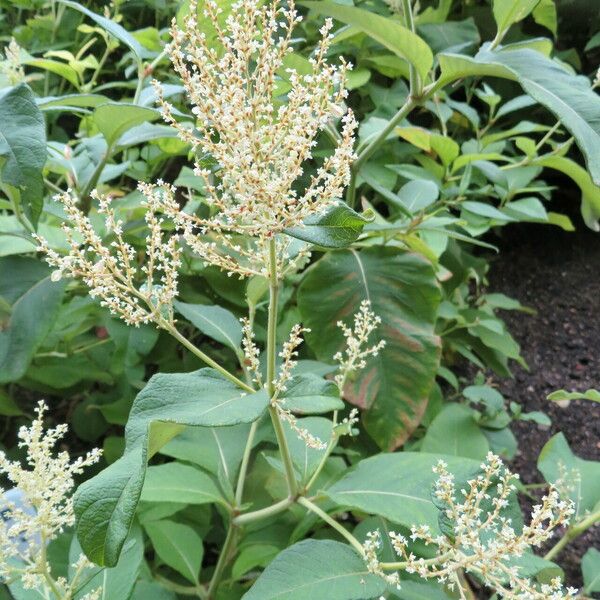
- 🍃 Broad Foliage: The leaves are impressively large and heart-shaped, featuring a soft, slightly fuzzy underside that feels like fine felt to the touch.
- ☁️ Cloud-like Blooms: In late summer, the plant is crowned with airy, branched clusters (panicles) of tiny, star-shaped, cream-colored flowers.
- 📏 Robust Stature: It grows in a dense, upright clump, often reaching 3 to 5 feet in height, giving it a shrub-like appearance even though it is a perennial herb.
🏡 In Your Garden
- 💧 Moisture Lover: This plant is a natural fit for "boggy" spots or rain gardens; it thrives in soil that stays consistently damp and will signal its thirst by wilting quickly if left in parched earth.
- 🌱 Non-Invasive Habit: Unlike its infamous cousin, the Japanese Knotweed, Koenigia weyrichii is a clumping plant rather than a runner. It stays where you plant it, expanding slowly outward rather than popping up through your floorboards.
⚠️ Safety & Toxicity
- ✅ Generally Non-Toxic: This plant is not known to be poisonous to humans, cats, or dogs.
- 👅 Oxalic Acid: Like its relatives, rhubarb and sorrel, the plant contains small amounts of oxalic acid. While a nibble won't hurt, it should not be consumed in large quantities as it can cause a bit of a tummy ache or interfere with calcium absorption.
✨ Fun Fact
Despite the "knotweed" stigma, Koenigia weyrichii is so well-behaved and beautiful that it has earned the prestigious Award of Garden Merit from the Royal Horticultural Society!

Detailed Care Instructions







