Plant Overview
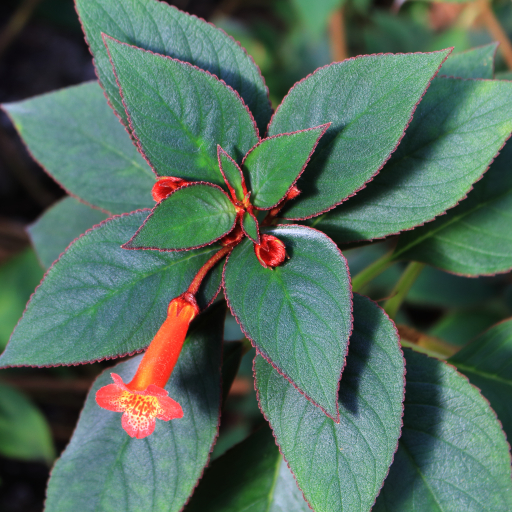
Known as the "Velvet Kohleria," Kohleria hirsuta is a tropical showstopper from the misty mountains of South America. It is beloved for its incredibly soft, tactile texture that covers every inch of the plant, from its sturdy stems to its spotted, bell-shaped blooms. If you are looking for a plant that looks and feels like it’s wearing a tiny, vibrant sweater, this member of the African Violet family is a perfect match.
🔍 How to Identify
- 🌿 Velvety Foliage: Large, heart-shaped leaves covered in fine, dense hairs that catch the light, often giving the plant a silvery or reddish shimmer.
- 🔔 Speckled Flowers: Bright orange-red, tubular blossoms that hang like bells. The "throat" of the flower is usually a contrasting yellow, heavily decorated with dark red spots to guide pollinators.
- 🧣 Hirsute Stems: True to its name (hirsuta means "hairy"), the stems are visibly fuzzy and thick, often appearing in shades of deep green or burgundy.
🏡 In Your Garden
- 💧 The "No-Wet" Rule: While this plant craves high humidity, you should avoid misting the leaves directly. Water trapped in the dense hairs can lead to unsightly brown "burn" spots or fungal rot.
- 🥔 Caterpillar Rhizomes: Below the soil, the plant grows from scaly, white rhizomes that look remarkably like fuzzy caterpillars. If the plant goes dormant in the winter, keep these rhizomes dry, and they will sprout fresh new stems in the spring.
⚠️ Safety & Toxicity
- ✅ Safe Status: Kohleria hirsuta is generally considered non-toxic to humans and common household pets like cats and dogs.
- 🧤 Mild Irritation: While not poisonous, the fine hairs (trichomes) on the leaves can occasionally cause a mild "itchy" sensation for people with very sensitive skin if handled frequently.
✨ Fun Fact
The underground rhizomes are so resilient that they act as a biological "reset button." In the wild, if the plant is damaged by weather or animals, it can completely regenerate from just a tiny segment of one of those scaly, caterpillar-like roots!

Detailed Care Instructions
Some basic steps to grow a Kohleria Hirsuta plant include:
- Choose a suitable location: Kohleria Hirsuta prefers medium to bright indirect light. Make sure the plant is not exposed to direct sunlight to avoid leaf burn.
- Select the right container: Use a well-draining pot with drainage holes to prevent waterlogging. Ensure that the pot is large enough to accommodate the plant's roots comfortably.
- Provide the right soil: Use a well-draining, loose, and fertile soil mix. A mixture of peat moss, perlite, and vermiculite or coco coir works well for Kohleria Hirsuta.
- Watering: Keep the soil evenly moist but not soggy. Water the plant when the top inch of soil feels dry. Avoid overwatering, as it can lead to root rot.
- Humidity: Kohleria Hirsuta prefers high humidity levels. You can increase humidity by placing the plant on a tray filled with water and pebbles or using a humidifier nearby.
- Temperature: These plants thrive in a temperature range of 60-75°F (16-24°C). Protect the plant from cold drafts.
- Fertilizer: Feed the Kohleria Hirsuta plant every 2-3 weeks during the growing season (spring and summer) with a balanced water-soluble fertilizer. Dilute the fertilizer to half strength to avoid overfertilization.
- Pruning: Regularly remove any dead or yellowing leaves to keep the plant healthy. Pinch the tips of the plant to encourage bushier growth.
- Propagation: Kohleria Hirsuta can be propagated through stem cuttings. Take 3-4 inch cuttings from healthy stems, remove the lower leaves, and place the cuttings in a well-draining rooting medium. Keep the cuttings in a warm and humid environment until roots develop.
- Pest control: Monitor the plant for common pests like aphids, spider mites, and mealybugs. Treat any infestations promptly with natural or chemical insecticides.
Remember to regularly observe and care for your Kohleria Hirsuta plant, adjusting watering and other conditions as needed.

Place in a window with dappled sun or a spot in the middle of a room. Or directly in a window facing west or east.

To provide proper moisture to this plant, you can lightly water the soil regularly without allowing it to become too soggy. It is important to ensure that the soil is well-draining and not too compacted to allow excess water to flow away easily. You can check the moisture level by touching the soil surface with your finger - if it feels dry to the touch, it's time to water. It is recommended that you use a watering can with a narrow spout to control the water flow, and you should avoid getting water on the leaves as it can cause damage or disease. Additionally, it is important to avoid watering too much during the plant's dormant season as it may lead to problems with root rot.
To fertilize this plant, use a nitrogen-rich fertilizer every two weeks during the growing season. Dilute the fertilizer solution to half strength to prevent burning the foliage. You can also use a slow-release fertilizer during planting in the spring. Be sure to follow the manufacturer's instructions and do not over-fertilize, as this can harm the plant. Water the plant before and after applying fertilizer to prevent stress on the roots.
Kohleria Hirsuta plant requires a well-draining, fertile soil that is rich in organic matter. The ideal pH level for this plant is slightly on the acidic side, between 5.5 and 6.5. A high-quality commercial potting mix with added perlite, vermiculite, or coarse sand can also be used to meet the plant's soil requirements. Avoid using heavy soils that hold water as they can cause root rot or promote the growth of harmful microorganisms. Furthermore, it is recommended to amend the soil with organic fertilizers to provide the plant with essential nutrients such as nitrogen, phosphorus, and potassium for healthy growth.
To propagate this particular plant, take stem cuttings from the parent plant during the spring or summer months. Choose a healthy stem that is not too woody and has several leaves attached to it. Using a sharp, clean pair of scissors, cut the stem at a 45-degree angle just below a leaf node. Remove the lower leaves from the stem, leaving only a few at the top. Dip the cutting in rooting hormone powder to encourage root growth and insert it into a pot filled with well-draining soil. Water the cutting thoroughly and keep it in a warm, humid environment while it begins to establish roots. After a few weeks, new growth should appear, indicating that rooting has taken place. Gradually acclimate the cutting to more sunlight and less humidity, and continue to care for it as you would a mature Kohleria Hirsuta plant.
Common pests of the wooly kohleria include Spider mites, aphids, thrips. Make a habit of checking your wooly kohleria frequently for pests so that any infestations can be caught and managed early.








