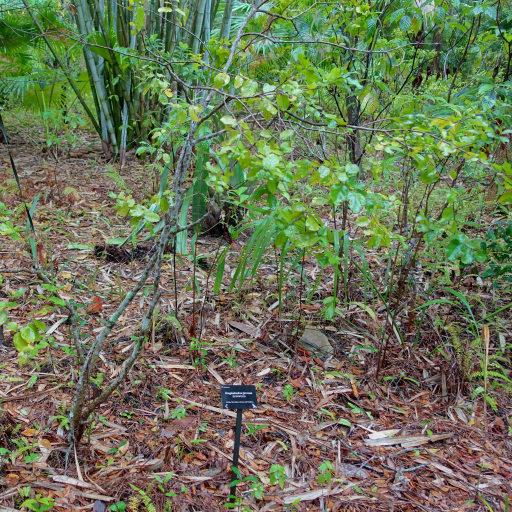
Plant Overview
Known as the Black Ironwood or Leadwood, Krugiodendron ferreum is a Caribbean native famous for being one of the heaviest and densest woods in the entire world. In its native coastal hammocks, it stands as a symbol of endurance, growing painstakingly slowly to create timber so heavy it actually sinks in water. It is a favorite among high-end woodworkers and those seeking a permanent, low-maintenance evergreen for tropical landscapes.
🔍 How to Identify
- 🍃 The Foliage: Look for small, oval-shaped leaves that are a deep, glossy green. They often have a tiny notch at the very tip and are arranged oppositely along the stems.
- 🪵 The Bark: On young trees, the bark is smooth and gray, but as it matures, it develops a rough, shredded appearance with deep furrows that look like aged metal.
- 🍇 The Fruit: In late summer, it produces small, round berries. They start green, turn reddish, and eventually ripen into a dark purple or black color, looking much like miniature plums.
🏡 In Your Garden
- 🪨 The Limestone Lover: This plant is a specialist in alkaline environments. It thrives in rocky, limestone-heavy soils where other plants might struggle with nutrient uptake.
- ⏳ Patience is Key: Because it focuses its energy on creating incredibly dense wood, its growth rate is very slow. It is an excellent choice for a "permanent" hedge or a specimen tree that won't outgrow its space for decades.
- ☀️ Coastal Warrior: It is highly resistant to salt spray and drought once established, making it a "bulletproof" choice for coastal gardeners who want a lush look without the high water bill.
⚠️ Safety & Toxicity
- ✅ Generally Safe: The Black Ironwood is not considered toxic to humans or common household pets.
- 🐦 Wildlife Friendly: The small fruits are a significant food source for tropical birds and small mammals, who handle the seeds without issue.
- 🦷 Mechanical Hazard: While not chemically toxic, the wood is so incredibly hard that it can be a hazard for pets that like to chew on fallen branches; it is much tougher than standard "stick" wood.
✨ Fun Fact
The wood of the Black Ironwood has a specific gravity of up to 1.42. For context, water has a specific gravity of 1.0. This means if you toss a log of Black Ironwood into a lake, it will plummet to the bottom like a stone!

Detailed Care Instructions
To grow a Krugiodendron Ferreum plant, also known as black ironwood, you can follow these steps:
- Climate and Soil Conditions: Krugiodendron Ferreum plants are native to the Florida Keys and the Bahamas, so they thrive in tropical and subtropical climates. Ensure that your planting location receives plenty of sunlight and has well-drained soil.
- Plant Selection: Obtain a healthy Krugiodendron Ferreum sapling from a reputable nursery or consider germinating seeds. Choose a plant that is disease-free and already established.
- Digging the Hole: Dig a hole that is twice as wide and the same depth as the root ball of the sapling. This will allow the roots to spread out easily.
- Soil Preparation: Mix organic matter, such as compost or well-rotted manure, with the excavated soil. This enriches the soil with nutrients and enhances its drainage capabilities.
- Planting: Gently place the Krugiodendron Ferreum sapling into the hole, ensuring that it is level with or slightly above the surrounding soil. Backfill the hole with the soil mixture, gently firming it around the roots.
- Watering: Thoroughly water the sapling immediately after planting. Afterward, keep the soil consistently moist but not waterlogged. Adjust watering frequency based on weather conditions.
- Mulching: Spread a layer of organic mulch, such as wood chips or shredded leaves, around the base of the young tree. Mulch helps retain moisture, suppresses weeds, and insulates the soil.
- Pruning: Regularly inspect your Krugiodendron Ferreum plant for dead, damaged, or overgrown branches. Prune these as necessary to maintain a healthy and aesthetically pleasing shape.
- Fertilization: Krugiodendron Ferreum plants usually do not require heavy fertilization. However, if you observe slow growth or a lack of vibrant foliage, you can apply a balanced slow-release fertilizer during the growing season.
- Protection: Protect the tree from extreme cold or frost, as it is sensitive to freezing temperatures. Consider covering it during cold snaps or providing a windbreak.
- Monitoring and Care: Regularly monitor the plant for pests and diseases such as root rot or leaf spot. Take prompt action if any issues are identified.
- Patience: Growing a Krugiodendron Ferreum plant takes time and patience. It can be slow-growing initially, but with proper care and favorable conditions, it will gradually thrive and adapt to its surroundings.
Remember that every plant is unique, so closely observe your tree's health and adjust care practices accordingly.

Place in a bright room that is sun drenched almost all day. Or directly in a south-facing window.

To properly water this plant, you should first assess its soil moisture levels by sticking your finger about an inch into the soil. If it feels dry, it's time to water the plant. When watering, use a watering can or hose to gently saturate the soil until the water begins to drain out of the drainage holes at the bottom of the container. Avoid overwatering, as this can cause root rot and other issues. Allow the soil to dry out slightly between waterings, but don't let it completely dry out. The frequency of watering will depend on a variety of factors, including the size of the plant, the size of its container, the amount of light it receives and the temperature of its environment. As a general guideline, aim to water once a week or every 10 days.
To fertilize this plant, use a balanced fertilizer with equal amounts of nitrogen, phosphorus, and potassium. Apply the fertilizer in the early spring, summer and fall. Mix the fertilizer with water and apply it evenly to the soil around the plant's root zone. Water the plant after fertilizing. Be careful not to over-fertilize as this can damage the roots of the plant. Avoid fertilizing during the winter months when the plant is dormant.
Krugiodendron ferreum is a plant that prefers well-draining soil with a pH range of 6.0-7.5. The ideal soil type for this plant is sandy loam or loamy soil with a high organic matter content. It is important to ensure that the soil remains moist but not waterlogged, as this can lead to root rot and other issues. Adding organic matter such as compost or leaf mold to the soil can help improve its texture and fertility. Avoid using heavy clay soils or soils with high salinity levels, as these can be detrimental to the growth and health of the plant. Regular soil testing can help to ensure that the soil pH and nutrient levels remain optimal for the plant.
Propagation of this plant can be accomplished through a variety of methods, including both sexual and asexual propagation. Sexual propagation involves collecting the seeds from mature plants and planting them in well-draining soil. It's important to note that this plant may take several years to reach maturity.
Asexual propagation can be achieved through cuttings as well, by either rooting stem cuttings in water or soil, or by air layering. Stem cuttings can be taken from healthy, established plants and soaked in rooting hormone to encourage root growth. Air layering involves wounding a section of the stem and encasing it in soil or moss until roots develop. The new plant can then be removed from the parent plant and planted in its own container or in the ground.
Overall, propagation of this plant takes patience and attention to detail, but can be a rewarding way to grow and share this unique species.








