Plant Overview
Often called the Golden Chain Tree or "Golden Rain," Laburnum anagyroides is a showstopper that seems to drip with molten sunlight during late spring. Native to the mountains of Central and Southern Europe, it has been a centerpiece of royal gardens for centuries, prized for its dramatic, weeping clusters of yellow blooms that create a fairy-tale atmosphere.
🔍 How to Identify
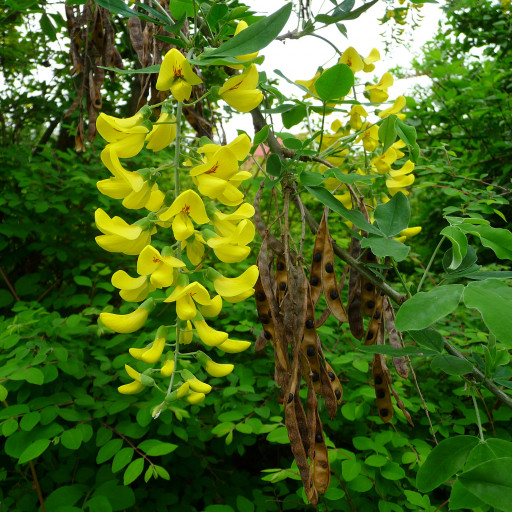
- 🌼 The Flowers: Its most iconic feature is the pendulous, hanging clusters (racemes) of bright yellow, pea-like flowers that can reach up to 10 inches in length.
- ☘️ The Foliage: The leaves are "trifoliate," meaning they are divided into three oval leaflets, closely resembling the look of a large clover or watercress leaf.
- 🌱 The Seed Pods: After the flowers fade, they are replaced by flat, green pods that eventually turn brown and papery, containing small black seeds that look deceptively like garden peas.
🏡 In Your Garden
- 🧊 Cooler Climates: This tree thrives in temperate regions; it actually struggles in sweltering heat and high humidity, which can lead to "leaf scorch" or a lack of blooms.
- 🪴 Pruning & Structure: Because of its flexible branches, many gardeners train it over pergolas or arches to create a "golden tunnel" effect, but be careful—it has a shallow root system and dislikes being moved once established.
⚠️ Safety & Toxicity
- 🚫 High Toxicity: WARNING. Every part of the Golden Chain Tree is highly poisonous if ingested, containing the alkaloid cytisine.
- 🐾 Pets & Children: The seed pods are particularly dangerous because they look like edible legumes. Ingestion can cause severe vomiting, tremors, and in extreme cases, respiratory failure. Always wear gloves when pruning to avoid skin irritation.
✨ Fun Fact
- 📚 Literary Inspiration: J.R.R. Tolkien, the author of The Lord of the Rings, was reportedly inspired by the Laburnum tree in his garden when creating Laurelin, one of the Two Trees of Valinor that emitted golden light.

Detailed Care Instructions
| Humidity | Normal |
| Lighting | Full Sun |
| Toxicity | Poisonous |
| Difficulty | Medium |
| Hibernation | Cold Period |
| Hardiness Zones | 5 - 7 |
To grow Laburnum Anagyroides, also known as golden chain tree, follow these steps:
- Choose the right location: Laburnum plants prefer a sunny spot with well-draining soil. Make sure the soil is fertile and not excessively alkaline.
- Planting: If you are starting from seeds, soak them in water for 24 hours prior to planting. Sow the seeds in pots or directly in the ground during spring. The planting hole should be twice as wide and equally deep as the root ball. Gently backfill the hole with soil and water thoroughly.
- Watering: Keep the soil consistently moist but avoid overwatering. Deep watering once a week during dry spells is usually sufficient.
- Mulching: Apply a layer of organic mulch around the base of the plant to help retain moisture, suppress weeds, and insulate the roots.
- Pruning: Laburnum Anagyroides does not require heavy pruning, but you can shape the plant in its dormant season (late winter or early spring). Remove any dead, damaged, or crossing branches to maintain an open and balanced framework.
- Fertilization: Fertilize the Laburnum plant once a year in early spring with a balanced, slow-release fertilizer. Follow the instructions on the packaging for the dosage.
- Pests and diseases: Laburnum trees are generally resistant to most pests and diseases. However, aphids and powdery mildew can sometimes be a problem. Regularly inspect the plant for any signs of infestation and treat accordingly using organic insecticides or fungicides.
- Support: Laburnum Anagyroides has weak wood and delicate branches. It is beneficial to provide support, such as staking or tying, to prevent damage from strong winds or heavy clusters of flowers.
Remember to always refer to specific care instructions for your particular location and climate, as well as any guidelines provided with the plant or seeds.

Place in a window with dappled sun or a spot in the middle of a room. Or directly in a window facing west or east.

The Laburnum Anagyroides plant requires regular watering, especially during the hot summer months. It should be watered deeply, but infrequently, to allow the soil to dry out slightly between waterings. When watering, it is important to avoid getting the foliage wet, as this can lead to fungal diseases. One effective way to water the plant is to use a soaker hose or drip irrigation system, which allows water to be delivered directly to the roots without getting the foliage wet. Alternatively, a watering can or hose with a gentle spray attachment can be used to water the base of the plant. It is important not to overwater the plant, as this can lead to root rot and other problems. As with all plants, it is important to monitor the moisture level of the soil and adjust watering accordingly.
To fertilize this plant, you should first ensure that it is properly watered and the soil is moist. Then, apply a slow-release granular fertilizer to the soil around the base of the plant. Be sure to follow the dosage instructions on the fertilizer package and avoid over-fertilizing, as this can harm the plant. Finally, water the plant again to ensure that the fertilizer is properly distributed into the soil.
The Laburnum Anagyroides plant prefers well-drained soil that is slightly acidic. The ideal soil pH range for this plant is between 5.5 and 6.5. The soil should also be fertile and rich in organic matter. It is recommended to mix in compost or peat moss into the soil before planting to increase its fertility. This plant is sensitive to waterlogging and does not tolerate heavy, clay soils. Therefore, it is important to ensure the soil has good drainage to avoid waterlogging. Additionally, adding sand or gravel to the soil can improve drainage. Overall, the Laburnum Anagyroides plant requires a soil that is rich in nutrients, well-drained, and slightly acidic.
To propagate this plant, select healthy and vigorous shoots from the parent plant. Using a sharp and clean knife, make a clean cut about 10 cm long below the node where the leaves are attached. Remove the lower leaves from the cutting, leaving two or three leaves at the top. Dip the cut end into rooting hormone powder, and plant the cutting in moist, well-drained propagation medium such as peat moss or vermiculite. Cover the cutting with a plastic bag or dome to retain moisture and create a greenhouse effect. Place the cutting in a warm spot with bright, indirect light. Keep the soil moist and mist the cutting frequently. After a few weeks, check for root formation by gently tugging on the cutting. If the cutting resists, roots have formed and it can be potted into a larger container with soil. Wait until new growth appears, then gradually expose the plant to more light and less humidity.
Common pests of the golden rain tree include Spider mites. Make a habit of checking your golden rain tree frequently for pests so that any infestations can be caught and managed early.








