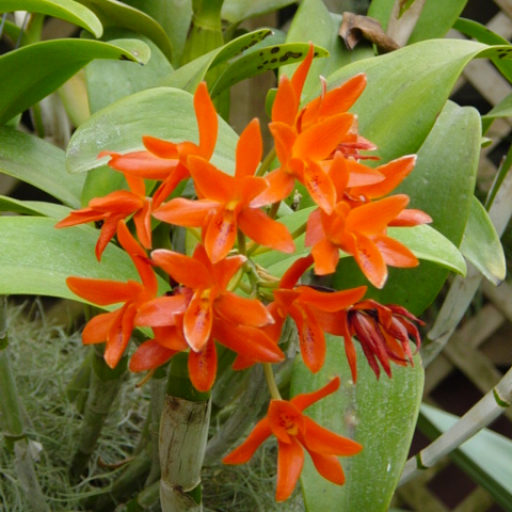
Plant Overview
Commonly known as the Golden Laelia, this orchid is a sun-drenched treasure hailing from the dry, deciduous forests of western Mexico. Often celebrated as one of the most radiant species in its genus, it acts like a burst of captured sunlight on a branch. While it may look delicate, it is a hardy survivor designed to thrive in seasonal climates where many other orchids would falter.
🔍 How to Identify
- ☀️ The Flowers: Produces stunning, star-shaped blooms ranging from pale lemon to a deep, burnished gold. The lip often features intricate, reddish-brown veins or a subtle orange flush.
- 🍐 The Pseudobulbs: Look for plump, egg-shaped or pear-shaped green bulbs that store water. These are usually topped with one or two stiff, leathery leaves.
- 📏 Growth Habit: It is a compact epiphyte, meaning it naturally grows on trees rather than in soil, with a sprawling or clumping rhythm.
🏡 In Your Garden
- 🌵 The Seasonal Sleep: Unlike tropical rainforest orchids, Laelia aurea demands a "tough love" approach. It requires a significant dry rest period during the winter to mimic its Mexican home; if you water it too much during its dormancy, it may refuse to bloom or even rot.
- 🌤️ Light Hunger: This plant is a sun-worshiper. It needs very bright, filtered light—much more than your average Moth Orchid (Phalaenopsis)—to trigger those golden flowers.
- 💨 Airflow is Key: Because it grows on tree bark in the wild, it hates "wet feet." Using a very loose bark mix or mounting it directly onto a piece of cork or wood allows the roots to breathe and dry quickly.
⚠️ Safety & Toxicity
- ✅ Safe for All: Laelia aurea is generally considered non-toxic to cats, dogs, and humans. It is a "friendly" orchid for households with curious nibblers.
- 🧤 Handling: While not poisonous, the sap of some orchids can occasionally cause mild skin irritation for those with sensitive skin. It’s always best to wash your hands after pruning or repotting.
✨ Fun Fact
The name aurea is Latin for "golden," but in its native Mexican habitat, this orchid is a master of timing. It waits until the hottest, driest months to burst into bloom, providing a vital splash of color and nectar when much of the surrounding forest has gone brown and dormant.

Detailed Care Instructions
To grow a Laelia Aurea plant, you can follow these steps:
- Obtain a healthy Laelia Aurea plant: You can purchase a Laelia Aurea plant from a reputable nursery or orchid specialist. Make sure the plant is in good condition, with healthy leaves and roots.
- Choose a suitable pot: Laelia Aurea plants prefer small pots with good drainage. Select a pot that is just slightly larger than the plant's root system. Clay pots are preferred as they allow for better airflow and water evaporation.
- Select a growing medium: Laelia Aurea plants are epiphytes, meaning they grow on trees and rocks in their natural habitat. They require a well-draining growing medium such as specialized orchid mix, which consists of bark, perlite, and sphagnum moss.
- Repot the plant: Carefully remove the plant from its current pot and gently untangle any tightly wound roots. Place the plant in the new pot, ensuring that the roots are spread out. Fill in the gaps with the orchid mix, making sure not to cover the base of the leaves.
- Provide the right environment: Laelia Aurea plants thrive in bright, indirect light. Place your plant near a south or east-facing window, but avoid direct sunlight as it can scorch the leaves. Maintain a temperature range between 60-80°F (15-27°C), avoiding sudden temperature drops.
- Watering and humidity: Water the plant thoroughly, allowing excess water to drain from the bottom of the pot. Avoid letting the plant sit in standing water, as this can cause root rot. Laelia Aureas prefer moderate humidity, so consider using a humidifier or placing a tray of water nearby to increase humidity levels.
- Fertilize regularly: Use a balanced orchid fertilizer diluted to half strength. Apply the fertilizer to the plant once a month during the growing season (spring to fall), and reduce or stop fertilizing during the winter months.
- Pruning: Remove any dead or yellowing leaves by cutting them at the base. Trim off any dead or damaged roots.
- Repotting: Repot the plant every two to three years, or when you notice the roots filling the pot and becoming overcrowded.
- Be patient: Laelia Aurea plants grow slowly, so don't expect rapid growth. With proper care and patience, your plant will grow and potentially produce beautiful flowers.
Remember, orchids require a specific set of care instructions, so it's crucial to research and understand the specific needs of your Laelia Aurea plant to ensure successful growth.
The Laelia Aurea plant should be watered thoroughly when the top inch of soil is dry to the touch. Use room temperature or slightly warm water and pour it slowly onto the soil around the plant. Avoid getting water on the foliage or in the crown of the plant as it can lead to rot. Allow the excess water to drain out of the pot to prevent waterlogging. The frequency of watering will depend on environmental factors such as light, humidity, and temperature, so monitor the soil moisture regularly. During the winter months, reduce the frequency of watering to reflect the plant's reduced growth rate.
To fertilize this plant, use a balanced fertilizer with equal levels of nitrogen, phosphorus, and potassium. Apply the fertilizer every two weeks during the active growing season, which is usually from spring to early fall. Dilute the fertilizer to half strength and apply it to damp soil, making sure not to get the fertilizer on the leaves or pseudobulbs. During the dormant season, which is typically in the winter, reduce fertilizing to once a month or stop completely.
Laelia Aurea plant require loose and well-drained soil for optimal growth. It is recommended to use a mix of medium-grade bark, coarse sand, and sphagnum moss in a ratio of 2:1:1. The soil pH should be slightly acidic to neutral, ranging from 6.0 to 7.0. The soil should also be able to retain moisture while still allowing airflow to reach the roots. Adding perlite or vermiculite to the soil mix can help improve drainage and aeration. It is important to avoid using soil mixes that are too heavy or retain too much moisture as this can lead to root rot and other soil-borne diseases.
To propagate this plant, you will need to select a healthy and matured plant that has strong roots and a good stem. You will need to use a clean and sharp cutting tool to make a stem cutting from the selected plant. The cutting should be about 4-6 inches long and should have at least two to three healthy leaves.
Once the cutting has been made, you will need to prepare a suitable potting mix that is well-draining and nutrient-rich. You can use a mixture of peat moss and perlite in equal proportions as the potting mix. Then, plant the cuttings in the prepared potting mix and water them thoroughly.
After planting, it is important to keep the cuttings moist and in a warm and humid environment. You can achieve this by covering the cuttings with a layer of plastic wrap or placing them in a clear plastic bag. This will create a humid microclimate that will help the cuttings to root faster.
It usually takes about 4-6 weeks for the cuttings to take root and start growing new leaves. Once the cuttings have rooted and started to establish, you can gradually remove the plastic wrap or bag and expose them to more light and air. You should also start fertilizing them with a balanced fertilizer to promote healthy growth.
Overall, propagating this plant through stem cuttings is an easy and rewarding process that can be done successfully with the right tools, technique, and care.








