Plant Overview
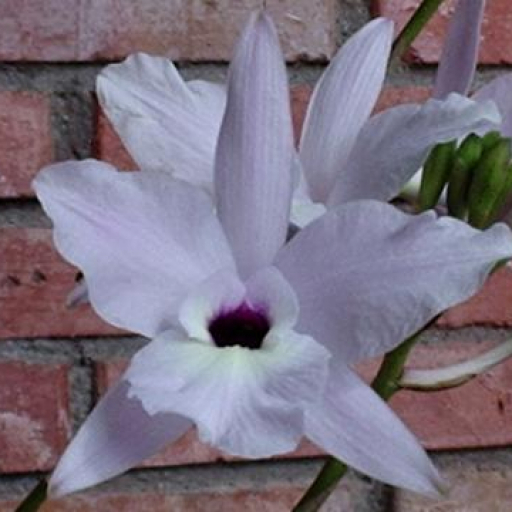
Known affectionately as the "Blushing Laelia" or the "Rosy Laelia," this stunning orchid is a sun-loving gem from the dry forests of Central America and Mexico. Unlike many orchids that hide in the deep shade of the jungle, this species thrives in bright light, even clinging to the tops of deciduous trees. It is famous for its elegant, long flower spikes that dance in the breeze, topped with delicate blooms that feature a mysterious, dark "eye" at their center.
🔍 How to Identify
- 🥞 Pancake Pseudobulbs: The base of the plant consists of distinctively flattened, round, or oval pseudobulbs that look like little green buttons or pancakes pressed against the growing surface.
- 🌸 The "Dark Eye": The flowers range from paper-white to pale rose-pink, but they are most easily identified by the deep maroon or purple blotch deep inside the throat of the lip.
- 📏 Tall Flower Spikes: Even though the plant itself is relatively small, it produces impressively long, slender stems (inflorescences) that can reach up to 20 inches, holding a cluster of fragrant flowers at the very tip.
🏡 In Your Garden
- ☀️ Light Lover: Because it naturally grows in dry, open forests, this orchid craves much more light than your average Phalaenopsis. It often develops a slight reddish tint on its leaves when it's getting the perfect amount of "tan" from the sun.
- 💧 The Dry Sleep: This plant has a very specific "rest" period during the winter. It prefers to be kept quite dry during the cooler months to mimic its natural habitat. Overwatering during this dormant phase is the most common mistake hobbyists make, as it can lead to root rot.
- 🪵 Mounting Preference: While it can grow in pots with very coarse bark, it is happiest when mounted on a slab of cork or wood. This allows its roots to breathe and dry out quickly after a rain or watering.
⚠️ Safety & Toxicity
- ✅ Status: Non-toxic and safe.
- 🐾 Details: Like most members of the Orchidaceae family, Laelia rubescens is considered non-toxic to cats, dogs, and horses. While it's not meant to be a snack, you don't need to worry if a curious pet takes a nibble.
✨ Fun Fact
The flowers of Laelia rubescens are surprisingly fragrant! If you catch them in the early morning sunlight, you might notice a sweet, delicate scent that many collectors describe as a mix of honey and chocolate.

Detailed Care Instructions
| Humidity | High |
| Lighting | Full Sun |
| Difficulty | Medium |
| Temperature | 24°C - 32°C |
To grow Laelia Rubescens, follow these steps:
- Lighting: This orchid species prefers bright, indirect light. Place it near a window where it will receive partial sunlight, or provide supplemental grow lights.
- Temperature: Laelia Rubescens thrives in warm temperatures, between 65-85°F (18-29°C) during the day, and up to 10°F (5°C) cooler at night. Avoid exposing the plant to temperature extremes.
- Humidity: This orchid requires moderate to high humidity levels, around 50-70%. You can increase humidity by placing the plant on a humidity tray or using a humidifier.
- Watering: Water your Laelia Rubescens thoroughly when the top inch of the potting mix feels dry. Ensure the water drains well, as this orchid dislikes sitting in water. Avoid overwatering, as it can lead to root rot.
- Potting medium: These orchids prefer a well-draining potting medium like a mix of bark, sphagnum moss, and perlite. Repot the plant every 2-3 years using fresh potting mix.
- Fertilizer: Feed your Laelia Rubescens with a balanced orchid fertilizer diluted to half strength. Apply it every 2 weeks during the growing season (spring and summer) and reduce to once a month during the dormant season (fall and winter).
- Air circulation: Good air circulation is essential for Laelia Rubescens. Avoid crowding your orchid with other plants and ensure proper ventilation.
- Rest period: Laelia Rubescens requires a cooling period during the winter months. Reduce watering and fertilizer application during this time and maintain slightly cooler temperatures to promote blooming in the following season.
- Blooming: With proper care, Laelia Rubescens should produce beautiful, fragrant blooms in shades of pink or lavender. The flowering season typically occurs in late winter or early spring.
Remember that orchids require patience and attention to detail. By providing the right growing conditions and care, your Laelia Rubescens should thrive and reward you with stunning blooms.

Place in a bright room that is sun drenched almost all day. Or directly in a south-facing window.

When watering this plant, it is important to ensure that the soil is thoroughly moistened, but not waterlogged. This can be achieved by giving the plant a deep watering once a week, or more frequently during periods of hot and dry weather. Avoid getting water on the foliage as this can increase the risk of fungal infections. Allow the top inch of soil to dry out between waterings to prevent overwatering and root rot. In addition, when watering the plant, use room temperature water to avoid shocking the roots with cold water.
To fertilize this plant, use a balanced fertilizer with a ratio of 20-20-20. Dilute it to half strength and apply it once a month during the growing season (spring and summer). Avoid fertilizing during the dormant period (fall and winter) and make sure to water the plant thoroughly before and after fertilizing.
The recommended soil for Laelia Rubescens should have good drainage capacity, a slightly acidic pH between 5.5 to 6.5, and should be rich in organic matter. The ideal soil mix can be prepared by combining peat moss, pine bark, perlite or coarse sand, and vermiculite in the proportion of 2:2:1:1. The soil should be well-aerated, porous, and should retain moisture without becoming waterlogged as the plant doesn't tolerate soggy soil. It is important to avoid using heavy garden soil or pure compost for this plant as they can retain too much water, causing the plant's roots to rot. Providing a suitable soil environment is critical for ensuring the healthy growth and development of Laelia Rubescens.
To propagate this plant, start by selecting a healthy parent plant and carefully removing one of its pseudobulbs. It's important to choose a pseudobulb that has at least one growing point, or "eye".
Before planting the pseudobulb, sterilize a small pot and fill it with a well-draining potting mix. Make a hole in the center of the potting mix and bury the pseudobulb up to its neck, making sure that the growing point is facing upwards.
Water the pot thoroughly, but be careful not to overwater as this can cause the pseudobulb to rot. Place the pot in a bright, warm location but away from direct sunlight.
In about a month, new growth should begin to emerge from the eye on the pseudobulb. After a few more months, the new plant should be established enough to be transplanted into a larger pot or into its permanent spot in the garden.








