Plant Overview
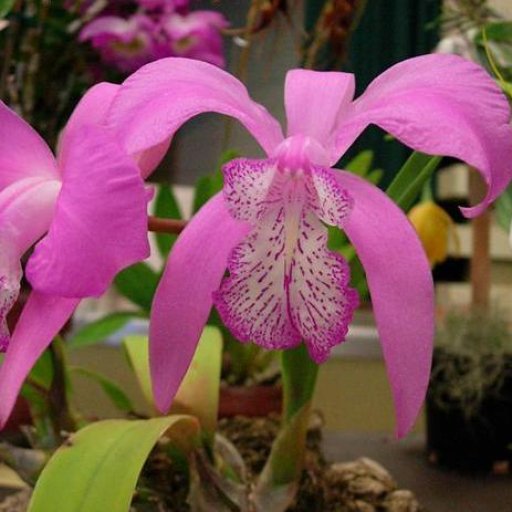
Known as the "Flor de Mayo" (May Flower) in its native Mexico, Laelia speciosa is a rugged beauty that defies the typical image of a delicate orchid. It is a high-altitude survivor, clinging to the branches of gnarled oak trees in some of the harshest, driest mountain forests. This plant is celebrated by collectors for producing massive, honey-scented blooms that seem far too large for its compact, egg-shaped body.
🔍 How to Identify
- 🌸 Showy Blooms: The flowers are the star of the show—vibrant lilac or rose-purple, reaching up to 6 inches across, often featuring a white-throated lip streaked with deep amethyst veins.
- 🥚 Rugged Pseudobulbs: It possesses small, egg-shaped, and deeply wrinkled pseudobulbs that act as water reservoirs during the brutal Mexican dry season.
- 🍃 Stiff Foliage: One or two grey-green, leathery leaves sprout from the top of the bulb; they are stiff to the touch and designed to minimize water loss under the intense mountain sun.
🏡 In Your Garden
- ☀️ Light & Air: This orchid is a sun-worshipper. It craves much more light than your average grocery-store Moth Orchid and requires excellent air circulation to mimic the breezy mountain ridges of its home.
- ❄️ The "Hard" Dry Rest: The secret to success is a strict winter dormancy. From late autumn until spring, the plant should be kept almost bone-dry and cool; watering during this time can cause the roots to rot instantly and prevent the spectacular May flowers from appearing.
- 🪵 Mounting Preference: Because it hates "wet feet," it is happiest when mounted on a piece of cork bark or rough wood rather than being buried in a pot, allowing its roots to dry completely between mistings.
⚠️ Safety & Toxicity
- ✅ Non-Toxic: Laelia speciosa is generally considered non-toxic to both humans and household pets like cats and dogs.
- 🤚 Handle with Care: While safe, the plant is a very slow grower. Breaking a pseudobulb or damaging the new growth lead can set the plant back by years, so keep it in a secure spot away from high-traffic areas.
✨ Fun Fact
🧗 The Mountain Climber: Laelia speciosa is one of the highest-growing orchids in the world, found at altitudes of up to 8,200 feet (2,500 meters). It has adapted to survive freezing temperatures and intense UV radiation that would kill most other tropical orchids!

Detailed Care Instructions
| Humidity | High |
| Lighting | Full Sun |
| Difficulty | Medium |
| Temperature | 13°C - 27°C |
| Hardiness Zones | 11 - 11 |
To grow Laelia speciosa, also known as the elegant or showy Laelia, follow these steps:
- Lighting: Place the plant in an area with bright and indirect light. Avoid direct sunlight, as it can scorch the leaves.
- Temperature: Laelia speciosa prefers warm temperatures ranging from 60-80°F (15-27°C) during the day and slightly cooler temperatures at night.
- Humidity: Laelia speciosa thrives in high humidity. You can increase humidity by placing the potted plant on a tray filled with water and pebbles or using a humidifier in the room.
- Watering: Water the plant when the potting mix starts to dry out. It's important not to let the roots sit in standing water as it can cause root rot. Make sure the pot has proper drainage.
- Fertilization: Feed the plant with a balanced orchid fertilizer once a month during the growing season (spring and summer). Follow the instructions on the fertilizer packaging for the correct dosage.
- Potting mix: Use a well-draining orchid potting mix that consists of bark, sphagnum moss, or coconut fiber. Repot the plant every 1-2 years when it outgrows its current pot.
- Pests and diseases: Keep an eye out for common orchid pests such as mealybugs, aphids, and spider mites. Treat any infestations promptly. Additionally, avoid overwatering to prevent root rot.
- Blooming: Laelia speciosa usually blooms in the spring or early summer. Enjoy the beautiful flowers that can last for several weeks. After flowering, allow the plant to rest before starting its growth cycle again.
Remember that growing orchids requires patience and observation. Each plant is unique, and it may take some trial and error to find the optimal growing conditions for your Laelia speciosa.

Place in a bright room that is sun drenched almost all day. Or directly in a south-facing window.

To properly water Laelia Speciosa, it is essential to consider its specific water needs. Here are some guidelines to help you water this plant effectively:
1. Understand the environmental factors: Observe the natural habitat of Laelia Speciosa orchids. They are typically epiphytic plants found in the highlands of Central America. Therefore, it is crucial to replicate their natural conditions as closely as possible.
2. Assess moisture requirements: Like most orchids, Laelia Speciosa prefers a well-draining growing medium. Before watering, ensure that the top layer of the substrate feels slightly dry to the touch. This indicates that the plant is ready for moisture replenishment.
3. Choose the right water source: It is recommended to use rainwater, filtered water, or distilled water for orchids. These water sources are free of chemicals and minerals that can harm the plant's sensitive roots.
4. Determine the watering frequency: Laelia Speciosa orchids generally prefer more frequent watering, especially during their active growing season. If the environment is warm and dry, you may need to water the plant every 5-7 days. However, in cooler conditions, watering every 7-10 days may be sufficient.
5. Watering technique: Rather than pouring water directly onto the orchid, it is best to soak the entire root zone. Place the plant in a sink or container and allow water to run freely through the substrate, ensuring it is thoroughly saturated. After about 15-20 minutes, remove the orchid from the water, letting excess water drain away completely.
6. Avoid waterlogging: Always ensure that the pot or container has proper drainage holes. This prevents water from accumulating, which could lead to root rot. Never let the orchid sit in standing water as it can be detrimental to its health.
7. Monitor humidity levels: In addition to regular watering, maintaining adequate humidity is crucial for Laelia Speciosa. These orchids thrive in humidity levels of around 50-70%. You can increase humidity by using a humidifier, placing a tray of water near the plant, or grouping plants together.
8. Adjust watering during dormant periods: Like most orchids, Laelia Speciosa goes through a dormant period. During this time, which usually occurs in late fall or winter, reduce watering frequency to allow the plant to rest. Only water when the substrate is quite dry to prevent root rot.
Remember, these guidelines are general recommendations, and it is always beneficial to adapt your watering routine based on the specific needs of your Laelia Speciosa plant and the environmental conditions it resides in.
To fertilize your Laelia Speciosa plant, consider the following instructions:
- Choose a balanced water-soluble fertilizer suitable for orchids. Look for a formula with equal or similar ratios of nitrogen (N), phosphorus (P), and potassium (K), such as 20-20-20.
- Dilute the fertilizer according to the instructions provided on the package. It's generally recommended to use half or quarter strength to prevent over-fertilization.
- Water the plant thoroughly before applying fertilizer. This helps prevent root burn caused by applying fertilizer to dry roots.
- Apply the diluted fertilizer to the plant's soil or growing medium. Ensure that the entire root zone receives the fertilizer to promote balanced growth.
- Repeat the fertilization process every two to four weeks during the plant's active growth period, usually from spring to early fall. Reduce or stop fertilizing during the plant's dormant period in winter.
- Avoid applying fertilizer directly to the foliage or crown of the plant, as this may lead to burning or rotting. Always focus on the root area while fertilizing.
- Monitor the plant's response to fertilization. If you notice signs of fertilizer burn, such as brown or crispy leaf tips, reduce the concentration or frequency of fertilizing.
- Remember to flush the plant's growing medium with plain water periodically to remove any accumulated salts from fertilizer. This helps prevent salt build-up and potential damage to the roots.
- Provide ample sunlight, adequate watering, and proper air circulation along with regular fertilization for the overall health and wellbeing of your Laelia Speciosa plant.
When growing Laelia speciosa plants, it is important to choose a suitable soil type that provides the necessary conditions for optimal growth. The ideal soil for this plant is well-draining and porous to prevent waterlogging and promote root health. It should be able to retain some moisture, yet also allow excess water to drain away to prevent the roots from becoming waterlogged.
A mixture composed of a variety of components is often recommended. Some common ingredients in the ideal soil mix for Laelia speciosa include bark chips, coconut husk, sphagnum moss, and perlite. These components ensure good airflow, adequate drainage, moisture retention, and root stability.
Bark chips, specifically medium-sized or fine-grade orchid bark, are commonly used as a base component in the soil mix for Laelia speciosa. They are excellent at retaining moisture and promoting drainage, while also offering stability to the roots. Coconut husk chips or fiber are also highly valued because they provide additional moisture retention and aeration.
Sphagnum moss is another vital ingredient, known for its moisture-retaining properties. It can help to maintain a humid environment around the plant's roots, which is crucial for Laelia speciosa. Additionally, sphagnum moss can absorb and release water as needed, preventing the roots from becoming overly saturated.
Perlite, a volcanic glass material, is often added to the soil mix to improve aeration and drainage. It helps maintain an appropriate level of moisture in the soil and ensures that excess water does not accumulate around the roots.
The ratio of these components may vary depending on individual preferences and environmental factors. However, a commonly recommended ratio for a Laelia speciosa soil mix is roughly 3 parts bark chips, 1 part coconut husk, 1 part sphagnum moss, and 1 part perlite.
By using an appropriate soil mix for Laelia speciosa, you can create an ideal growing environment that promotes healthy root development, prevents waterlogging, and allows air circulation, leading to overall plant vitality.
Laelia Speciosa is a type of orchid that can be easily propagated using two methods: division and back-bulb propagation.
- Division: This method is typically done during the plant's dormant period, which is usually in the late fall or winter. Here are the steps to propagate Laelia Speciosa through division:
a. Prepare a clean and sharp knife or gardening shears.
b. Gently remove the plant from its pot, taking care not to damage the roots.
c. Inspect the plant and identify natural divisions or clusters of bulbs.
d. Use the knife or shears to separate these divisions, ensuring that each division has at least three mature bulbs.
e. Trim any damaged or rotten roots from each division.
f. Optionally, apply a fungicide or rooting hormone to the cut surfaces of the divisions to prevent infections.
g. Plant each division in a separate pot filled with a well-draining orchid potting mix.
h. Water the newly potted divisions thoroughly and place them in a bright, indirect light location.
i. Regularly check the moisture level of the medium and adjust watering accordingly to promote root growth.
- Back-bulb propagation: This method is useful for older and overgrown Laelia Speciosa plants that have developed multiple pseudobulbs. Here's how to propagate using back-bulbs:
a. Carefully remove the plant from its pot, ensuring you don't damage any of the bulbs or roots.
b. Identify older, mature bulbs that have lost their leaves or have become shriveled.
c. Gently separate these older bulbs from the healthy, younger bulbs.
d. Clean the back-bulbs by removing any loose or damaged roots.
e. Optionally, treat the cut surfaces with fungicide or rooting hormone.
f. Place the back-bulbs on a tray or in a storage container with damp sphagnum moss or orchid potting mix to maintain humidity.
g. Keep the back-bulbs in a warm and humid environment with bright, indirect light.
h. Mist the back-bulbs regularly to maintain humidity and prevent them from drying out.
i. After a few weeks, new roots and shoots will start to develop from the back-bulbs.
j. Once the new growth is well-established, carefully transfer each back-bulb to an individual pot filled with orchid potting mix.
k. Gradually acclimate the new plants to their new environment by reducing humidity levels and increasing light exposure.
By following these propagation techniques, you can successfully propagate Laelia Speciosa orchids and expand your collection of this beautiful plant.








