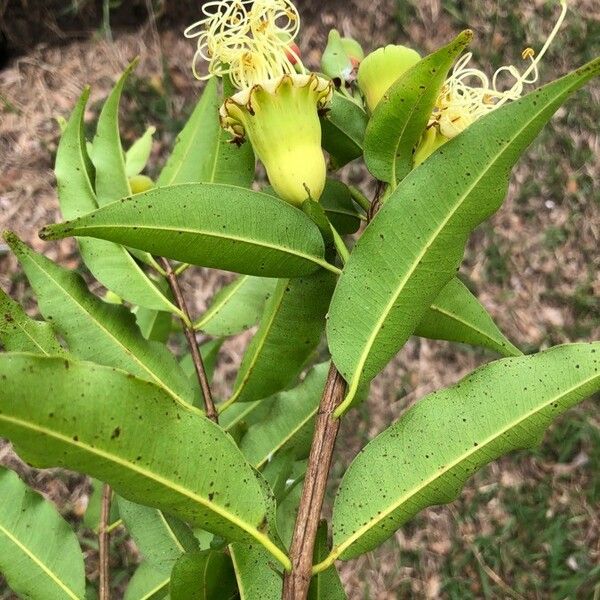
Plant Overview
Known widely as the Guayacán de Manizales or the Dedalito, Lafoensia punicifolia is a vibrant tropical gem that earns its name from its pomegranate-like foliage. This tree is a local celebrity in South America, particularly in Colombia, where it is used to paint city streets with lush, glossy greenery. It’s a resilient beauty that bridges the gap between wild Andean forests and modern urban gardens.
🔍 How to Identify
- 🍃 The Foliage: The leaves are glossy, lance-shaped, and arranged in opposite pairs. They look strikingly similar to those of the Pomegranate tree (Punica granatum), which is exactly why "punicifolia" is part of its scientific name.
- 🌺 The Flowers: It produces large, bell-shaped flowers that are often creamy-white or yellowish. The most striking feature is the bundle of long, dramatic stamens that protrude like exploding fireworks.
- 🪵 The Fruit: After blooming, it develops small, woody capsules that resemble thimbles. This unique shape earned it the common nickname "Dedalito" (Little Thimble).
🏡 In Your Garden
- 🌳 Urban Warrior: This tree is highly prized in landscaping because it is incredibly hardy. It can tolerate poor soil quality and urban pollution better than many of its tropical cousins, making it a perfect "street tree."
- ☀️ Sun Seeker: To see this plant at its best, it needs full sun exposure. While it can survive in partial shade, a lack of direct light will result in "leggy" growth and very few of those signature firework-like flowers.
- 💧 Drought Resilience: Once established, its deep root system allows it to handle dry spells quite well, though it prefers consistent moisture to keep its leaves looking waxy and vibrant.
⚠️ Safety & Toxicity
- 🟢 General Safety: Lafoensia punicifolia is not considered toxic to humans or common household pets like cats and dogs.
- 🚫 Non-Edible: While safe to touch, the woody fruits and bitter leaves are not edible. The seeds and pods can also present a minor choking hazard for curious puppies or small children.
✨ Fun Fact
The Lafoensia punicifolia is a primary "gas station" for high-altitude hummingbirds! Because of the deep, nectar-rich shape of its flowers, it attracts specialized pollinators that are rarely seen visiting other garden plants.

Detailed Care Instructions
- Location: Firstly, you need to make sure that the plant is located in a suitable environment, which receives the appropriate amount of light, humidity, and ventilation.
- Watering frequency: The watering frequency of this plant depends on various factors, such as environmental conditions, plant size, and pot size. Generally, during the growing season, you should water the plant regularly, keeping the soil moist but not waterlogged. During the dormant season, you can reduce the watering frequency, allowing the soil to dry out between watering.
- Water quantity: When watering, ensure that you provide enough water to saturate the soil adequately. You can test the soil's moisture level by sticking your finger about an inch deep into the soil. If it feels moist, you don't need to water, but if it's dry, it's time to water the plant.
- Watering method: Avoid watering from above, as this can damage the foliage and flowers. Instead, water the plant from the bottom by placing the pot in a tray or saucer with water. The soil will absorb the water through the drain holes in the bottom of the pot.
- Water quality: Use room temperature water, as water that's too hot or cold can shock the plant's roots. Also, avoid using chlorinated water, which can harm the plant. If you don't have access to filtered or distilled water, fill a container with tap water and let it sit overnight. This will allow the chlorine to dissipate.
- Fertilizer: Fertilize the plant once every two weeks during the growing season with a balanced liquid fertilizer. Stop fertilizing during the dormant season.
- Monitoring: Keep an eye on the plant's foliage and growth habits to determine if you're providing it with the right amount of water. If the leaves start to wilt or turn yellow, you may be over- or under-watering the plant.
Lafoensia Punicifolia is a plant that prefers soil with good drainage. It is important to ensure that the soil is not waterlogged as this can cause root rot and damage to the plant. Sandy or loamy soils are ideal for this plant, but heavy clay soils should be avoided as they retain too much moisture.
The soil should also be rich in nutrients, so it is recommended to mix in compost or other organic matter into the soil prior to planting. This will help the plant to establish itself and promote healthy growth.
It is important to maintain consistent moisture levels in the soil to prevent the plant from drying out. However, overwatering should be avoided as this can lead to waterlogged soil and cause damage to the plant.
Overall, a well-draining, nutrient-rich soil that remains consistently moist is ideal for growing Lafoensia Punicifolia.








