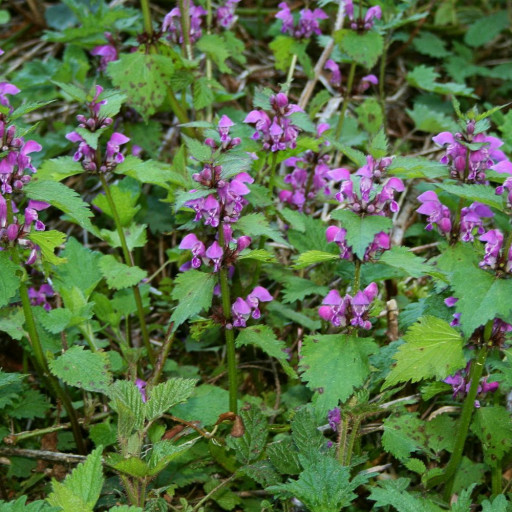
Plant Overview
Often called the Spotted Dead-Nettle, this charming groundcover is a favorite for brightening up the dark, forgotten corners of the garden. Unlike its stinging relatives, this "dead" nettle is completely harmless and offers a shimmering carpet of silver-splashed foliage. It is a resilient European native that has become a staple for gardeners who need a tough plant that looks delicate but acts like a survivor.
🔍 How to Identify
- 🍃 Foliage: Heart-shaped leaves with toothy edges, almost always featuring a prominent silver or white stripe down the center that looks like it was painted on.
- 🌸 Blooms: Small, hooded flowers that cluster at the stem tips; they look like tiny snapdragons and usually come in shades of rose-purple, pink, or crisp white.
- 🌱 Growth Habit: A low-growing, mounding plant that spreads via creeping runners to form a dense, weed-suppressing mat.
🏡 In Your Garden
- 🌥️ The Shade Solution: This is a "set it and forget it" plant for deep shade. It thrives under the heavy canopy of trees or along the north side of buildings where grass refuses to grow.
- 💧 Moisture Balance: While it loves damp soil, it is surprisingly "smart"—if the ground gets too dry, the plant will simply stop growing and wait for rain rather than wilting away immediately. It hates "wet feet" in the winter, so ensure the soil drains well.
⚠️ Safety & Toxicity
- 🛡️ Non-Toxic: Good news for families! Lamium maculatum is generally considered non-toxic to humans, dogs, and cats.
- 🚫 No Stings: Despite the "Nettle" name, it lacks the stinging hairs of its cousins. The name "Dead-Nettle" literally refers to the fact that it is "dead" (harmless) to the touch.
✨ Fun Fact
🐝 The Bee’s Umbrella: The upper petal of the flower is shaped like a tiny hood or umbrella. This design isn't just for looks—it keeps the nectar dry and protects the pollen from being washed away during rainstorms, ensuring bumblebees have a snack even on gloomy days.

Detailed Care Instructions
| Color | Mauve, Pink, Purple, Or White, Depending On Cultivar |
| Soil Ph | Acidic |
| Lighting | Part Sun |
| Soil Type | Well-Drained, With Average Moisture And Fertility Needs |
| Bloom Time | May To July |
| Plant Type | Herbaceous In Cooler Climates, But With A Perennial Life Cycle |
| Mature Size | Depending On The Cultivar, Usually 3 To 12 Inches Tall, With A Width Two Or Three Times That |
| Native Area | Europe, North Africa, West Asia |
| Sun Exposure | Full Shade To Partial Shade |
| Hardiness Zones | 4 To 8 |
Here are some steps to help you grow Lamium Maculatum plant:
- Choose the right location: Lamium Maculatum thrives in partial shade to full shade, although some varieties can tolerate more sunlight. Find an area in your garden that receives the appropriate amount of sunlight for your specific variety.
- Prepare the soil: Lamium Maculatum prefers well-draining soil that is rich in organic matter. If your soil is heavy or compacted, amend it with compost or well-rotted manure to improve drainage and fertility.
- Planting: Select healthy Lamium Maculatum plants from a reputable nursery or start from seeds. Dig a hole slightly larger than the plant's root ball and place it in the hole. Backfill with soil and water thoroughly to settle the soil around the roots.
- Watering: Lamium Maculatum plants prefer moist soil, so ensure you provide enough water to keep the soil consistently damp, especially during the warmer months. However, be careful not to overwater to prevent root rot.
- Mulching: Apply a layer of organic mulch, such as wood chips or straw, around the base of the plants. Mulch helps retain moisture, suppress weeds, and regulate soil temperature.
- Fertilizing: Feed your Lamium Maculatum plants with a balanced slow-release fertilizer in the spring, following the manufacturer's instructions. You can repeat the fertilization process in late summer if desired.
- Pruning: Lamium Maculatum plants benefit from regular pruning to maintain a compact shape and encourage continuous blooming. After the first flush of flowers is complete, shear back the plant by about one-third to promote new growth and additional blooms.
- Division: Lamium Maculatum tends to spread and form dense clumps. To prevent overcrowding and maintain plant health, divide the clumps every few years in early spring or fall. Dig up the clump, carefully separate it into smaller sections, and replant them at the same depth as the original plants.
- Pests and diseases: While Lamium Maculatum is generally resistant to pests and diseases, occasional issues like aphids or powdery mildew may occur. Monitor your plants regularly and take immediate action if any infestations or diseases are observed. Use organic insecticides or fungicides if necessary.
By following these steps, you should be able to successfully grow Lamium Maculatum plants in your garden.

Place in a window with dappled sun or a spot in the middle of a room. Or directly in a window facing west or east.

To water this plant, it is important to first check the moisture level of the soil. This can be done by inserting a finger or a soil moisture meter into the soil to determine if it is dry or moist. If the soil is dry, water the plant thoroughly with a watering can or hose, being careful not to overwater it. It is important to let the water soak into the soil before watering again. In general, this plant prefers a moist soil, but not one that is constantly wet. It is also important to avoid getting water on the leaves, as this can lead to the development of leaf diseases. Instead, water the soil at the base of the plant. During hot summer months, this plant may require more frequent watering to prevent it from drying out.
To keep this plant healthy, fertilize it once a month during growing season with a balanced fertilizer, following the instructions on the package. Be careful not to over-fertilize, as excess nutrients can harm the plant. Additionally, make sure to water the plant regularly and provide it with adequate sunlight and soil drainage to promote healthy growth.
The ideal soil for the Lamium Maculatum plant should have a slightly acidic to neutral pH level between 6.0 to 7.0. The soil should be well-draining and moist, but not waterlogged. It should be rich in organic matter, such as compost or leaf mold, to provide the necessary nutrients for the plant's growth. A mixture of loam, sand, and peat moss can be used to achieve the desired soil texture. The soil should also be able to retain moisture without becoming compacted, as this can lead to root rot. It is important to avoid using soils that are too heavy or clay-based, as they can become waterlogged and prevent proper drainage. Additionally, adding a layer of mulch around the plant can help to retain moisture and provide additional nutrients.
Lamium Maculatum is a popular perennial plant that is commonly used for landscaping and gardening purposes. It is propagated easily by dividing its clumps or cuttings.
To propagate Lamium Maculatum by division, begin by digging up the parent plant in the fall or early spring when it is dormant. Separate the roots and leaves from the parent plant into several clumps. Then, plant each clump in a new location with well-draining soil in partial shade.
To propagate Lamium Maculatum by cuttings, take cuttings in the spring or summer when the plant is actively growing. Cut a stem from the parent plant that is approximately 4 to 6 inches long and remove the lower leaves. Dip the cut end into rooting hormone and then plant in well-draining soil in partial shade. Keep the soil consistently moist and the cutting should root in a few weeks.
It is important to note that Lamium Maculatum can also self-seed, meaning it can produce new plants from its dropped seeds. However, these seedlings may not necessarily be true to the parent plant's characteristics.








