Plant Overview
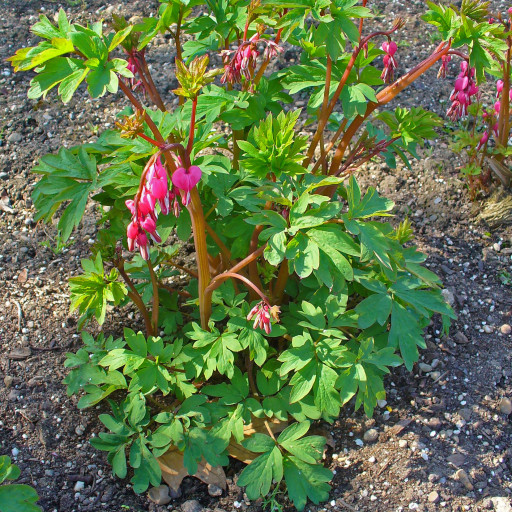
Known widely as the Bleeding Heart, this whimsical perennial looks like it stepped straight out of a fairy tale. Its delicate, heart-shaped blossoms dangle gracefully from arching stems, earning it nicknames like "Lady in a Bath" or "Lyre Flower." Originally from the cool woodlands of Eastern Asia, it has become a Victorian-era classic that brings a touch of romance and drama to any shaded corner of the garden.
🔍 How to Identify
- 💖 The Blooms: Its most striking feature is the row of puffy, heart-shaped flowers. Most varieties are bright pink with a white "drop" emerging from the bottom, though pure white versions are also popular.
- 🎣 The Stems: The flowers hang from elegant, leafless stems that arch like a fishing rod, usually holding 7 to 15 hearts in a perfect row.
- 🌿 The Foliage: The leaves are soft, green, and deeply lobed, resembling the texture of a fern or parsley. This lush greenery provides a beautiful backdrop before the flowers emerge in late spring.
🏡 In Your Garden
- 💤 The Summer Vanishing Act: One of the most important things to know is that this plant is "ephemeral." Once the summer heat hits, the plant often turns yellow and goes completely dormant, disappearing underground until next spring. Don't worry—it’s not dead, just napping!
- 💧 Woodland Roots: Because it originated in forest floors, it craves rich, organic soil and consistent moisture. It hates "wet feet" during the winter, so ensuring your soil drains well is the key to seeing it return year after year.
⚠️ Safety & Toxicity
- 🚫 Toxic if Ingested: All parts of the plant contain isoquinoline alkaloids. It is considered toxic to both humans and pets (cats, dogs, and horses) if eaten in large quantities.
- 🧤 Skin Sensitivity: Some gardeners experience "contact dermatitis" (an itchy rash) after handling the foliage or roots. It is always a good idea to wear gloves when pruning or dividing this plant.
✨ Fun Fact
If you turn a single flower upside down and gently pull the two outer pink petals apart, the inner white petals look like a tiny person sitting in a tub—which is why old-fashioned gardeners often call it the "Lady in a Bath!"

Detailed Care Instructions
| Humidity | Normal |
| Lighting | Part Sun |
| Toxicity | Poisonous |
| Difficulty | Medium |
| Hibernation | Cold Period |
| Temperature | 10°C - 30°C |
| Hardiness Zones | Min 3A |
To grow Lamprocapnos spectabilis (Bleeding Heart) plants, follow these steps:
- Planting Time: The best time for planting bleeding hearts is in early spring or fall, although they can be planted at any time if you can maintain proper care.
- Location: Select a location with partial shade to protect the plant from direct sunlight during the hottest parts of the day. Bleeding hearts prefer cool and moist environments.
- Soil: Choose a well-draining soil that is rich in organic matter. Amend the soil with compost or peat moss to improve its fertility and moisture retention.
- Planting: Dig a hole that is wide and deep enough to accommodate the root ball of the bleeding heart plant. Place the plant in the hole, ensuring that the crown (the area where the stem emerges from the roots) is level with or slightly above the soil surface. Backfill the hole with soil and gently pat it down.
- Watering: After planting, water the bleeding heart thoroughly to settle the soil around the roots. Water regularly, keeping the soil evenly moist but not saturated. Avoid overwatering, as this can lead to root rot.
- Mulching: Apply a layer of organic mulch, such as wood chips or shredded bark, around the base of the plant. Mulching helps retain moisture, suppresses weed growth, and keeps the soil cool.
- Fertilizing: Lamprocapnos spectabilis doesn't require heavy feeding. However, you can apply a balanced fertilizer in early spring and again in late summer to provide nutrients for healthy growth.
- Pruning: Deadhead the spent flowers regularly to encourage continuous blooming. After the plant finishes flowering and starts to decline, you can cut back the foliage to ground level. New growth will emerge in the following season.
- Winter Care: Bleeding hearts are hardy perennials, but in areas with severe winters, it is beneficial to provide a layer of mulch over the plant in late fall to insulate the roots and protect against freezing temperatures.
By following these steps and ensuring proper care, you can successfully grow Lamprocapnos spectabilis plants in your garden.

Place in a window with dappled sun or a spot in the middle of a room. Or directly in a window facing west or east.

Lamprocapnos Spectabilis is a perennial plant that requires regular watering to thrive. It should be planted in well-draining soil to prevent waterlogging.
When watering, it is important to avoid getting water on the leaves, as this can cause fungal diseases. Instead, water the soil at the base of the plant, allowing the water to soak in slowly.
During the summer months, when the plant is in active growth, it may require more frequent watering, but be cautious not to overwater, as this can also lead to waterlogging and root rot.
In the winter months, when the plant is dormant, it will require less frequent watering. Allow the soil to dry out slightly before watering again.
In general, it is best to water Lamprocapnos Spectabilis deeply and infrequently, rather than giving it small amounts of water frequently. This will encourage the roots to grow deeper to access water, which will make the plant more drought tolerant in the future.
To fertilize this plant, use a balanced fertilizer with equal parts nitrogen, phosphorus, and potassium. Apply the fertilizer in early spring before new growth appears. Be sure to follow the manufacturer's instructions for proper application rates. Avoid over-fertilizing, as this can lead to excessive foliar growth at the expense of flowers. Additionally, be sure to water the plant deeply after fertilizing to prevent root burn.
Lamprocapnos spectabilisis a perennial herbaceous plant with delicate pink flowers that grows best in well-draining, nutrient-rich soil. The ideal soil for this plant should have a pH range of 5.5 to 7.0 and be slightly acidic to neutral. It should be relatively moist but not waterlogged, as this can cause root rot and other issues.
The best type of soil for this plant is a loamy soil that is rich in organic matter, such as compost or leaf mold. This type of soil will provide the necessary nutrients and moisture retention that this plant needs to thrive.
When planting Lamprocapnos spectabilis, it is important to prepare the soil by removing any weeds, rocks, or other debris. The soil should be loosened to a depth of at least 8 inches and amended with compost or other organic matter if necessary.
In addition to the right soil, Lamprocapnos spectabilis also requires full to partial shade to grow and bloom successfully. It is important to make sure that the plant receives enough sunlight to stimulate growth and flowering, but not so much that it becomes overly dry or stressed.
Lamprocapnos spectabilis can be propagated easily through division or by seeds. Division is best done in early spring or fall while the plant is still dormant. Care should be taken to divide the plant into sections with roots, and each section should have at least one healthy shoot.
Seeds can be sown in late fall or early spring in well-draining soil. The seeds should be sown at a depth of 1/8 inch and spaced at least 6 inches apart. The soil should be kept moist but not waterlogged. Germination typically occurs in 14-28 days.
Once the seedlings are large enough to handle, they can be transplanted into pots or directly into the garden. It is best to transplant in the spring when the plant is still dormant or in the fall when it is preparing to go dormant.
Overall, propagation of this plant is relatively simple and can be done by any gardener with basic knowledge and experience.
Common pests of the bleeding-heart include Scale insect, aphids, snails. Make a habit of checking your bleeding-heart frequently for pests so that any infestations can be caught and managed early.








