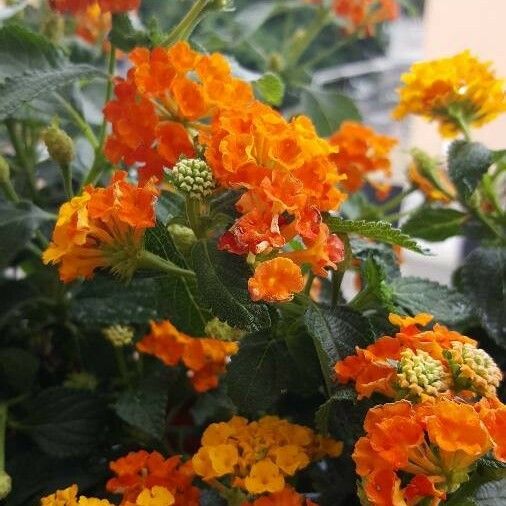
Plant Overview
Known as the "Texas Lantana" or "Calico Bush," Lantana horrida is a sun-drenched survivor famous for its kaleidoscope of sunset-colored blooms. Despite its somewhat intimidating Latin name—horrida refers to its prickly, rough stems—it is one of the most beloved nectar plants in the Americas. It is a staple for "wildscape" gardeners who want maximum color with minimum effort.
🔍 How to Identify
- 🌼 Sunset Clusters: The flowers grow in rounded clusters called umbels, featuring tiny, tubular blossoms that transition from bright yellow to deep orange and fiery red as they age.
- 🍃 Sandpaper Leaves: The oval, tooth-edged leaves have a distinctively rough, sandpapery texture and a pungent, sage-like aroma when crushed.
- 🌵 Prickly Stems: Unlike many ornamental hybrids, this species has square-shaped stems lined with small, recurved prickles or stiff hairs.
🏡 In Your Garden
- 🦋 Pollinator Magnet: This plant is a high-octane refueling station for butterflies, especially Giant Swallowtails and Great Purple Hairstreaks, who are drawn to its constant supply of nectar.
- ☀️ Drought Warrior: It thrives in punishing heat and poor, rocky soil. It develops a deep woody root system, which is why it’s so difficult to transplant once established—it prefers to stay exactly where it’s planted.
- ✂️ Growth Habit: It has a sprawling, shrubby habit that can get "leggy." Gardeners often cut it back almost to the ground in late winter to encourage a flush of fresh, dense growth in the spring.
⚠️ Safety & Toxicity
- 🚫 Toxic Berries: All parts of the plant are toxic, but the small, metallic-blue/black berries are particularly dangerous to children and pets if ingested. They contain triterpenoids that can cause liver failure.
- 🖐️ Skin Irritant: The "horrid" bristles on the stems and the oils in the leaves can cause contact dermatitis (itchy rashes) for people with sensitive skin. It is best to wear gloves when pruning.
✨ Fun Fact
The flowers of the Lantana act as a "traffic light" for insects. They typically start yellow (full of nectar) and turn red once they have been pollinated and the nectar is gone, signaling to butterflies not to waste their energy on the red flowers!

Detailed Care Instructions
| Humidity | High |
| Lighting | Shade |
| Toxicity | Poisonous |
| Difficulty | Medium |
| Hibernation | Cold Period |
| Temperature | 3°C - 13°C |
| Hardiness Zones | 8 - 11 |
To grow Lantana horrida, also known as Texas Lantana or Yellow Sage, you can follow these steps:
- Choose a suitable location: Lantana horrida thrives in full sun and well-draining soil. Select a spot in your garden that receives at least 6 hours of direct sunlight each day.
- Prepare the soil: Before planting, prepare the soil by loosening it and removing any weeds or rocks. Lantana horrida prefers slightly acidic to neutral soil with a pH range of 6.0 to 7.5. If your soil is heavy clay, consider adding organic matter such as compost to enhance drainage.
- Planting: Dig a hole that is slightly larger than the plant's root ball. Place the plant in the hole, ensuring that the top of the root ball is level with or slightly above the soil surface. Backfill the hole with soil, gently firming it around the plant. Water thoroughly after planting.
- Watering: Young plants require regular watering to establish their roots. Water deeply, but avoid over-watering, as Lantana horrida can tolerate periods of drought once established. Water when the top inch of soil feels dry.
- Mulching: Apply a layer of organic mulch, such as wood chips or straw, around the base of the plant. This will help retain moisture, suppress weeds, and regulate soil temperature.
- Fertilizing: Lantana horrida is relatively low-maintenance and usually does not require heavy fertilization. However, you can apply a balanced slow-release fertilizer in spring to promote healthy growth. Follow the instructions on the fertilizer package for application rates.
- Pruning: Lantana horrida benefits from occasional pruning to maintain a compact shape and promote more abundant flowering. Prune in early spring before new growth emerges, removing any dead or damaged branches. Deadheading spent flowers throughout the growing season can also encourage continuous blooming.
- Pests and diseases: Lantana horrida is generally resistant to pests and diseases. However, aphids, spider mites, and whiteflies can occasionally be a problem. Regularly inspect your plants for any signs of infestation and apply appropriate organic insecticides or use insecticidal soap if necessary.
By following these guidelines, you can successfully grow Lantana horrida in your garden and enjoy its vibrant blooms throughout the season.

Place in a bright room that is sun drenched almost all day. Or directly in a south-facing window.

The best way to water this particular plant is to check the soil moisture level regularly before watering. It is important to allow the soil to dry out slightly between watering as overwatering can lead to root rot. When watering, thoroughly saturate the soil around the plant, but avoid getting the leaves wet to prevent diseases. It is also recommended to use a well-draining soil mix and to ensure proper drainage in the pot or planting area. During the hot summer months, the plant may require more frequent watering, but be careful not to overwater.
To fertilize this particular plant, use a balanced fertilizer with equal amounts of nitrogen, phosphorus, and potassium. Apply the fertilizer according to the manufacturing instructions, typically once every three to four months during the growing season. Avoid over-fertilizing, as this can lead to excessive growth and weak plants. Water the plant after applying fertilizer to help it absorb the nutrients.
Lantana horrida plant prefers a well-draining soil that is rich in nutrients. The soil should be slightly acidic with a pH level of 6.0 to 6.5. It is recommended to use a mix of organic compost and sand to improve soil texture. A soil that is too heavy or clay-like can lead to root rot. When planting, it is important to ensure proper spacing and depth. The plant prefers to be planted in full sun and should be watered regularly, but not over-watered as this can also lead to root rot.
The first step in propagating this plant is to obtain healthy branches from an established plant. Using sterilized pruning shears, take several 4-6 inch cuttings from the tips of the branches.
Remove the lower leaves from the cuttings, leaving only a few at the top. Dip the cut ends of the branches into a rooting hormone powder, tapping off any excess.
Fill a small pot with well-draining soil and make a hole in the center. Place the cuttings into the hole and firm the soil around them. Water the cuttings well and place a plastic bag over the pot to create a humid environment.
Place the pot in a warm and bright spot but out of direct sunlight. Keep the soil moist but not waterlogged.
In about four to six weeks, the cuttings should have formed roots and can be transplanted into larger pots or directly into the garden. Gradually acclimate the newly rooted plants to outdoor conditions before transplanting them into the garden.








