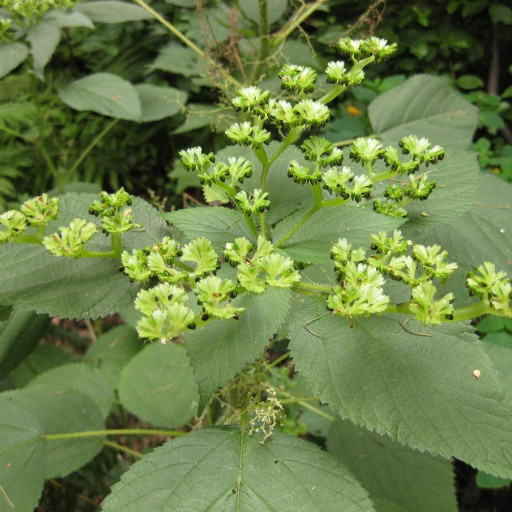
Plant Overview
Known as the Wood Nettle, this native North American perennial is the "shy cousin" of the common stinging nettle. While it prefers to hide in the deep shade of moist, ancient forests, it makes its presence known the moment a hiker’s bare leg brushes against it. Historically, Indigenous peoples valued it not just as a spring green, but as a source of incredibly strong fiber for weaving fishing nets and high-quality cordage.
🔍 How to Identify
- 🌿 Alternate Leaves: The easiest way to tell this apart from Common Stinging Nettle is the leaf arrangement; Wood Nettle leaves alternate along the stem rather than growing in opposite pairs.
- 🍃 Broad, Ovate Shape: The leaves are large, egg-shaped, and sharply toothed, often looking much "fluffier" and broader than other nettle varieties.
- 🪡 Hollow Needles: The stems and leaf undersides are covered in "trichomes"—tiny, hollow silica needles that contain an irritating fluid.
- ☁️ Zingy Flowers: In mid-to-late summer, it produces branched clusters of tiny, greenish-white flowers that seem to float among the upper leaves.
🏡 In Your Garden
- 💧 The Moisture Marker: If you find Wood Nettle appearing in your yard, it’s a sign of high-quality, nutrient-rich, and consistently moist soil. It thrives in those "problem" soggy areas where other plants might suffer from root rot.
- 🦋 Butterfly Sanctuary: This plant is a primary host for the Red Admiral butterfly. If you see leaves that have been folded over and "sewn" together with silk, you likely have a caterpillar neighbor living inside.
- 🌳 Woodland Specialist: It does not handle direct, midday sun well. It is a true forest dweller that prefers the dappled light found under a heavy tree canopy.
⚠️ Safety & Toxicity
- 🚫 Skin Irritant: Touching the plant causes an immediate burning, stinging sensation followed by small white welts. This is a mechanical defense, not a systemic poison.
- 🧴 First Aid: If "stung," avoid rubbing the area, as this pushes the silica hairs deeper. Use sticky tape to pull the hairs out of the skin, or apply a paste of baking soda and water.
- 🐾 Pet Safety: Dogs and cats generally avoid the plant after one "sting," but curious pets may experience discomfort on their nose or paws. The irritation is temporary and usually fades within an hour.
✨ Fun Fact
In the 19th century, botanists and textile pioneers considered the Wood Nettle a potential "super-fiber." Its inner bark produces a thread that is significantly stronger than hemp or flax, though the difficulty of harvesting it without getting stung prevented it from becoming a household fabric!

Detailed Care Instructions
To grow Laportea Canadensis plant, also known as Canadian woodnettle or Indian nettle, follow these steps:
- Obtain seeds or a young plant: You can either purchase seeds online or at a nursery, or you can collect mature seeds from existing plants if available. Alternatively, you can also obtain a young plant from a nursery.
- Choose a suitable location: Laportea Canadensis prefers partial shade to full shade and moist soil. Look for a location in your garden that gets indirect sunlight or is shaded for most of the day. Make sure the soil is rich, well-draining, and consistently moist.
- Prepare the soil: Till the soil to break up clumps and remove rocks or debris. Add organic matter such as compost or well-rotted manure to improve the soil's fertility and moisture retention capabilities.
- Sow the seeds or plant the seedling: If using seeds, follow the instructions on the seed packet regarding when and how to sow them. Typically, you'll sow them in spring or early summer. If using a seedling, dig a hole large enough to accommodate the root ball and gently place the plant in it. Backfill the hole with soil, firm it gently around the plant, and water thoroughly.
- Watering and mulching: Laportea Canadensis requires consistent moisture, so make sure to water it regularly, especially during dry periods. Mulching around the plant with organic mulch, such as wood chips or straw, will help retain soil moisture, suppress weeds, and provide nutrients as it breaks down.
- Pruning and maintenance: Laportea Canadensis may spread through rhizomes, so it's essential to monitor its growth and prevent it from becoming invasive by regularly pruning and removing any unwanted shoots. You may also need to protect it from heavy winds or extreme temperatures depending on your climate.
- Fertilization: Laportea Canadensis usually doesn't require much fertilization, as it naturally grows in rich woodland soil. However, if you notice poor growth or yellowing leaves, you can apply a balanced organic fertilizer in spring.
- Pests and diseases: Canadian woodnettle is generally not prone to significant pest or disease issues. However, keep an eye out for common garden pests like aphids or snails, and treat them using organic pest control methods if necessary.
By following these steps and providing proper care and maintenance, you can successfully grow Laportea Canadensis in your garden.

Place in a window with dappled sun or a spot in the middle of a room. Or directly in a window facing west or east.

To properly water this particular plant, it is important to ensure that the soil is moist but not waterlogged. It is recommended to water the plant thoroughly once a week, allowing the excess water to drain away from the pot or plant bed before returning it to its usual location. It is also important to avoid letting the soil dry out completely, as this can lead to stress and damage to the plant. It is therefore recommended to check the soil regularly, especially during hot, dry weather, and adjust watering accordingly. Additionally, it is best to use distilled or filtered water, as this plant is sensitive to chemicals and minerals commonly found in tap water.
To fertilize this particular plant, you will want to use a general purpose fertilizer with a balanced 10-10-10 nitrogen, phosphorous, and potassium ratio. You should apply the fertilizer in the spring when the plant is actively growing and then again in mid-summer. Be sure to follow the instructions on the fertilizer packaging for the correct amount to use per plant and water thoroughly after applying. Over-fertilizing this plant can cause leaf burn and stunted growth, so use caution and don't exceed the recommended amounts.
The Laportea Canadensis plant prefers well-draining soil with a slightly acidic to neutral pH level. It requires a soil with good moisture retention capabilities while still allowing for proper drainage to prevent soil saturation. A mixture of peat moss, perlite, and vermiculite can help achieve these conditions. It is also important to note that this plant thrives in nutrient-rich soil with organic matter, so adding compost or a balanced fertilizer can be beneficial.
To propagate this plant, first take stem cuttings from a mature plant. Make sure the stems are healthy and have at least two nodes and some leaves. Remove the lower leaves from the stem, leaving only a few near the top. Dip the cut end of the stem in rooting hormone, which will help encourage root growth. Plant the stem in a pot filled with a well-draining soil mix and water it thoroughly. Keep the soil moist but not waterlogged, as too much water can cause the stem to rot. Place the pot in a warm, bright location with indirect sunlight. After a few weeks, the stem should start to grow roots. Once the roots are established, transplant the new plant into a larger pot or outdoors in a suitable location.








