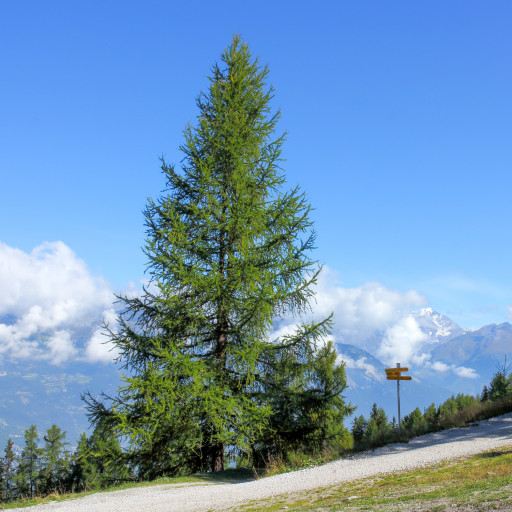
Plant Overview
Often called the "European Larch," this tree is a botanical rebel—a conifer that behaves like a maple by shedding its needles every autumn. In the high Alps, it is a legendary symbol of endurance, painting the mountain slopes in brilliant gold before the first snow falls. It is a favorite among bonsai enthusiasts and landscape artists for its delicate, feathery texture and dramatic seasonal transformations.
🔍 How to Identify
- 🌿 Needle Clusters: Soft, bright green needles grow in brush-like tufts of 30 to 40, sprouting from short "spurs" along the branches.
- 🍂 Seasonal Glow: Unlike most "evergreens," these needles turn a vibrant, fiery yellow or burnt orange in late autumn before dropping off entirely for the winter.
- 🌲 Upright Cones: Small, egg-shaped cones sit vertically on the branches; they begin as rosy-pink "larch roses" in spring before maturing into woody brown.
🏡 In Your Garden
- ☀️ The Sun Seeker: This tree is extremely "light-demanding." If it is shaded by buildings or taller neighbors, it will quickly drop its lower branches and lose its signature pyramidal shape.
- 🏔️ Climate Preferences: It thrives in areas with distinct seasons and cold winters. Because it is a mountain native, it struggles in muggy, humid heat or urban environments with heavy air pollution.
- 🏗️ Root Stability: Once the Larch is established, it develops a deep, sturdy root system that makes it incredibly wind-resistant, though this also means it hates being moved or transplanted.
⚠️ Safety & Toxicity
- ✅ Low Risk: The European Larch is generally considered non-toxic to humans, dogs, and cats, making it a safe choice for family backyards.
- 🩹 Physical Caution: While the fresh needles are soft to the touch, the dried winter twigs can be quite brittle and sharp. Always wear gloves when pruning to avoid minor scratches or resin stains.
✨ Fun Fact
🚣 The Foundation of Venice: Because Larch wood is incredibly resinous and naturally resistant to rot when submerged, thousands of Larch trunks were driven into the mud to serve as the underwater foundations for the palaces of Venice, Italy!

Detailed Care Instructions
| Humidity | Normal |
| Lighting | Full Sun |
| Toxicity | Poisonous |
| Difficulty | Easy |
| Hardiness Zones | 3 - 6 |
To grow Larix decidua, also known as the European larch, follow these steps:
- Choose the right location: European larch prefers full sun but can tolerate some shade. The soil should be well-draining and slightly acidic.
- Prepare the soil: Before planting, amend the soil with organic matter such as compost or well-rotted manure to improve drainage and nutrient content.
- Planting: Dig a hole slightly larger than the root ball of the plant. Place the plant in the hole and backfill with the amended soil, firming gently around the base. Make sure the plant is planted at the same depth as it was in the nursery container.
- Watering: Provide adequate water to the newly planted tree and maintain consistent soil moisture, especially during the first year. Water deeply and less frequently to encourage deep root growth.
- Mulching: Apply a layer of organic mulch around the base of the plant to conserve moisture, suppress weeds, and maintain a cooler root environment. Keep the mulch a few inches away from the trunk to prevent rot.
- Pruning: Minimal pruning is usually required for Larix decidua, but you can remove any dead, damaged, or crossing branches to maintain health and shape.
- Fertilizing: European larch typically doesn't need much fertilization. However, you can periodically apply a balanced, slow-release fertilizer in early spring to support healthy growth.
- Protection: In areas with harsh winters, you may need to protect young Larix decidua plants from frost or extreme cold by wrapping the trunks with burlap or using tree guards.
- Monitoring and maintenance: Regularly monitor your Larix decidua for any signs of pests or diseases. Proper maintenance, including regular watering and mulching, will help keep the plant healthy.
- Patience: Growing Larix decidua from seed can take several years before the plant reaches a desirable size. Be patient and provide consistent care and maintenance.
Remember to consult local gardening resources or professionals for specific guidance regarding your region's climate and growing conditions.

Place in a bright room that is sun drenched almost all day. Or directly in a south-facing window.

The best way to water this plant is to ensure that the soil is consistently moist but not waterlogged. This can be achieved by watering deeply once or twice a week depending on weather conditions and the moisture level of the soil. It is important to water early in the day or in the evening to prevent evaporation and ensure that the plant has enough time to absorb the water before any heat or sun exposure. When watering, aim to water the soil directly rather than the foliage as this can cause fungal issues. Additionally, supplementing the plant with organic mulch can help retain moisture in the soil and reduce the need for frequent watering.
To fertilize this plant, apply a slow-release balanced fertilizer with a 10-10-10 NPK ratio in early spring before new growth emerges. Follow the recommended dosage on the package label or as advised by a horticulturist. Avoid applying fertilizer during hot and dry weather conditions, as it may burn the roots. Water the plant deeply after fertilizing to help distribute the nutrients throughout the soil.
The ideal soil for the plant in question prefers a well-draining, moist but not water-logged soil. It tolerates slightly acidic to slightly alkaline soils and can grow in various soil textures, but prefers sandy loams. Adding organic matter to the soil can be beneficial for growth, as well as using a balanced fertilizer. It is important to avoid compacted or poor-draining soils, as this can lead to root rot. A soil pH test can be helpful in determining if a plant-specific soil amendment is necessary.
To propagate this plant, take semi-hardwood or hardwood cuttings from a healthy and mature specimen. The cuttings should be about 6-8 inches long and have a diameter of 1/4 to 1/2 inch. Remove the leaves from the bottom half of the cutting and dip the cut end in rooting hormone. Plant the cutting in a pot filled with well-draining soil mix and keep the soil consistently moist. Place the pot in a bright and warm location but out of direct sunlight. After about 4-6 weeks, roots should start to grow and new growth will appear. Once the new plant has grown strong enough, it can be transplanted into a bigger pot or planted directly in the ground.
Common pests of the european larch include Scale insect, mealybugs. Make a habit of checking your european larch frequently for pests so that any infestations can be caught and managed early.








