Plant Overview
Known as Jarilla in its native South America, Larrea divaricata is a resilient desert warrior. It is world-famous for the pungent, refreshing aroma it releases immediately after a rainstorm—a scent many locals describe as the "smell of the desert rain." This shrub is a master of survival, utilizing complex chemistry to thrive in places where most other life withers.
🔍 How to Identify
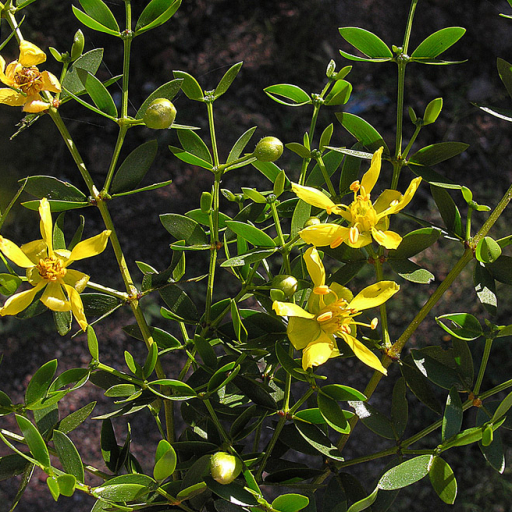
- 🌿 The Foliage: Small, dark green, resinous leaves that appear "fused" into two leaflets at the base. They have a waxy coating to prevent water loss.
- 🌼 The Flowers: Small, bright yellow blossoms with five petals that appear tucked among the branches during the growing season.
- ☁️ The Seed Pods: Once the flowers fade, they turn into distinctive, tiny white globes covered in soft, fuzzy hairs that help them catch the wind.
- 💧 The Texture: The entire plant feels slightly sticky or resinous to the touch, which is actually a protective layer of natural oils and waxes.
🏡 In Your Garden
- 🏜️ The Desert Specialist: This plant demands "neglect" to thrive. It requires extremely well-draining, sandy, or rocky soil. If the roots sit in damp, heavy clay, the plant will quickly decline.
- 🚫 A Solo Player: It is known for "allelopathy," meaning it releases chemicals into the surrounding soil to prevent other plants from growing too close. This is its way of ensuring it doesn't have to share precious water.
- ☀️ Sun Worshiper: It requires full, intense sun. In the shade, it becomes leggy and loses the resinous scent that makes it so iconic.
⚠️ Safety & Toxicity
- 🟡 Caution Advised: While it has a long history in traditional folk medicine (often called Chaparral), it should never be ingested without professional guidance.
- 🧪 Internal Risks: The plant contains Nordihydroguaiaretic acid (NDGA). High doses or long-term internal use have been linked to significant liver and kidney stress in both humans and pets.
- 🧴 Skin Sensitivity: The sticky resins can cause contact dermatitis or a mild rash in people with sensitive skin or those with specific plant allergies.
✨ Fun Fact
Larrea divaricata is a chemical powerhouse. It produces over 100 different types of resinous compounds. These aren't just for scent; they act as a biological "sunscreen" to protect the plant's DNA from the intense UV radiation of the desert sun!

Detailed Care Instructions
To grow Larrea divaricata, also known as creosote bush, you can follow these steps:
- Climate and soil requirements: Larrea divaricata is native to arid regions and can tolerate hot and dry climates. It prefers well-draining sandy or gravelly soil. Make sure the plant receives full sunlight for at least 6-8 hours a day.
- Seed collection and preparation: Harvest the seeds from mature creosote bushes during the fall. Collect the seeds from the seedpods, which are small and brown. Remove the seeds from the pods and place them in a paper bag to dry for a few weeks.
- Preparing the planting area: Clear the planting area by removing any weeds or grass. Use a shovel or tiller to loosen the soil to a depth of about 6-8 inches. Add organic matter, such as compost or well-rotted manure, to improve the soil's fertility and drainage.
- Planting the seeds: Once the seeds are dry, scatter them over the planting area or plant them individually in small holes. Cover the seeds with a thin layer of soil, about 1/4 inch deep. Water the area lightly to settle the soil and keep it moist.
- Watering and care: Larrea divaricata is drought-tolerant and does not require frequent watering. Water the plants sparingly, only when the soil is dry to the touch. Overwatering can lead to root rot and other problems. Once established, the plant will only require occasional watering during prolonged dry periods.
- Pruning: Prune the plant to maintain its shape and remove any dead or diseased branches. Avoid heavy pruning, as Larrea divaricata has a naturally dense and bushy growth habit.
- Pest and disease control: Creosote bushes are relatively resistant to pests and diseases. However, keep an eye out for spider mites, aphids, and leaf blight. If necessary, treat affected areas with organic insecticides or fungicides.
- Propagation: Apart from growing Larrea divaricata from seeds, you can also propagate it through cuttings. Take stem cuttings during spring or early summer, dip them in rooting hormone, and plant them in well-draining soil. Keep the cuttings moist until they form roots.
Remember to check if Larrea divaricata is legal to grow in your area, as it may be considered invasive in some regions. Additionally, always follow local guidelines for planting and invasive species management.

Place in a bright room that is sun drenched almost all day. Or directly in a south-facing window.

The best way to water this plant is to thoroughly saturate the soil around the base using a watering can or hose with a gentle flow. It is important to avoid getting water on the leaves as this can cause damage and lead to disease. The frequency of watering will depend on the climate and season, but generally this plant prefers drier conditions and should not be watered too frequently. It is important to allow the soil to dry out partially before watering again, as overwatering can lead to root rot and other problems. When watering, it is helpful to check the soil moisture level by sticking your finger into the soil about an inch deep – if it feels dry, it is time to water.
To provide proper fertilization for this plant, it is recommended to use a slow-release granular fertilizer with a balanced NPK ratio of 10-10-10 or 20-20-20. Apply the fertilizer evenly around the root zone of the plant, being careful not to directly contact the stem or leaves. Water the plant immediately after fertilizing to aid in nutrient uptake. Fertilize once every 2-3 months during the active growing season. Avoid fertilizing during periods of dormancy.
The ideal soil for this plant should be well-draining and slightly alkaline. It should also be low in organic matter and nutrients. A sandy loam or rocky soil would be suitable for this plant. When planting, make sure to mix in some coarse sand or gravel to improve drainage. The plant is adapted to arid environments, so it does not require a lot of watering and can grow in poor soils. However, it is important to ensure that the soil is not too compacted, as this can inhibit root growth and lead to waterlogging. Adding a layer of mulch around the plant can help to retain moisture and regulate soil temperature. Overall, the key to growing this plant successfully is to provide it with well-draining, nutrient-poor soil that mimics the conditions of its natural habitat.
Larrea Divaricata plant can be propagated by taking cuttings from mature plants. Select a healthy stem that is at least 4 inches long and free of disease and damage. Using a sharp, clean pair of pruning shears, cut the stem at a 45-degree angle just below a node. Remove any leaves from the lower half of the cutting.
Prepare a well-draining soil mix made of sand and peat moss or vermiculite. Moisten the soil mix with water. Dip the cut end of the cutting in rooting hormone powder and gently tap off any excess.
Make a small hole in the soil mix and gently insert the cutting, making sure that the bottom node is buried in the soil. Firm the soil around the cutting to ensure good soil-to-stem contact. Water the cutting thoroughly.
Cover the cutting with a clear plastic bag or container to create a humid environment. Place the container in a warm, bright location but out of direct sunlight. Monitor the cutting regularly and mist the soil if it starts to dry out.
After a few weeks, the cutting should start to develop roots. Once the roots are well-established, remove the plastic bag or container and gradually expose the cutting to more light. When the cutting has grown several new leaves and appears healthy, it can be transplanted into a larger pot or directly into the garden.








