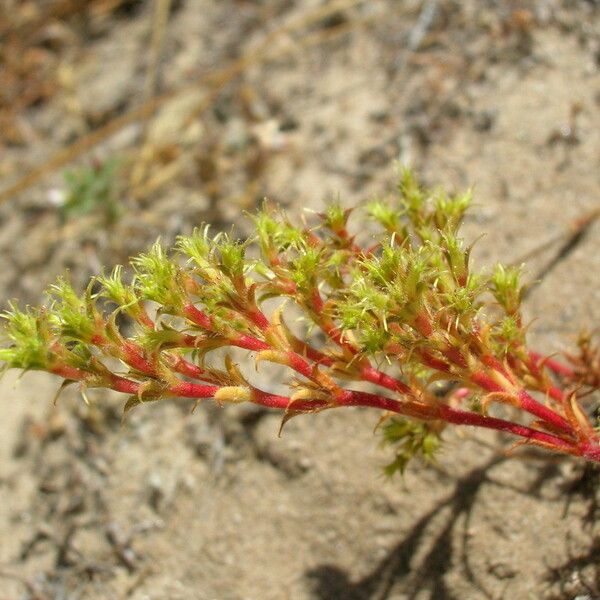
Plant Overview
Commonly known as the Leatherspine, this tiny, unassuming desert dweller has a surprising international history. While it looks like a humble ground-hugging weed, it is a master of hitchhiking, naturally occurring in both the dry sands of California and the arid regions of Chile. Its name comes from the tough, leathery texture of its stems and the tiny, hooked spines that protect its seeds.
🔍 How to Identify
- 🌵 Growth Habit: A low-growing, sprawling annual herb that forms small, tangled mats, rarely rising more than a few inches off the ground.
- 🍷 Stem Color: The stems are notably brittle and often turn a deep crimson or copper-red color, especially when the plant is stressed by intense sunlight.
- 🪝 The Spines: Look closely at the flower clusters; they are surrounded by tiny, hooked bracts that feel stiff and "leathery," designed to snag onto passing fur or fabric.
🏡 In Your Garden
- 🏜️ Soil Specialist: In nature, this plant is a specialist of sandy, open spaces and coastal scrub. It rarely survives in rich, loamy garden soil because it requires exceptionally sharp drainage to prevent root rot.
- 👣 The Hitchhiker: If you have this in your landscape, be prepared for it to spread. Its "leather spines" act like natural Velcro, meaning the seeds will follow you or your pets into the house after a walk through the garden.
⚠️ Safety & Toxicity
- 🩹 Status: Generally non-toxic but physically irritating.
- 🐕 Details: There are no recorded toxic effects for humans or pets if ingested. However, the hooked spines are sharp enough to become painfully embedded in a dog's paw or a hiker's socks, potentially causing minor skin irritation or mechanical injury.
✨ Fun Fact
- 🌎 The Great Leap: Lastarriaea coriacea is famous among botanists for its "disjunct" distribution. It grows in North and South America with thousands of miles of ocean and jungle in between, likely having crossed the equator by hitching a ride on the feathers of a migrating bird centuries ago!

Detailed Care Instructions

Water-loving plants flourish in wet or sloppy soil and near ponds. The extensive root system enables these plants to absorb plenty of water. The surface of the soil should be kept moist at all times. Place your pot in a container filled with water to guarantee that plants get enough water. If the ground becomes dry, it is recommended that you water it well. Plants in smaller pots will need to be watered more frequently. Water the soil in which the plant is standing thoroughly using a watering can.








