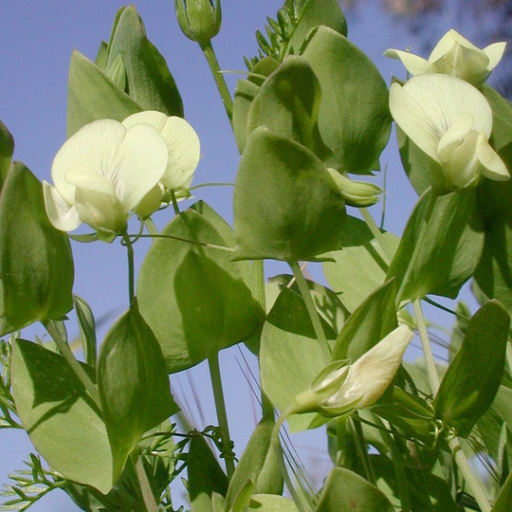
Plant Overview
Often called the Yellow Vetchling, this plant is a master of botanical disguise. While it appears to have simple, triangular leaves, it is actually a "leafless" wonder that has traded its true foliage for sensitive climbing tendrils. It is a delicate but hardy scrambler often found dancing through the tall grasses of meadows and field edges.
🔍 How to Identify
- 🍃 The "False" Leaves: What look like pairs of bluish-green, arrowhead-shaped leaves are actually enlarged stipules. They do the work of photosynthesis since the plant lacks traditional leaves.
- 🧶 Climbing Tendrils: Look for thin, wiry threads branching out from between the stipules; these are actually the plant’s true leaves, modified entirely for gripping and climbing.
- 🌼 Pale Yellow Blooms: It produces single, buttery-yellow flowers shaped like tiny pea blossoms that sit atop long, slender stalks.
🏡 In Your Garden
- 🧱 Soil Preference: This vetchling is a specialist for dry, well-drained, and lime-rich (alkaline) soils. It is often used in wildflower meadows to add a pop of subtle color to chalky or sandy patches.
- 🧗 The Scrambling Habit: Because it relies on its tendrils to reach the sun, it needs "neighbors." It performs best when allowed to weave through taller grasses or light shrubbery rather than being grown in a bare, open pot.
⚠️ Safety & Toxicity
- 🚫 Toxic Seeds: While it belongs to the pea family, it is definitely not for the dinner table. The seeds are toxic if consumed.
- 🐾 Pet & Human Risk: The plant contains amino acids that can cause lathyrism, a serious condition affecting the nervous system and mobility, if seeds are eaten in quantity. It is best kept away from curious pets and children.
✨ Fun Fact
🧬 Botanical Efficiency: Lathyrus aphaca is an evolutionary rebel. It is one of the very few plants that has completely outsourced the job of photosynthesis to its leaf-base attachments (stipules) so that its primary "limbs" could become specialized climbing hooks!

Detailed Care Instructions
To grow Lathyrus aphaca (yellow vetch), follow these steps:
- Choose the right location: Yellow vetch prefers full sun to partial shade. Select an area in your garden that receives at least 6 hours of sunlight per day.
- Prepare the soil: Yellow vetch thrives in well-draining soil. Loosen the soil and remove any weeds or debris. Adding compost or organic matter will improve soil fertility.
- Sow the seeds: Yellow vetch is generally sown directly into the ground. Plant the seeds about 1 inch deep and space them 6-8 inches apart. If you have multiple rows, keep each row at least 12 inches apart.
- Watering: Keep the soil evenly moist but not waterlogged. Water the plants regularly, especially during dry periods. Avoid overhead watering to prevent fungal diseases.
- Support: As the plants grow, they might need support. Yellow vetch is a climbing plant, so provide trellises, fences, or stakes for the vines to climb onto. This will help keep the plant upright and prevent it from sprawling.
- Mulch: Apply a layer of organic mulch around the plants to conserve moisture, suppress weed growth, and improve the soil's temperature stability. This can be done after the seedlings have emerged.
- Fertilize: Yellow vetch is a legume and tends to fix its own nitrogen through its root nodules. Therefore, additional nitrogen fertilizer is usually not necessary. However, if the plants appear weak or pale, you can apply a balanced fertilizer sparingly.
- Pruning: To encourage branching and more vigorous growth, pinch back the terminal ends of the vines when they are about 6-8 inches tall. This will help create a bushier plant.
- Pest and disease control: Yellow vetch is generally resistant to most pests and diseases. However, keep an eye out for aphids, which can be controlled with insecticidal soap or neem oil if necessary.
- Harvesting: Yellow vetch produces attractive yellow flowers in spring and early summer. If you're growing it as a cover crop, you can allow the plant to go to seed and collect the seeds for future use. If you're growing it for ornamental purposes, enjoy the flowers and trim them back as desired.
Remember to check your local agricultural extension office or gardening resources for specific regional information and growing recommendations for Lathyrus aphaca.

Place in a bright room that is sun drenched almost all day. Or directly in a south-facing window.

To water this specific plant, it is recommended to use a watering can to ensure that the water is delivered directly to the soil around the plant. Watering should be done when the soil feels dry to the touch, but be careful not to overwater as this can cause root rot. It is also important to avoid getting water on the leaves as this can cause fungal diseases. Aim to water deeply and infrequently rather than shallow and often to encourage deep root growth. Additionally, it is recommended to mulch around the plant to help retain moisture in the soil.
For optimal growth of this plant, apply a complete fertilizer with an NPK ratio of 5-10-10 every 4-6 weeks throughout the growing season. Avoid over-fertilization as it can lead to excessive vegetative growth and reduced flower production. Apply fertilizer directly to the soil, careful not to splash on the leaves, and water thoroughly after each application.
The best type of soil to use for this plant is one with good drainage and abundant nutrients. The soil should be neutral to slightly alkaline, with a pH between 6.0 and 7.5. It should be rich in organic matter, such as compost or well-rotted manure, and have good aeration. The plant prefers loamy or sandy soils and can tolerate moderately saline soils. It is important to avoid heavy clay soils that can easily become waterlogged and suffocate the roots. The plant grows best in full sun or partial shade, but too much shade can affect the growth and flowering of the plant. Adequate moisture is necessary, but overwatering and soggy soils should be avoided. Adding a layer of mulch can help to retain moisture and suppress weed growth.
Propagation of this plant can be done through seed or vegetative propagation. To propagate through seeds, harvest the seeds once the seed pods have dried and turn brown, then plant the seeds in a well-draining soil mix and keep the soil consistently moist. The seeds should germinate in 1-2 weeks.
To propagate through vegetative means, take stem cuttings from new growth in the spring or summer. Cut a 4-6 inch section of stem and remove the lower leaves. Dip the cutting in rooting hormone and plant it in a well-draining soil mix. Keep the soil consistently moist and provide indirect sunlight until the cutting has rooted, which can take 4-6 weeks.








