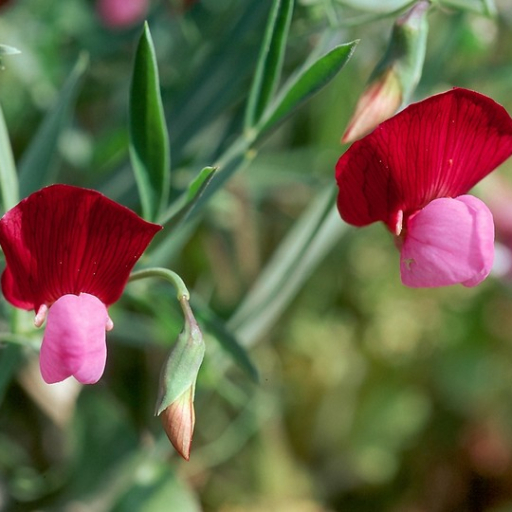
Plant Overview
Often called the Spanish Vetchling, Lathyrus clymenum is a Mediterranean treasure that blurs the line between a beautiful wildflower and a gourmet staple. While it looks like a delicate sweet pea, it is most famous for producing the seeds used in the world-renowned Santorini "Fava" dish. It is a resilient climber that tells a story of volcanic soil and ancient Aegean sunshine.
🔍 How to Identify
- 🌸 Bi-color Blooms: The flowers are a striking visual treat, usually featuring vibrant crimson or pinkish "wings" paired with a deeper violet or blue upper petal (the standard).
- 🌿 Winged Stems: Unlike many round-stemmed plants, this vetchling has flattened, "winged" stems that give the plant a distinct, architectural look even when not in bloom.
- 🧗 Climbing Tendrils: The leaves end in branching, wiry tendrils that allow the plant to scramble over rocks, fences, or neighboring shrubs with ease.
🏡 In Your Garden
- 🏜️ Mediterranean Roots: This plant thrives in poor, rocky, or sandy soils where other plants might struggle. It is perfectly adapted to "lean" environments and requires very little pampering once established.
- 🌱 Soil Improver: As a member of the legume family, it possesses the "superpower" of nitrogen fixation. It works with soil bacteria to pull nitrogen from the air, naturally fertilizing the ground for future inhabitants.
- ☀️ Sun Seeker: It demands full sun to produce its signature bicolor flowers. In a garden setting, it works beautifully as a "filler" that can climb through sturdier perennials or over a low trellis.
⚠️ Safety & Toxicity
- 🐕 Pet & Child Safety: Like many members of the Lathyrus genus, the seeds can be toxic if consumed raw or in large quantities over a long period.
- ⚠️ Lathyrism Risk: The seeds contain an amino acid that can cause "lathyrism" (a neurological condition) if they are a primary food source. While it is a famous food crop in Greece, the seeds are always dried and processed. Keep the raw pods and seeds away from curious pets and toddlers.
✨ Fun Fact
Despite being called "Fava" in Greece, this plant is not a broad bean (Vicia faba) at all! The Lathyrus clymenum grown on the island of Santorini has Protected Designation of Origin (PDO) status, meaning true "Santorini Fava" can only come from these specific, ancient vines grown in volcanic ash.

Detailed Care Instructions
To grow Lathyrus Clymenum, also known as Spanish Pea, you can follow these steps:
- Choose a suitable location: Lathyrus Clymenum prefers full sun to light shade. Select a spot in your garden that receives at least 6-8 hours of direct sunlight daily. Ensure the soil is well-draining.
- Prepare the soil: Before planting, enrich the soil with organic matter like compost or well-rotted manure. This helps improve soil fertility and drainage.
- Sow the seeds: Lathyrus Clymenum seeds can be sown directly into the ground in early spring or late autumn. Create small furrows in the soil about 1 inch deep and space them 6-8 inches apart. Place a seed in each furrow and cover it with soil. Water gently after sowing.
- Watering and maintenance: Keep the soil moist but not waterlogged until the seeds germinate. Once the plants are established, water them deeply once or twice a week. Mulching around the plants can help retain moisture and suppress weed growth.
- Provide support: Lathyrus Clymenum is a climbing plant that requires support to grow. Install trellises, stakes, or any vertical structures near the planting area where the vines can climb and twine.
- Fertilize: Feed the plants with a balanced organic fertilizer every 4-6 weeks during the growing season to encourage healthy growth and blooming.
- Pruning and deadheading: Regularly remove spent flowers to promote continuous blooming. Prune back any leggy or excessive growth to maintain a tidy appearance.
- Pest and disease control: Keep an eye out for common pests like aphids, slugs, and snails. Use organic pest control methods or treatments if necessary. Watch for signs of diseases such as powdery mildew or rust, and take appropriate measures to prevent their spread.
- Harvesting: Lathyrus Clymenum produces small, delicate flowers in shades of pink and purple. Harvest the flowers regularly to encourage more blooms. Cut the stems just above a leaf node to promote branching.
Following these steps should help you successfully grow Lathyrus Clymenum plants in your garden.

Place in a bright room that is sun drenched almost all day. Or directly in a south-facing window.

The best way to water this plant is to do it regularly and consistently. This plant likes to be kept moist, but not too wet. It is important to ensure that the water drains well and does not collect around the roots, as this can cause root rot. When watering, it is best to water the soil around the plant rather than the leaves. This will help avoid any fungal issues. The amount of water required will depend on the temperature, humidity, and sunlight exposure of the plant's environment, as well as its growth stage. It is important to monitor the soil moisture level and adjust watering accordingly.
- Start by preparing the soil for planting the Lathyrus Clymenum plant. Ensure the soil is well-draining and rich in organic matter.
- Before planting, it's advisable to incorporate some well-balanced granular fertilizer into the soil. Follow the specific product's instructions for the recommended application rate.
- After planting, wait for the plant to establish itself before applying any additional fertilizer. Typically, this can take several weeks or until you notice active growth.
- Once the plant is established, apply a slow-release or controlled-release fertilizer according to the package instructions. These fertilizers gradually release nutrients over an extended period, providing a steady supply to the plant.
- It's essential not to over-fertilize the Lathyrus Clymenum plant as this can lead to excessive vegetative growth, reduced flowering, or even burn the roots. It's better to under-fertilize and apply additional nutrients later if necessary.
- To prevent potential nutrient deficiencies, occasionally supplement the plant with a balanced liquid fertilizer. Dilute the fertilizer according to the package instructions and apply it to the plant's base or as a foliar spray.
- Regularly monitor the health of the plant and adjust fertilization practices as needed. Signs of nutrient deficiency or excess, such as yellowing of leaves or stunted growth, should be addressed promptly.
- Water the Lathyrus Clymenum plant after each fertilization to ensure the nutrients reach the roots and start working effectively.
- Lastly, remember that while fertilization is important for optimal growth, it should be accompanied by proper watering, sunlight exposure, and other care practices to maintain the overall health of the plant.
Lathyrus clymenum is a flowering plant that requires well-drained soil to grow. It prefers a soil that is rich in organic matter and has a neutral to slightly acidic pH. The soil should be moist but not waterlogged, as excessive moisture can lead to root rot. It is also recommended to add a balanced fertilizer to the soil before planting to ensure proper nutrition for the plant. When choosing soil for Lathyrus clymenum, it is important to avoid heavy clay soils and sandy soils that do not retain moisture well. A loamy soil that is a mixture of sand, silt, and clay is ideal for this plant.
To propagate Lathyrus Clymenum, you can follow these steps:
- Start by gathering ripe seeds from mature pods of the Lathyrus Clymenum plant. Ensure the pods have dried completely on the plant before collecting them.
- Once you have collected the seeds, separate them from the pods and any debris by gently rubbing them between your fingers.
- Fill a small pot or seed tray with a well-draining potting mix. Make sure the pot has drainage holes at the bottom.
- Moisten the potting mix slightly using distilled or rainwater. Avoid using tap water, as it may contain chemicals that can hinder germination.
- Scatter the Lathyrus Clymenum seeds evenly on the surface of the potting mix. Lightly press them into the soil, ensuring they are in good contact without burying them too deep.
- Sprinkle a thin layer of additional potting mix over the seeds, just enough to cover them lightly.
- Place a clear plastic bag or a plastic wrap over the pot to create a mini greenhouse effect. This will help retain moisture and create a favorable environment for germination.
- Keep the pot in a warm and well-lit area, but away from direct sunlight. The ideal temperature for germination is around 70-75°F (21-24°C).
- Check the pot regularly to ensure the soil remains moist but not waterlogged. If needed, mist the potting mix with water to maintain adequate moisture levels.
- After approximately 2-4 weeks, you should start to see tiny seedlings emerging from the soil. At this stage, remove the plastic covering to allow for better airflow.
- Continue watering the seedlings regularly, but avoid overwatering, as excessive moisture can lead to rot.
- Once the Lathyrus Clymenum seedlings have grown to a suitable size, usually around 2-3 inches tall, carefully transplant them into individual pots or directly into the garden.
- Choose a permanent location for the plants that provides full sun to partial shade and has well-draining soil.
- Water the newly transplanted seedlings regularly until they establish a strong root system.
- As the plants grow, provide support in the form of trellises or stakes to help them climb and prevent sprawling.
By following these steps, you can successfully propagate Lathyrus Clymenum plants from seeds and enjoy the beauty of this species in your garden.








