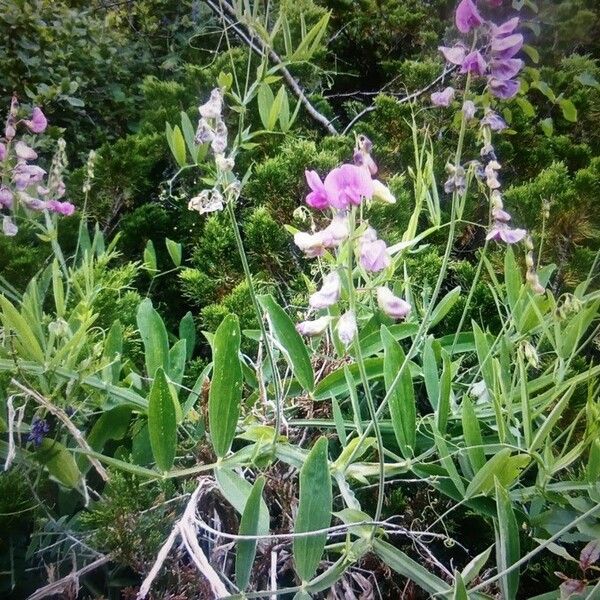
Plant Overview
Often called the Norfolk Everlasting-pea, this hardy climber is a master of resilience and vertical charm. Unlike its fragile annual cousins, this perennial vine returns year after year to drape garden fences in a cascade of magenta blossoms. It’s a favorite for those wanting a wild, cottage-garden aesthetic without the high-maintenance demands of delicate florist peas.
🔍 How to Identify
- 🦋 Winged Stems: Look closely at the stems; they feature unique, flattened "wings" or ridges running along the sides, which help the plant gather extra sunlight and provide structural strength.
- 🍃 Transforming Leaves: True to its name (heterophyllous means "different leaves"), the foliage changes shape as it climbs. Lower leaves are often broader and simpler, while the upper leaves become narrower and sprout wiry, grasping tendrils.
- 🌸 Pea-Shaped Blooms: It produces clusters of 3 to 10 scentless flowers. These classic legume blossoms range from a soft rose-pink to a deep, regal magenta, appearing throughout the mid-to-late summer.
🏡 In Your Garden
- 🧗 The Natural Scrambler: This plant doesn't just grow; it explores. It uses its tendrils to hoist itself up trellises or through neighboring shrubs. It is excellent for "living privacy screens," though it needs a sturdy structure to hold its weight as it matures.
- 🌱 Deep Roots, No Moves: It develops a powerful, deep root system that makes it incredibly drought-tolerant once established. However, this taproot makes it very grumpy if you try to move it; choose its permanent home carefully to avoid transplant shock.
⚠️ Safety & Toxicity
- 🚫 Non-Edible: Despite its resemblance to the common garden pea, the Norfolk Everlasting-pea is not edible.
- 🐾 Pet & Human Risk: All parts of the plant, especially the seeds (peas) inside the pods, contain lathyrogens. If ingested in significant quantities, these can cause "lathyrism," a serious condition affecting the nervous system. Keep this plant away from curious pets and young children who might mistake the pods for snacks.
✨ Fun Fact
The specific epithet heterophyllus comes from the Greek words heteros (different) and phyllon (leaf). It was named this because botanists were fascinated by how the plant transitions from broad, simple leaves near the soil to complex, "winged" leaves as it reaches for the sky!

Detailed Care Instructions
To grow Lathyrus heterophyllus, also known as the Lord Anson's Blue Pea, you can follow these steps:
- Choose a suitable location: Lathyrus heterophyllus requires full sun to partial shade. Select a spot in your garden that receives at least 6 hours of direct sunlight daily.
- Prepare the soil: The plant prefers well-draining soil that is rich in organic matter. Amend the soil with compost or well-rotted manure to improve its fertility and drainage.
- Plant the seeds: Sow the seeds directly into the soil in early spring or late fall, depending on your climate. The optimal soil temperature for germination is between 50-60°F (10-15°C). Plant the seeds about 1 inch deep, spacing them 6-8 inches apart. If planting multiple rows, space the rows about 12-18 inches apart.
- Watering: Keep the soil consistently moist but avoid overwatering. Water the plants regularly, especially during dry spells or hot weather.
- Provide support: Lathyrus heterophyllus is a climbing vine that requires support to grow upwards. Install a trellis, fence, or other vertical structures for the plant to climb on. As the plant grows, gently guide its tendrils towards the support structure.
- Mulching: Apply a layer of organic mulch around the base of the plants to help conserve moisture, suppress weeds, and regulate soil temperature.
- Fertilization: Apply a balanced, all-purpose fertilizer every 4-6 weeks during the growing season to provide essential nutrients. Follow the instructions on the fertilizer package for proper dosage and application.
- Pruning: Regularly check for dead or damaged foliage and remove it to maintain plant health and aesthetics. Additionally, if the plant becomes too dense, you can prune it back to encourage better airflow and prevent diseases.
- Pest and disease control: Keep an eye out for common garden pests like aphids, snails, and slugs. Remove them by hand or use organic pest control methods if necessary. Lathyrus heterophyllus is generally resistant to diseases but keep an eye out for signs of fungal infections or other issues.
- Harvesting: Lathyrus heterophyllus produces beautiful blue flowers that you can harvest for floral arrangements. Cut the flowers just as they open for best vase life. Deadheading, or removing spent blooms, will encourage the plant to continue producing more flowers.
By following these guidelines, you can successfully grow Lathyrus heterophyllus and enjoy its stunning blue flowers in your garden.

Place in a bright room that is sun drenched almost all day. Or directly in a south-facing window.

To water this plant, it is important to ensure that the soil is well-drained and not waterlogged. Allow the top layer of soil to dry out slightly before watering again. When watering, aim to water deeply, ensuring that water reaches the roots. Avoid getting the foliage wet, as this can lead to fungal diseases. It is recommended to water early in the morning or late in the evening to avoid evaporation and scorching of the plant. Be careful not to overwater, as this can lead to root rot and damage to the plant.
- Begin fertilizing your plant in early spring, once it has begun to establish new growth.
- Use a balanced, slow-release fertilizer with a ratio of 10-10-10 or 20-20-20.
- Apply the fertilizer evenly around the base of the plant, being careful not to let it touch the stems or leaves.
- Water the plant thoroughly after applying the fertilizer to help it absorb the nutrients.
- Repeat this process every 4-6 weeks throughout the growing season, typically from spring until late summer.
- Once fall arrives, stop fertilizing the plant to allow it to prepare for dormancy.
- Remember to always follow the manufacturer's instructions when fertilizing your plant to avoid over-fertilization, which can damage the plant and harm the environment.
Lathyrus heterophyllus requires a well-draining soil with a pH range of 5.5 to 7.5. The soil should be rich in nutrients and organic matter, with good water retention capacity. It is recommended to mix in compost or well-rotted manure to improve soil fertility. The plant prefers a slightly alkaline soil, so adding lime may be necessary if the soil is too acidic. It is important to avoid using heavy clay soils or those with poor drainage.
To propagate this plant, you will need to take stem cuttings from a healthy parent plant. Select a stem that is about 4-6 inches long and has several healthy leaves. Using a sharp, clean pair of scissors or garden clippers, cut the stem just below a node. Remove any leaves from the bottom half of the stem.
Place the stem cutting in a jar or vase with clean water, making sure that the bottom of the stem is submerged. Place the jar in a bright, indirect light location, away from direct sunlight. Change the water every 2-3 days to prevent bacterial growth and fungal infections.
After about 2-3 weeks, you should begin to see roots developing from the bottom of the stem. Once the roots are about an inch long, you can transplant the cutting into a small pot filled with a well-draining potting mix. Keep the newly potted cutting in a warm, humid location and water it regularly to keep the soil moist.
Continue to care for the new plant as it grows, gradually introducing it to more sunlight and adjusting watering as needed. With proper care, your new Lathyrus Heterophyllus plant should thrive and grow into a healthy, mature plant.








