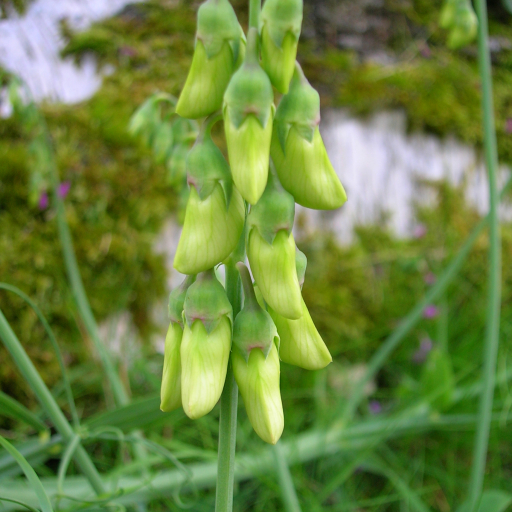
Plant Overview
Often known as the Bitter Vetch or Heath Pea, this charming wild perennial is a secret survivor of the European countryside. Historically, it was more than just a pretty face; it was a "miracle herb" used by Scottish Highlanders to stave off hunger and thirst for days at a time. Today, it is a favorite for wildflower enthusiasts looking to add a touch of ancient woodland magic to their gardens.
🔍 How to Identify
- 🌸 Color-Changing Blooms: The pea-like flowers appear in clusters of two to six, starting as a vivid crimson-pink and maturing into a cool, dusty blue or purple as they age.
- 🌿 Narrow Leaves: Unlike many of its cousins, its leaves are narrow and lance-shaped (the name linifolius means "flax-like leaves") and lack the climbing tendrils typical of most sweet peas.
- 📐 Winged Stems: If you look closely at the stems, you’ll notice they aren't round; they have thin, leaf-like "wings" running down the sides, giving the plant a flat or angled appearance.
🏡 In Your Garden
- 🌱 The Nitrogen Fixer: As a member of the legume family, this plant works hard underground. It has a symbiotic relationship with soil bacteria that captures nitrogen from the air, naturally fertilizing the soil for its neighbors.
- ⛰️ Acid Lover: Unlike many garden peas that crave lime, the Bitter Vetch thrives in acidic, nutrient-poor soils. It is perfect for those "difficult" spots like grassy banks, open woodlands, or heathland-style rockeries.
- 🦋 Pollinator Magnet: Its deep-throated flowers are a specialized feast for long-tongued bees, making it an essential addition to any biodiversity-focused garden.
⚠️ Safety & Toxicity
- 🟢 General Status: Generally considered safe to touch, but caution is required regarding ingestion.
- 🥘 Historical Context: While the small, tuberous roots were traditionally eaten to suppress appetite, many Lathyrus species contain a toxin called ODAP. If consumed in very large quantities over a long period, it can lead to a neurological condition called lathyrism.
- 🐾 Pets & Kids: It is best to keep this plant out of reach of curious nibblers, as the seeds (peas) can cause digestive upset or more serious symptoms if eaten in bulk.
✨ Fun Fact
In the 1700s, it was rumored that eating just a small piece of the Bitter Vetch root would allow a person to go without food or drink for an entire week. It was even used as a "diet aid" long before modern medicine!

Detailed Care Instructions
To grow Lathyrus linifolius (bitter vetch) plants, follow these steps:
- Choose a suitable location: Lathyrus linifolius prefers full sun to partial shade. Select a location with well-draining soil.
- Prepare the soil: The soil should be rich in organic matter. Add compost or well-rotted manure to enhance the soil fertility. Ensure the soil pH is slightly acidic to neutral (around 6.0 to 7.0 pH).
- Planting: Sow the seeds directly into the soil during the early spring or fall. If the soil is heavy clay, improve drainage by adding sand or perlite. Space the seeds about 2-3 inches apart and plant them at a depth of 1-2 inches.
- Watering: Keep the soil consistently moist during the germination period, which usually takes around 10-14 days. Once the plants are established, water them once or twice a week, providing about 1 inch of water each time. Avoid over-watering, as excessive moisture may cause root rot.
- Fertilization: Prior to planting, incorporate a balanced slow-release fertilizer or compost into the soil to provide essential nutrients. Alternatively, you can use a liquid fertilizer every 4-6 weeks during the growing season to promote healthy growth and blooming.
- Mulching: Apply a layer of mulch around the plants to help retain moisture, suppress weed growth, and maintain an even soil temperature. Organic mulch, such as wood chips or straw, works well.
- Support: Lathyrus linifolius is a climbing vine, so provide support for the plants to climb on. Install trellises, fences, or other suitable structures that allow the vines to grow vertically.
- Pruning: Regularly remove any dead or faded flowers to encourage continuous blooming. Additionally, you can cut back the plants by a third after the first flush of flowers to promote a second round of blooms.
- Pest and Disease Control: Monitor the plant for common pests such as aphids, snails, and slugs. Treat infestations promptly using organic methods or insecticidal soap. Lathyrus linifolius is generally disease-resistant.
With proper care and attention, Lathyrus linifolius should grow well and reward you with beautiful, delicate flowers. Enjoy the process of nurturing and observing the growth of this lovely plant!

Place in a window with dappled sun or a spot in the middle of a room. Or directly in a window facing west or east.

The Lathyrus Linifolius plant should be watered regularly, but not too frequently as it may lead to waterlogging and root rot. It prefers a well-draining soil that doesn't hold too much water.
To water, you should wait until the top layer of soil is dry to the touch before providing additional water. This can be gauged by sticking your finger into the soil or by using a moisture meter.
When watering, slowly add water to the soil around the base of the plant until the soil is moderately moist. It's important to avoid getting water on the foliage, as this can lead to fungal problems.
In the summer months, when the plant is actively growing and flowering, you may need to water more frequently, while in the cooler months, you can reduce watering.
It's also important to make sure the plant is getting enough sunlight and that the soil is enriched with organic matter.
To fertilize this plant, you should use a balanced fertilizer with equal amounts of nitrogen, phosphorus, and potassium. Apply the fertilizer in early spring before the new growth appears, and again in mid-summer, following the package directions. Be careful not to over-fertilize, as this can cause the plant to produce more foliage than flowers and become top-heavy. Water the plant deeply after fertilizing to help distribute the nutrients throughout the soil.
In order to grow the plant Lathyrus Linifolius effectively, it is recommended to use a well-draining soil mix that conforms to the pH level of approximately 6 to 7.5. Additionally, the soil should contain nutrients such as phosphorus, nitrogen, and potassium, which are necessary for the plant’s growth and development. It is advisable to incorporate organic matter in the soil to enhance soil fertility and water retention capabilities. Moreover, the soil should be adequately moistened, but not waterlogged, to ensure optimal plant growth. In summary, a balanced and nutrient-rich soil with adequate moisture levels is the ideal choice for planting Lathyrus Linifolius.
First, locate a mature plant and carefully dig up a portion of the root system. Divide the root system into smaller pieces, making sure each piece has some healthy roots attached.
Prepare a planting site in a well-draining soil with partial shade. Plant the root pieces in the soil, making sure the top of each piece is just below the soil surface. Water thoroughly and keep the soil moist but not waterlogged.
Alternatively, Lathyrus Linifolius can also be propagated from seed. Collect seed pods from a mature plant and allow them to dry out completely. Once the pods are dry, gently crack them open and remove the seeds.
Prepare a seed starting mix with equal parts peat moss and perlite. Moisten the mix and fill small containers or seed trays. Plant the seeds about 1/2 inch below the soil surface and cover with a light layer of soil. Keep the soil moist and provide bright, indirect light.
The seeds should germinate in one to two weeks. Once the seedlings have developed their second set of true leaves, they can be transplanted into individual pots or into a prepared outdoor planting site. Keep the soil moist and provide partial shade until the seedlings have become established.








