Plant Overview
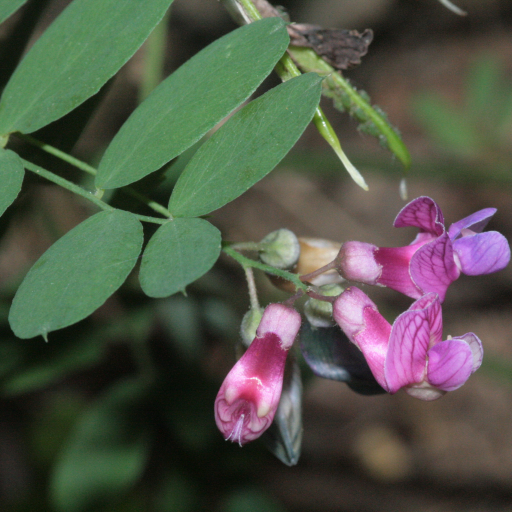
Often called the Black Pea or Black Bitter-vetch, Lathyrus niger is a sophisticated, upright perennial that defies the typical climbing habit of its sweet pea cousins. It earns its name from a curious botanical vanishing act: its lush green foliage turns an intense, ink-black color when the plant dies back or is dried. This plant brings a touch of moody woodland elegance to any shade-dappled corner of the garden.
🔍 How to Identify
- 🌿 The Foliage: Unlike many peas, this plant lacks climbing tendrils. It features elegant, pinnate leaves with 4 to 6 pairs of oval, dark-green leaflets that grow in a tidy, bushy clump.
- 🌸 The Bloom: In early to mid-summer, it produces one-sided clusters (racemes) of pea-like flowers. They emerge as a vivid reddish-purple and gracefully transition to a dusty violet-blue as they age.
- 🏗️ The Stems: The stems are stiff, angled, and self-supporting, reaching about 2 to 3 feet in height, meaning you won't need to provide a trellis or netting.
🏡 In Your Garden
- 🌳 Woodland Roots: This species is native to European forests, meaning it thrives in "edge-of-woods" conditions. It prefers well-drained soil and dappled sunlight; it will struggle in heavy, waterlogged clay or harsh, direct midday sun.
- ✂️ The "Black" Transition: If you are a fan of dried flower arrangements or herbariums, this plant is a must-have. When the stems are cut and dried, they transform from vibrant green to a striking jet-black, providing a unique architectural element to winter decor.
⚠️ Safety & Toxicity
- 🐾 Caution Recommended: Like many members of the Lathyrus genus, the seeds and pods contain L-alpha-amino-beta-oxalylaminopropionic acid (ODAP).
- 👶 Potential Risk: While not usually fatal in small garden encounters, ingesting large quantities of the seeds can cause a neurological condition called lathyrism. It is best kept away from curious pets and young children who might be tempted by the "pea-like" pods.
✨ Fun Fact
- 🖤 Botanical Ink: In the Victorian era, botanists and collectors prized Lathyrus niger for their herbarium scrapbooks because it was one of the few plants that would reliably turn a perfect, deep black when pressed, looking like a delicate Victorian silhouette on the page.

Detailed Care Instructions

Place in a window with dappled sun or a spot in the middle of a room. Or directly in a window facing west or east.

Some plants require more regular watering than others, which should be done every few days. It's critical to maintain the soil moist all of the time. The water requirements of the same plant placed in pots with varying sizes will differ. Because the water in the smaller pot evaporates faster than the water in the larger pot, it will require more watering. Regardless of pot size, the surface should constantly be maintained moist.








