Plant Overview
The Grass Vetchling is nature’s ultimate master of disguise. Often referred to as the "Invisible Pea," this plant mimics the look of common meadow grasses so perfectly that it remains completely hidden until its vibrant flowers suddenly appear. Native to Europe and parts of North Africa, it is a charming, delicate wildflower that brings a touch of "find me if you can" magic to any naturalized garden space.
🔍 How to Identify
- 🌿 The "Fake" Leaves: Instead of traditional leaves, this plant has phyllodes—flattened leaf stalks that look exactly like blades of grass. They are long, narrow, and lack the usual leaflets found in the pea family.
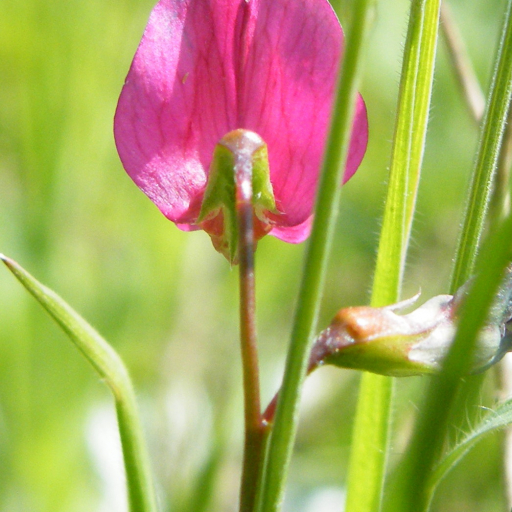
- 🌸 The Crimson Soloist: Unlike many of its cousins that grow in clusters, the Grass Vetchling usually produces one or two small, bright crimson-to-pink pea-shaped flowers at the end of a long, thin stalk.
- 🫛 The Linear Pods: Following the bloom, it develops long, straight, and slender seed pods that start green and turn a light tan color as they ripen, eventually twisting to fling seeds away.
🏡 In Your Garden
- 🌾 The Meadow Mystery: This plant is perfect for "wild" or "no-mow" areas. Because it is an annual that relies on self-seeding, it thrives in undisturbed grassy banks where it won't be outcompeted by aggressive perennials.
- 🌱 The Invisible Guest: It is notoriously difficult to spot when not in bloom. If you are trying to establish it, mark your planting spots carefully; otherwise, you might accidentally weed it out, thinking it’s just a stray blade of grass!
⚠️ Safety & Toxicity
- 🚫 Non-Edible: While it is a member of the pea family (Fabaceae), the Grass Vetchling is not a food crop.
- 🐾 Pet & Human Caution: Like many members of the Lathyrus genus, the seeds can contain amino acids that are toxic if consumed in large quantities over time (a condition known as lathyrism). It is best kept away from curious pets and children who might mistake the pods for edible peas.
✨ Fun Fact
The specific name nissolia honors the 18th-century French botanist Guillaume Nissolle. However, its most fascinating trait is evolutionary: by looking like grass, it avoids being eaten by herbivores who are looking for more "leafy" and nutritious-looking plants!

Detailed Care Instructions
To grow Lathyrus Nissolia, also known as the Grass Vetchling or heath pea, follow these steps:
- Climate and location: Lathyrus Nissolia thrives in temperate climates, so choose a location with full or partial sunlight. It prefers well-draining soil, so ensure that the soil is fertile, loamy, and slightly acidic.
- Planting: Sow the seeds in spring or early fall. Loosen the soil and remove any weeds or debris. Dig small holes 1-2 inches deep, spacing them 4-6 inches apart. Place one seed in each hole and cover it lightly with soil.
- Watering: Keep the soil moist, but not waterlogged. Water the plants regularly, especially during dry spells. Avoid overhead watering, as it may promote disease. Consider using drip irrigation or watering at the base of the plant.
- Support: Lathyrus Nissolia is a climbing plant that forms tendrils to grip onto supports. Provide a trellis, fence, or other support structure for the plants to grow vertically. This will prevent the vines from trailing on the ground and minimize disease risks.
- Fertilization: Apply a balanced fertilizer, such as a 10-10-10 NPK (nitrogen-phosphorus-potassium) fertilizer, once every month during the growing season. This will provide essential nutrients for healthy growth and flowering.
- Pruning: Trim the plants regularly to encourage bushier growth and promote better airflow. Pruning also helps to remove faded flowers and control the size of the plant.
- Pests and diseases: Watch out for common garden pests like aphids and slugs. Use organic or chemical controls as necessary. Additionally, maintaining good air circulation and avoiding overwatering can help prevent diseases such as powdery mildew.
- Harvesting: Once the plants start flowering, you can collect the seeds for future propagation. Allow the seed pods to dry on the vine, then harvest and store them in a cool, dry place.
By following these steps, you can successfully grow Lathyrus Nissolia and enjoy its beautiful flowers in your garden.

Place in a bright room that is sun drenched almost all day. Or directly in a south-facing window.

Lathyrus Nissolia is a type of plant that requires regular watering in order to thrive. When watering this plant, it is important to ensure that the soil is evenly moist, but not waterlogged. One way to achieve this is to water the plant deeply and then allow the soil to dry out slightly before watering again. It is also important to avoid getting water on the leaves of the plant, as this can lead to fungal diseases.
To water Lathyrus Nissolia, start by checking the soil moisture level. Stick your finger into the soil to a depth of about an inch. If the soil feels dry at this depth, it is time to water the plant. Use a watering can or hose to water the plant deeply, making sure the water is soaking into the soil rather than running off the surface.
Avoid overwatering the plant, which can lead to root rot and other problems. If the soil is consistently wet or waterlogged, reduce the amount of water you are giving the plant and allow the soil to dry out slightly between waterings.
In general, Lathyrus Nissolia plants require more water during hot, dry weather and less water during cool, wet weather. Adjust your watering schedule accordingly to ensure that the plant is getting the right amount of water throughout the growing season.
To fertilize this plant, it is recommended to use a balanced fertilizer with equal amounts of nitrogen, phosphorus, and potassium. Apply the fertilizer to the soil around the plant every 4-6 weeks during the growing season, following the manufacturer's recommended application rate. Be sure to water the plant thoroughly after fertilizing, and avoid getting any of the fertilizer on the leaves or stems of the plant.
Lathyrus Nissolia requires a well-draining soil that is rich in nutrients. It is recommended to use a mixture of loamy soil and organic compost, with a pH range of 6-7.5. The soil should have a good structure and be able to retain moisture without becoming waterlogged. The addition of perlite or vermiculite can help improve the soil's drainage and aeration. It is also important to avoid using soil that has been previously contaminated with chemicals or pesticides, as this can negatively impact the plant's growth.
To propagate this particular plant, one can first harvest mature seeds from the parent plant. The seeds can be sown directly into a well-draining soil mixture at a depth of about 1-2 inches. Alternatively, one can start the seeds indoors in late winter or early spring, and transplant them outdoors once they have germinated and grown a few inches.
Another method of propagation is through stem cuttings. Select healthy stems that are at least 4-6 inches long, and remove the bottom leaves. Dip the cut end in rooting hormone powder, and place it in a container with moist soil mix. Keep the container in a warm and humid location, and mist the cutting frequently to keep it from drying out. Once new growth appears, the cutting can be transplanted outdoors.
Lathyrus Nissolia can also be propagated by division. Carefully dig up the parent plant and separate the clumps into individual plants. Replant the divided plants in a suitable location, taking care to water them frequently until they are established.








