Plant Overview
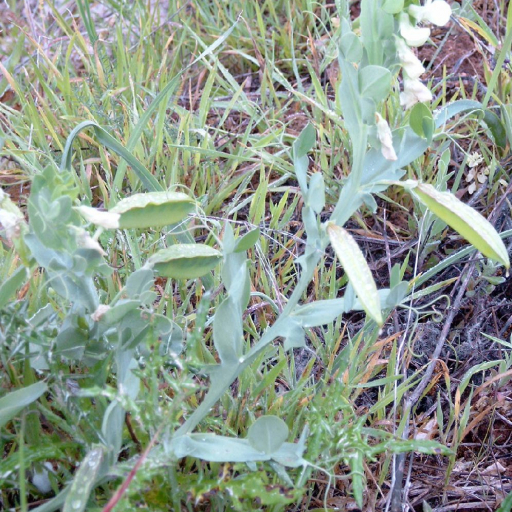
Known affectionately as the Pale Pea or Winged Vetchling, Lathyrus ochrus is a resilient Mediterranean native that feels like a piece of living history. Often found scrambling over sun-drenched hillsides from Cyprus to Spain, it is prized for its architectural stems and soft, butter-colored blooms. While it lacks the heavy fragrance of its "Sweet Pea" cousins, it makes up for it with its fascinating, "winged" structural beauty.
🔍 How to Identify
- 🦋 The "Wings": The most striking feature is the stem. Unlike typical round stems, these are flattened and bordered by thin, leafy ridges that look like green wings running the length of the plant.
- 🍃 Transforming Leaves: The lower leaves start as simple, broad shapes (phyllodes), but as the plant grows, they evolve into complex leaflets ending in delicate, grasping tendrils.
- 🍦 Ivory Blooms: The flowers are a subtle, creamy pale yellow or off-white. They have the classic "keel and wing" shape of the pea family, appearing almost like tiny ivory butterflies resting on the vines.
🏡 In Your Garden
- ☀️ Mediterranean Soul: This plant is a sun-worshiper. It thrives in well-draining, even rocky soil, and is remarkably drought-tolerant once its roots are established. It’s perfect for "wild" or xeriscaped garden corners.
- 🏗️ The Climber’s Support: Because it uses tendrils to pull itself upward, it needs a light trellis or nearby shrubs to scramble over. Without support, it will form a dense, lush groundcover that can help suppress weeds.
- 🧪 Soil Alchemist: Like many legumes, Lathyrus ochrus has a symbiotic relationship with soil bacteria to "fix" nitrogen. Planting it actually improves the soil quality for whatever you decide to grow in that spot next season.
⚠️ Safety & Toxicity
- 🐾 Caution for Pets: Like many members of the Lathyrus genus, the seeds contain amino acids that can be toxic if consumed in large quantities. Keep an eye on curious dogs or cats who like to munch on garden greens.
- 🍽️ Human Consumption: While the seeds have been eaten historically in times of famine (especially in the Aegean), they contain a neurotoxin that can cause "lathyrism" (a neurological condition) if they make up a large portion of the diet over a long period. It is best enjoyed as an ornamental plant rather than a food source.
✨ Fun Fact
Ancient archaeologists have discovered Lathyrus ochrus seeds in Neolithic settlements dating back over 9,000 years! It was one of the very first "pulses" gathered and potentially cultivated by early humans in the Near East.

Detailed Care Instructions
To successfully grow Lathyrus ochrus plants, also known as the yellow pea or the yellow vetchling, you can follow these steps:
- Seed selection: Obtain high-quality Lathyrus ochrus seeds from a reputable seed supplier or collect seeds from mature plants. Ensure that the seeds are fresh and viable.
- Soil preparation: Choose a well-draining soil that is rich in organic matter. Lathyrus ochrus prefers slightly acidic to neutral soil with a pH range of 6.0-7.5. Prepare the soil by removing any weeds, stones, or debris and loosen it to allow root penetration.
- Planting time: Lathyrus ochrus is typically sown in early spring or autumn/fall. Check your regional climate and plant accordingly.
- Sowing seeds: You can directly sow the seeds into the prepared soil by making a small hole or trench approximately 1-2 inches (2.5-5 cm) deep. Space the seeds about 1 inch (2.5 cm) apart and cover them with soil. If you are sowing multiple rows, maintain a spacing of 6-8 inches (15-20 cm) between each row.
- Watering: After sowing the seeds, water the soil to ensure proper moisture. Keep the soil consistently moist but not waterlogged throughout the growing season. Avoid overwatering, as it can lead to root rot.
- Sun exposure: Lathyrus ochrus plants prefer a sunny location with at least 6-8 hours of direct sunlight per day. Ensure they receive ample sunlight for healthy growth.
- Support structures: As Lathyrus ochrus is a climbing plant, provide the necessary support structures such as trellises, stakes, or fences. This will help the vines to climb and prevent them from trailing on the ground.
- Maintenance: Regularly remove any weeds near the plants to prevent competition for nutrients and water. Mulching can also help suppress weed growth. Additionally, it is recommended to provide a slow-release balanced fertilizer during the growing season to promote healthy growth.
- Harvesting: Lathyrus ochrus produces yellow flowers, followed by pods containing seeds. Harvest the pods when they turn brown and the seeds inside are fully mature. Allow the pods to dry thoroughly before removing the seeds.
- Saving seeds: To save seeds for future planting, remove the mature seeds from the dry pods and store them in a cool, dry place in a sealed container.
Remember to research and consider your specific climatic conditions, as they may vary from the general recommendations.

Place in a bright room that is sun drenched almost all day. Or directly in a south-facing window.

Lathyrus Ochrus is a plant that requires regular watering to thrive. It is important to note that the amount of water required will depend on the climate and soil type. In general, the plant needs to be watered once or twice a week during the growing season.
To water the plant, pour water directly onto the soil, avoiding getting the foliage wet. The soil should be moist but not waterlogged. If the soil is dry to the touch, it is time to water the plant.
During periods of hot weather or drought, the plant may need to be watered more frequently. If the soil becomes waterlogged, reduce the frequency of watering to allow the soil to dry out.
It is also important to provide good drainage to avoid waterlogging, as this can lead to root rot. Adding a layer of mulch to the soil around the plant can help retain moisture and prevent the soil from drying out too quickly.
In summary, water Lathyrus Ochrus regularly, ensuring the soil is moist but not waterlogged. Adjust watering frequency based on climate and soil type, and provide good drainage to prevent root rot.
To fertilize this plant, start by selecting a balanced fertilizer with equal parts nitrogen, phosphorus, and potassium. Apply the fertilizer to the soil around the base of the plant, being careful not to get any on the leaves. Water the plant after fertilizing to help the nutrients absorb into the soil. Repeat fertilizing every 4-6 weeks during the growing season.
Lathyrus Ochrus prefers a well-draining soil that is rich in organic matter. The soil should have good moisture retention but not be waterlogged or overly compacted. A pH range of 6 to 7.5 is ideal for this plant. Sandy loam or loamy soils are preferred over clay soils. Adequate nutrition is important for the vigorous growth of this plant, so a balanced fertilizer can be applied during its growth period. It is recommended to avoid using soils that are contaminated with heavy metals.
To propagate this plant, you will need to collect seeds from mature pods during the fall. Store the seeds in a cool, dry location until the spring when you are ready to plant.
In the spring, prepare a well-draining soil mixture in a sunny location with a pH range between 6.0-7.5. Plant the seeds approximately 1 inch deep and 2 inches apart. Keep the soil consistently moist, but not waterlogged, until the seedlings emerge.
Once the seedlings have grown to approximately 4-6 inches tall, transplant them into their permanent location, taking care not to damage their delicate root systems. Water regularly and provide support for the plants to climb, such as a trellis or fence.
Propagation can also be achieved through softwood cuttings taken in the early summer. Take a cutting from a healthy stem that has not yet begun to harden, and remove all but the topmost leaves. Dip the cut end of the stem in rooting hormone and plant in a well-draining soil mixture. Keep the soil moist and the cutting in a shaded area until new growth begins to emerge.








