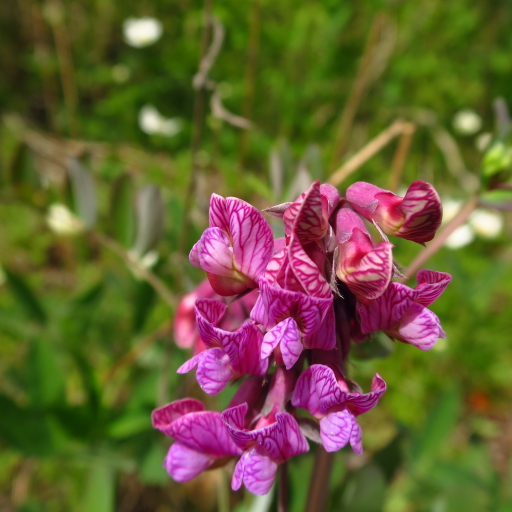
Plant Overview
Known as the Pea-shaped Vetchling, this elegant perennial is a wild relative of the common garden pea. Native to the grassy steppes and light forests of Eurasia, it brings a delicate, meadow-like charm to any landscape. While it looks like it belongs in a vegetable patch, it is primarily admired for its resilience and its hidden ability to improve the very soil it grows in.
🔍 How to Identify
- 🍃 Pea-like Foliage: The leaves consist of several pairs of oval leaflets that look almost identical to those of a snap pea plant, ending in a slender, curling tendril.
- 🌿 Winged Stems: If you look closely at the stalks, you’ll notice thin, leafy "wings" running along the edges, a unique structural feature that helps the plant scramble over neighbors.
- 🌸 Muted Blooms: It produces clusters of small, pea-like flowers that start as a brownish-red or dull purple and often fade to a dusty blue-violet as they age.
🏡 In Your Garden
- 🌱 Natural Fertilizer: As a member of the legume family, this plant is a "nitrogen fixer." It works with soil bacteria to pull nitrogen from the air and store it in the ground, acting as a living fertilizer for the plants around it.
- 🧗 The Scrambling Habit: It isn't a heavy-duty climber like ivy; instead, it uses its tendrils to gently "weave" through other plants. It is perfect for a "wild" look at the base of a hedge or a light trellis.
- 💧 Drought Resilience: Once established, its deep root system makes it quite hardy against dry spells. It prefers well-drained soil and dislikes "wet feet" or standing water.
⚠️ Safety & Toxicity
- 🚫 Not for Eating: Despite the name and the resemblance to garden peas, the seeds and pods of the Pea-shaped Vetchling are not edible.
- 🐾 Livestock Warning: Like many members of the Lathyrus genus, it contains small amounts of toxins that can cause "lathyrism" (a neurological condition) if consumed in very large quantities over time. It is best kept away from grazing pets or curious children.
✨ Fun Fact
The Pea-shaped Vetchling is a favorite "nursery" for the Wood White butterfly. These butterflies specifically seek out this plant to lay their eggs, as the emerging caterpillars rely on the nutrient-rich leaves to grow!

Detailed Care Instructions
To successfully grow Lathyrus pisiformis, also known as the blue pea or sweet pea bush, follow these steps:
- Climate and soil conditions: Lathyrus pisiformis prefers temperate climates and well-drained soil. Ensure that the plant receives ample sunlight, ideally in a partially shaded area.
- Choosing the right location: Select a spot in your garden or container where the plant can receive sufficient sunlight and has enough space to grow, as it can reach a height of 2-3 feet (60-90 cm) and a spread of 1-2 feet (30-60 cm).
- Planting: If growing from seeds, sow them directly into the ground or containers in early spring after the last frost. Make sure the soil temperature is around 60°F (15°C) for optimal germination. If you prefer to start indoors, sow the seeds 4-6 weeks before the last frost and transplant them outside once the soil has warmed.
- Soil preparation and maintenance: Prior to planting, enrich the soil with organic matter like compost or well-rotted manure. Lathyrus pisiformis prefers slightly alkaline soil with a pH range of 6.5-7.5. Regularly water the soil, but avoid excessive watering to prevent root rot. Mulch around the plant to retain moisture and suppress weed growth.
- Support structures: Provide trellises or stakes for the plant to climb. Lathyrus pisiformis will naturally twine around objects for support, but it may need initial guidance until it starts climbing on its own.
- Pruning: Regularly pinch off the growing tips of the plant to encourage bushier growth and more flowers. This practice will also prevent the plant from becoming too tall or leggy.
- Fertilization: Apply a balanced fertilizer every 4-6 weeks during active growth to promote healthy foliage and flowering. Follow the instructions on the fertilizer packaging for proper dosage.
- Pest and disease control: Monitor the plant regularly for common garden pests like aphids, spider mites, or snails. Use organic pest control methods or insecticidal soap if necessary. Ensure good air circulation around the plant and avoid overcrowding to prevent diseases like powdery mildew.
- Harvesting: Lathyrus pisiformis produces delicate blue flowers that can be cut and used in floral arrangements or left to enhance the aesthetic appeal of your garden. Regularly deadhead faded blooms to prolong the flowering period.
By following these steps, you can successfully grow Lathyrus pisiformis and enjoy its beautiful blue flowers throughout the growing season.

Place in a bright room that is sun drenched almost all day. Or directly in a south-facing window.

To water this plant, ensure that the soil is dry to the touch before watering. Water thoroughly, allowing the water to soak into the soil and drain out the bottom. Avoid getting water on the foliage or flowers, as this can lead to disease or damage. Water regularly, especially during hot or dry periods, but be mindful not to overwater, as this can lead to root rot. A good rule of thumb is to water when the top inch of soil is dry.
To fertilize the Lathyrus Pisiformis plant, apply a balanced fertilizer at the beginning of the growing season and again every four to six weeks throughout the growing season. Be careful not to over-fertilize and always follow the recommended application rates on the fertilizer packaging. Additionally, incorporate organic matter into the soil prior to planting to help improve nutrient availability.
Lathyrus Pisiformis thrives in soil that is well-draining and rich in nutrients. The ideal soil pH for this plant is between 6.0 and 7.5. It is recommended to use soil that is loamy and sandy, with good aeration to allow for optimal root growth. Adding organic matter, such as compost or aged manure, to the soil can also provide the necessary nutrients for healthy growth. Additionally, the plant should be grown in an area that receives plenty of sunlight and has good air circulation to prevent disease and encourage strong growth.
Lathyrus pisiformis plants can be propagated by taking cuttings from the stems of mature plants during the spring or summer. It is important to choose healthy and vigorous stems that are free from pests and disease. Cuttings should be around 10cm long and taken from the top of the stem just below a leaf node.
Once the cuttings have been taken, the lower leaves should be removed, leaving only a few leaves at the top. The cuttings can then be dipped in rooting hormone powder to encourage root growth and planted in a good quality, well-draining potting soil.
The cuttings should be placed in a warm, bright location, but out of direct sunlight. It is important to keep the soil moist but not waterlogged, as excessive moisture can lead to fungal diseases. After a few weeks, the cuttings should begin to develop roots and can be transplanted into larger containers or directly into the garden.
Lathyrus pisiformis plants can also be propagated by seed. Seeds should be sown in the spring, either directly into the garden or in pots. The seeds should be placed about 1cm deep in the soil and kept moist until they germinate, which usually takes around 7-14 days. Once seedlings have developed their first true leaves, they can be transplanted to their final growing position.








