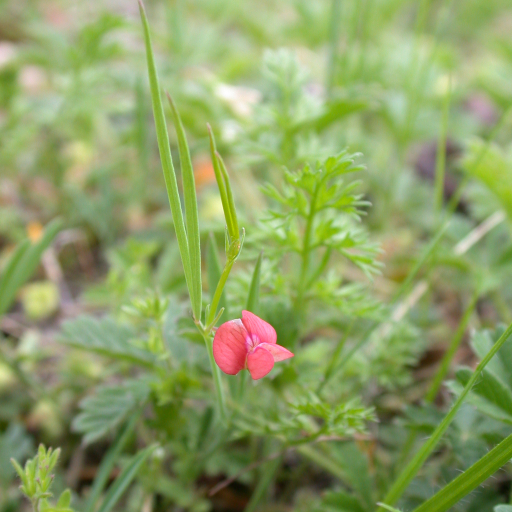
Plant Overview
Often called the Grass Pea or Round-seeded Vetchling, Lathyrus sphaericus is a delicate, slender annual that hides in plain sight among taller meadow grasses. Native to the Mediterranean and parts of Eurasia, this plant is known for its "blink-and-you’ll-miss-it" beauty. It has a remarkable ability to thrive in dry, rocky environments where more demanding garden flowers might wither.
🔍 How to Identify
- 🌿 Grass-like Foliage: Unlike many of its cousins, its leaves are narrow and linear, mimicking blades of grass to camouflage itself until it blooms.
- 🌺 Crimson Solitary Blooms: It produces tiny, pea-like flowers that are a striking brick-red or deep orange-pink. They usually grow singly on a long, hair-thin stalk.
- 🌰 Spherical Seeds: The seed pods are smooth and linear, containing the perfectly round, marble-like seeds that give the plant its specific name, sphaericus.
🏡 In Your Garden
- 🌱 Soil Improver: As a member of the legume family, this plant is a natural nitrogen-fixer. It works with soil bacteria to pull nitrogen from the air and "fertilize" the ground for neighboring plants.
- ☀️ Drought Specialist: It thrives in "neglected" spots. If you have a sunny, well-drained wildflower patch or a rocky slope, this plant will happily scramble over other vegetation using its tiny leaf-tendrils.
⚠️ Safety & Toxicity
- 🚫 Toxic if Ingested: While it looks like a culinary pea, this plant is strictly ornamental and wild. It contains amino acids that can be harmful if eaten in large quantities.
- 🐾 Pet Warning: Keep an eye on grazing pets. While a single nibble is rarely fatal, repeated ingestion of Lathyrus species can lead to a condition called lathyrism, which affects the nervous system and mobility.
✨ Fun Fact
- ⚽ Geometric Precision: The botanical name sphaericus is Latin for "spherical." Unlike many wild peas that have flattened or irregular seeds, the seeds of this plant are so perfectly round they were once compared to tiny green buckshot!

Detailed Care Instructions
Growing Lathyrus sphaericus, commonly known as the Round Seeded Pea, is relatively straightforward if you follow some basic guidelines. Here’s a step-by-step guide to get you started:
1. Choosing the Right Location
- Sunlight: Lathyrus sphaericus prefers full sun, so choose a location that gets at least 6-8 hours of direct sunlight per day.
- Soil: Well-draining soil is crucial. While the plant isn't particularly fussy about soil type, it performs best in moderately fertile conditions. Adding compost can improve soil quality.
2. Planting Seeds
- Timing: Sow seeds in early spring after the last frost, or start them indoors 6-8 weeks before the last expected frost date.
- Preparation: Scarify the seeds lightly with sandpaper and soak them in lukewarm water for 12-24 hours before planting to improve germination rates.
- Sowing: Plant seeds about 1 inch deep and 3-4 inches apart. If starting indoors, use seed trays or pots with quality seed-starting mix.
3. Watering
- Keep the soil evenly moist but not waterlogged. Once established, Lathyrus sphaericus can tolerate drier conditions better but will still benefit from regular watering during prolonged dry spells.
4. Support
- Like other Lathyrus species, Lathyrus sphaericus has a vining habit and may benefit from support structures like trellises, especially when grown in garden beds.
5. Fertilization
- Although not heavy feeders, a balanced, all-purpose fertilizer can be applied during the growing season to promote robust growth. Follow the manufacturer’s instructions for dosage and frequency.
6. Maintenance
- Weeding: Keep the area around the plants free from weeds to reduce competition for nutrients and water.
- Pruning: Trim back spent flowers to encourage continuous blooming and remove any dead or diseased foliage.
7. Pests and Diseases
- Generally, Lathyrus sphaericus is not prone to many pest or disease issues. However, keep an eye out for common problems like aphids or powdery mildew. Treat pests with insecticidal soap or horticultural oil and ensure good air circulation to prevent fungal issues.
8. Harvesting Seeds
- If you wish to collect seeds to plant the following year, allow some of the pods to mature and dry on the plant. Harvest the pods when they are fully dry and store the seeds in a cool, dry place.
Summary
Growing Lathyrus sphaericus involves selecting a sunny spot with well-draining soil, preparing and sowing the seeds properly, maintaining even moisture, providing support, and regularly checking for pests and diseases. With a bit of care, you'll have a beautiful and thriving plant.
Enjoy your gardening!

Place in a bright room that is sun drenched almost all day. Or directly in a south-facing window.

Watering Lathyrus sphaericus, commonly known in scientific contexts, requires attention to both its natural habitat and specific growing conditions. Here are some detailed guidelines:
### Soil and Drainage
- Ensure the plant is situated in well-drained soil. Poor drainage can lead to root rot and other issues.
- A loamy or sandy soil mix is ideal, facilitating good water flow and root aeration.
### Watering Frequency
- Initial Growth Stage: When the plant is young and still establishing, keep the soil consistently moist but not waterlogged. This often means watering more frequently, possibly daily, depending on local climate conditions.
- Established Plants: Once the plant is established, it typically requires less frequent watering. Generally, watering once a week should suffice, but always adjust based on weather conditions (more frequent watering during hot, dry spells and less during rainy periods).
### Watering Method
- Top Watering: Use a watering can or hose to apply water to the base of the plant. Water early in the morning or late in the evening to minimize evaporation and reduce the risk of fungal diseases, which can be exacerbated by wet foliage.
- Drip Irrigation: For more efficient watering, particularly in larger garden setups, drip irrigation can be an excellent method. It delivers water directly to the roots, minimizing waste and keeping foliage dry.
### Observing the Plant
- Check the soil moisture regularly. Stick your finger about an inch into the soil; if it feels dry, it's time to water.
- Look for signs of overwatering or underwatering. Yellowing leaves, wilting, or root rot can indicate excessive watering. Conversely, dry, brittle leaves and poor flowering could signal insufficient watering.
### Environmental Considerations
- Climate: In hotter, more arid climates, the plant may need more frequent watering, while in cooler, more humid areas, it could require less.
- Seasonal Adjustments: During periods of active growth and flowering, usually spring and summer, increase watering frequency. Reduce it during dormancy in the fall and winter.
By carefully monitoring soil moisture and adjusting your watering practices based on the plant's growth stage and environmental conditions, you can ensure the health and vitality of Lathyrus sphaericus.
Here are some fertilizing instructions for Lathyrus Sphaericus:
- Soil Preparation: Before planting, incorporate well-rotted compost or organic matter into the soil to improve its fertility and structure. This will provide a nutrient-rich base for your plants.
- Initial Fertilization: At planting time, apply a balanced, slow-release fertilizer (such as a 10-10-10 NPK formulation) according to the manufacturer's instructions. This will support root development and initial growth.
- Growing Season: During the growing season, it’s vital to continue providing nutrients for sustained growth and flowering:
- Every 4-6 weeks, apply a balanced liquid fertilizer or a granular slow-release fertilizer, following the label directions.
- Alternatively, you can use an organic option such as fish emulsion or seaweed extract, also following the recommended application rates.
- Every 4-6 weeks, apply a balanced liquid fertilizer or a granular slow-release fertilizer, following the label directions.
- Flowering Stage: When the plant begins to flower, switch to a fertilizer with a higher phosphorus content (the middle number in the NPK ratio, such as 5-10-5) to boost blooming.
- Mulching: Apply a layer of organic mulch around the base of the plants to help retain moisture, regulate soil temperature, and gradually add nutrients to the soil as it decomposes.
- Water Management: Ensure consistent watering to help the plant assimilate the nutrients effectively, but avoid waterlogging which can lead to root issues.
- Monitoring and Adjustments: Regularly monitor the plants for signs of nutrient deficiencies (such as yellowing leaves or stunted growth) and adjust the fertilization regimen as needed. Over-fertilization can also cause problems, so more is not always better.
By following these steps, you’ll provide your Lathyrus Sphaericus plants with the nutrients they need for healthy growth and abundant flowering.
Lathyrus sphaericus is a herbaceous perennial plant that requires well-draining soil to thrive. Here are some details about the ideal soil conditions for this plant:
- Texture: The soil should be loamy and sandy. A mixture that provides good drainage while retaining enough moisture is ideal. Avoid clay-heavy soils as they can retain too much water, leading to root rot.
- pH Level: A neutral to slightly alkaline pH level is preferable, typically ranging from 6.0 to 8.0. Conduct a soil test to determine the pH and amend as necessary with lime to increase alkalinity or sulfur to decrease it.
- Nutrient Content: It benefits from a soil that is rich in organic matter. Incorporate compost or well-rotted manure to improve fertility. Avoid overly rich soils that can encourage excessive foliage growth at the expense of flowering.
- Drainage: Ensure good drainage to prevent waterlogging. Raised beds or adding organic matter can help improve soil structure and drainage capabilities.
- Moisture: While this plant prefers well-draining soil, it also needs consistent moisture. Mulching around the base can help maintain soil moisture levels.
By providing these soil conditions, you can create a supportive environment for healthy growth and flowering of Lathyrus sphaericus.
Propagating Lathyrus sphaericus can be done through seeds, as it is the most common and effective method. Here are the detailed steps you can follow to propagate this plant:
Seed Propagation
- Seed Collection:
- Collect seeds from the mature pods of an existing plant. Seeds are typically harvested in the late summer or early autumn when the pods have dried out and are starting to split.
- Collect seeds from the mature pods of an existing plant. Seeds are typically harvested in the late summer or early autumn when the pods have dried out and are starting to split.
- Scarification:
- Lathyrus sphaericus seeds have a hard outer coating that can make germination slow. To improve germination rates, you can scarify the seeds. You can do this by lightly rubbing them with sandpaper or by nicking them with a knife. Alternatively, soaking the seeds in warm water for 24 hours can help soften the seed coat.
- Lathyrus sphaericus seeds have a hard outer coating that can make germination slow. To improve germination rates, you can scarify the seeds. You can do this by lightly rubbing them with sandpaper or by nicking them with a knife. Alternatively, soaking the seeds in warm water for 24 hours can help soften the seed coat.
- Sowing:
- Sow the scarified seeds in seed-starting trays or pots filled with a well-draining seed-starting mix. Plant the seeds about 1 inch deep and cover lightly with soil.
- Water the soil gently to moisten it, but make sure it's not waterlogged.
- Sow the scarified seeds in seed-starting trays or pots filled with a well-draining seed-starting mix. Plant the seeds about 1 inch deep and cover lightly with soil.
- Germination:
- Place the trays or pots in a location with plenty of bright, but indirect sunlight. A temperature range of 18°C to 21°C (65°F to 70°F) is ideal for germination.
- Keep the soil consistently moist but not soaked. Germination should occur within 2 to 4 weeks.
- Place the trays or pots in a location with plenty of bright, but indirect sunlight. A temperature range of 18°C to 21°C (65°F to 70°F) is ideal for germination.
- Transplanting:
- Once the seedlings have developed at least two sets of true leaves and are large enough to handle, they can be transplanted to their final growing location.
- Choose a site with well-draining soil and full sun exposure. Lathyrus sphaericus is adaptable to various soil types but performs best in moderately fertile soil.
- Space the seedlings about 6 to 8 inches apart to allow for adequate growth.
- Once the seedlings have developed at least two sets of true leaves and are large enough to handle, they can be transplanted to their final growing location.
- Aftercare:
- Water the young plants regularly to help them establish. Once established, they are generally drought-tolerant but will perform better with regular watering.
- Mulch around the base of the plants to retain soil moisture and suppress weeds.
- Provide some form of support for the vines to climb if they are in a garden setting.
- Water the young plants regularly to help them establish. Once established, they are generally drought-tolerant but will perform better with regular watering.
- Maintenance:
- Fertilize the plants lightly with a balanced, slow-release fertilizer during the growing season.
- Prune dead or yellowing foliage to encourage new growth and maintain plant health.
By following these steps, you can successfully propagate Lathyrus sphaericus and enjoy its growth in your garden or other planting areas.
- Fertilize the plants lightly with a balanced, slow-release fertilizer during the growing season.








