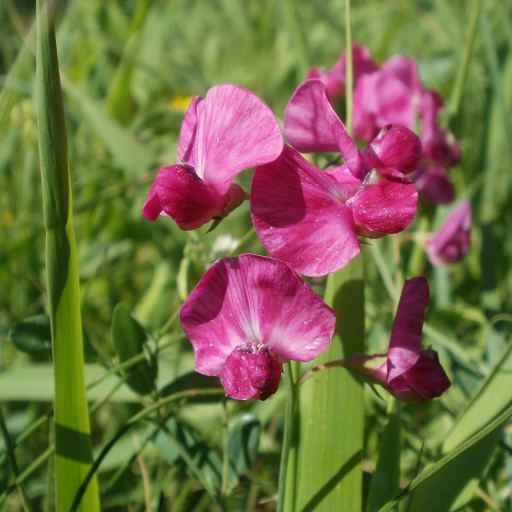
Plant Overview
Known as the Earthnut Pea or Tuberous Vetchling, this perennial climber is the "hidden treasure" of the legume world. While its vibrant, magenta-pink flowers look like delicate garden sweet peas, its true secret lies underground in the form of small, edible tubers that taste like a cross between a chestnut and a potato. Originally from Eurasia, it has been cherished for centuries as both a romantic wildflower and a survival food.
🔍 How to Identify
- 🌸 The Flowers: Produces clusters of 3 to 7 bright crimson or deep pink pea-like blossoms. They are famously fragrant, smelling slightly of vanilla or orange blossoms.
- 🌿 The Foliage: Look for leaves arranged in a single pair of narrow, oval-shaped leaflets. Between the leaves, a branching tendril emerges to help the plant "hook" onto nearby grasses or fences.
- 📏 The Stem: Unlike some other vetchlings, the stem of the Earthnut Pea is square-ish but lacks wide "wings," giving it a more slender, wiry appearance as it scrambles upward.
🏡 In Your Garden
- 🥔 The Underground Wanderer: This plant spreads via a network of thin rhizomes that develop into small, nut-sized tubers. Because of this, it can be a "slow invader"—once it likes a spot, it will pop up nearby year after year.
- ☀️ Edge Dweller: It thrives in sunny margins, hedgerows, and meadows. It prefers well-drained, slightly alkaline (chalky) soil and hates being waterlogged, which can rot the precious tubers.
- 🧗 Support System: Because it is a scrambler, it looks best when allowed to weave through a low fence or sturdier "neighbor" plants like shrubs.
⚠️ Safety & Toxicity
- 🟢 Status: Generally safe and historically edible.
- 🍽️ Details: The boiled or roasted tubers are a gourmet treat for humans. However, like many members of the Lathyrus genus, the seeds (peas) should not be consumed in large quantities over long periods, as they can contain small amounts of toxins that may cause neurological issues (Lathyrism) if they become a primary food source. It is non-toxic to touch.
✨ Fun Fact
In 18th-century France, these tubers were so highly prized for their flavor that they were grown commercially and sold in markets as "Parisian Truffles." Legend says that even Queen Marie Antoinette was a fan of their nutty taste!

Detailed Care Instructions
To grow Lathyrus Tuberosus, also known as the tuberous pea or earth nut pea, you can follow these steps:
- Choose a suitable location: Lathyrus Tuberosus prefers full sunlight but can tolerate partial shade. Ensure the planting area has well-draining soil.
- Prepare the soil: Before planting, loosen the soil by removing any weeds or rocks. Add compost or organic matter to improve soil fertility and drainage.
- Propagation: Lathyrus Tuberosus is typically propagated from tubers. You can purchase tubers from a local nursery or online, or you can collect them from mature plants. The tubers are typically planted in spring, before the last frost.
- Planting: Dig holes that are approximately 6-8 inches deep and 12-18 inches apart. Place one tuber in each hole. Cover the tuber with soil, ensuring the top of the tuber is about 2 inches below the soil surface.
- Watering: After planting, water the tubers thoroughly. Keep the soil moist but not water-logged throughout the growing season. Adequate watering is especially important during dry periods.
- Mulching: Apply a layer of organic mulch, such as straw or wood chips, around the planted tubers. This helps retain soil moisture and suppresses weed growth.
- Support: Lathyrus Tuberosus is a climbing plant that requires support. Install trellises or other climbing structures to provide support for the plants. This will also help prevent damage to the vines and tubers.
- Fertilization: Apply a balanced fertilizer before planting and side-dress with a phosphorus-rich or organic fertilizer during the growing season to promote healthy growth.
- Pruning: Occasionally, trim back excessive growth or damaged vines to keep the plant tidy and encourage better air circulation.
- Harvesting: Lathyrus Tuberosus typically produces edible tubers, which are ready for harvest in late summer or early autumn when the foliage dies back. Gently dig up the tubers, being careful not to damage them.
By following these steps, you should be able to successfully grow Lathyrus Tuberosus and enjoy its beautiful flowers and edible tubers.

Place in a bright room that is sun drenched almost all day. Or directly in a south-facing window.

Lathyrus Tuberosus is a plant that requires adequate water to grow properly. It is important to avoid overwatering as it can cause the roots to rot. The best method for watering Lathyrus Tuberosus is to give it a good soak once a week. The water should be applied slowly and evenly, taking care not to saturate the soil too much. It is important to water the plant at soil level, rather than from above, to prevent water from pooling on the foliage and causing damage. In warm or dry weather conditions, the plant may require more frequent watering. It is recommended to check the soil moisture level regularly by sticking a soil moisture meter or your finger into the soil to determine when it's necessary to water the plant.
To fertilize this plant, you should begin by preparing the soil with rich organic matter. Before planting, mix in compost and well-rotted manure to boost soil fertility. Once the plant is established, lightly feed it with a balanced fertilizer and repeat every 4-6 weeks during the growing season. Avoid overfeeding as this can lead to excessive foliage growth at the expense of flower production. Water the plant well after each fertilization.
Lathyrus tuberosus plant thrives best in a well-draining soil with a neutral pH level. The ideal soil for this plant is porous and has good aeration to allow air to circulate around the roots. The soil should also have a good water-holding capacity, ensuring that the plant can access water even in dry conditions. It is recommended to plant this species in sandy loam soil that has been mixed with compost or organic matter to improve its fertility. The addition of lime or dolomite to the soil can help to adjust the pH levels to the desired neutral levels. The soil should be rich in nutrients, with a high nitrogen content, to support the growth of this plant. It is important to avoid overwatering the soil, as this can lead to root rot, which can ultimately kill the plant.
Lathyrus Tuberosus plant can be propagated through seed or vegetatively through stem cuttings.
To propagate through seed, collect mature seed pods from the plant in late summer or early fall. Allow the pods to dry out on the plant before removing them. The seeds will be dark and hard when mature. Sow the seeds in a well-draining soil mix in the autumn or spring. Keep the soil consistently moist until the seeds germinate.
To propagate through stem cuttings, take a cutting from a healthy stem of the plant in the spring or summer. Cut the stem just below a node and remove the lower leaves. Dip the cut end in rooting hormone and plant it in a well-draining soil mix. Keep the soil consistently moist and provide plenty of sunlight until roots form and new growth appears.
Lathyrus Tuberosus may also propagate through its tuberous roots. The plant forms edible tubers that can be dug up and cut into sections with at least one "eye" or bud. Plant the sections in a well-draining soil mix with the buds facing upwards and keep it moist until roots and new growth appear.








