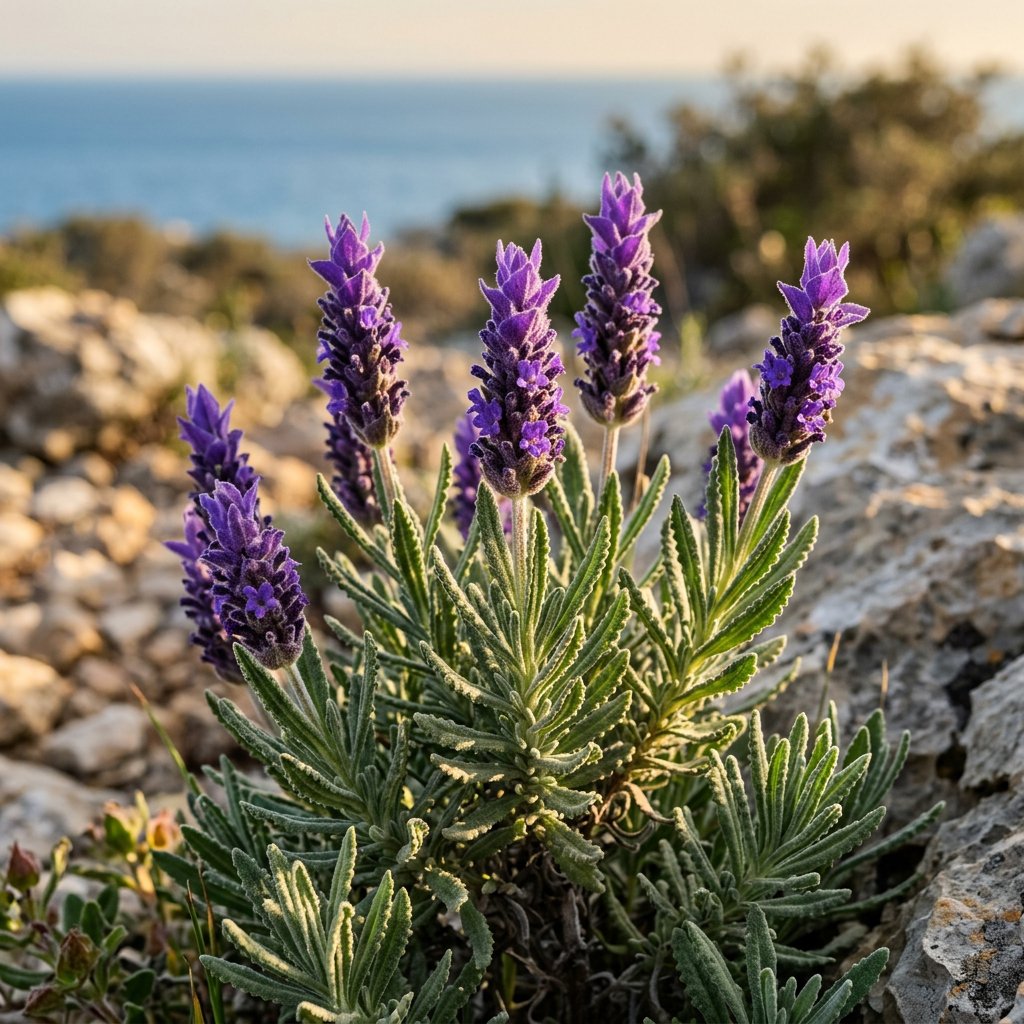
Plant Overview
Often called "Fringed Lavender," Lavandula dentata is the elegant, "toothed" cousin of the traditional English garden lavender. Native to the sun-drenched hills of the Mediterranean and Northern Africa, it is beloved for its serrated foliage and its ability to bloom much longer than other varieties. While it shares the iconic purple hue of its relatives, it brings a more wild, textured aesthetic to any herb garden or patio.
🔍 How to Identify
- 🌿 Toothed Foliage: The most distinctive feature is the "dentate" or serrated edges of the grey-green leaves, which look like tiny, delicate saw blades.
- 💜 Compact Spikes: The flower heads are shorter and more compact than English lavender, topped with soft, pale purple bracts that look like tiny tufts or "rabbit ears."
- 👃 Refreshing Scent: The aroma is less "soapy" than common lavender, carrying a sharper, camphorous scent that leans toward rosemary or clean pine.
🏡 In Your Garden
- ☀️ Sun & Airflow: This plant is a true sun-worshipper and thrives in locations where the air circulates freely. It is more heat-tolerant than English lavender but less hardy in freezing winters, often needing a sheltered spot or a pot that can be moved indoors.
- 💧 Drainage is Vital: Like most Mediterranean herbs, "wet feet" is its greatest enemy. It prefers sandy or rocky soil and is much happier being underwatered than overwatered; if your garden has heavy clay, plant it in a raised bed to ensure the roots stay dry.
⚠️ Safety & Toxicity
- 🐾 Pet Warning: Lavender contains small amounts of linalool, which is toxic to cats, dogs, and horses. While a quick sniff is fine, ingesting the foliage can lead to vomiting, lack of appetite, or lethargy.
- 👶 Gentle for Humans: It is generally safe for humans to touch and smell, though the concentrated essential oil should be used with caution around small children and those with sensitive skin.
✨ Fun Fact
The name "dentata" is Latin for "toothed," directly referencing the jagged shape of the leaves. Historically, this variety was a favorite in Spanish and Moroccan gardens, where it was used not just for its scent, but as a natural barrier to keep unwanted insects away from the home.

Detailed Care Instructions
| Color | Purple |
| Soil Ph | 6.5-8.0 |
| Humidity | Normal |
| Lighting | Full Sun |
| Toxicity | Poisonous |
| Soil Type | Sandy, Well-Draining |
| Bloom Time | Spring, Summer, Fall, Winter |
| Difficulty | Medium |
| Plant Type | Perennial |
| Hibernation | Cold Period |
| Mature Size | 23 To 36 Inches Tall |
| Native Area | Europe, Mediterranean |
| Temperature | 5°C - 25°C |
| Sun Exposure | Full Sun |
| Hardiness Zones | 8-11 |
To grow Lavandula dentata (French lavender) successfully, follow these steps:
- Location: Choose a sunny spot with well-draining soil. French lavender prefers full sun but can tolerate some light shade. Ensure the soil pH is between 6 and 8.
- Soil Preparation: Prepare the soil by removing any weeds, rocks, or debris. Enhance the drainage by mixing in organic matter like compost or well-rotted manure.
- Planting: Dig a hole slightly larger than the root ball of the lavender plant. Place the plant in the hole, ensuring the crown is level with or slightly above the soil surface. Space multiple plants around 2-3 feet apart to allow for adequate airflow and future growth.
- Watering: Water the plant thoroughly after planting. Lavender prefers slightly dry conditions, so only water when the top inch of soil is dry. Overwatering can cause root rot and kill the plant.
- Pruning: Prune the lavender plant regularly to maintain its shape and encourage bushier growth. Prune after flowering, cutting back about one-third of the plant's height.
- Mulching: Apply a layer of organic mulch around the base of the plant to help retain moisture, suppress weeds, and protect the roots from extreme cold.
- Fertilizing: French lavender generally does not require a lot of fertilizer. You can apply a balanced slow-release fertilizer in early spring and early fall if desired, following the package instructions.
- Pest and Disease Control: Lavandula dentata is relatively resistant to pests and diseases. However, it can occasionally suffer from aphids, spider mites, or fungal diseases. Keep an eye out for any issues and address them promptly using organic pest control methods if needed.
- Winter Care: In regions with colder winters, protect the lavender plant from freezing temperatures by covering it with mulch or a frost cloth. Provide good air circulation to prevent moisture buildup, which can lead to rot.
By following these guidelines, you can grow Lavandula dentata successfully and enjoy its fragrant flowers and aromatic foliage.

Place in a bright room that is sun drenched almost all day. Or directly in a south-facing window.

To water this plant, ensure that the soil is dry before watering. When watering, give the plant enough water so that it is evenly moist, but not water-logged. It is important to avoid allowing water to accumulate in the bottom of the pot, as this can lead to root rot and fungal growth. It is best to water this plant in the morning or evening, as watering in the middle of the day can cause the leaves to burn. Additionally, ensure that the plant has good drainage and is not sitting in standing water. Finally, be careful not to over-water the plant, as this can lead to root damage.
To fertilize this plant, apply a slow-release granular fertilizer to the soil in early spring, following the manufacturer's instructions for the appropriate amount and frequency of application. It is important to avoid over-fertilization, as this can lead to an overgrowth of foliage and a decrease in the production of blooms. Additionally, organic fertilizers such as compost or well-aged manure can be added to the soil around the plant during the growing season to provide additional nutrients. Regular watering and proper soil drainage are also important factors in maintaining the health and vitality of this plant.
Lavandula dentata, a flowering plant that belongs to the Lamiaceae family, prefers a well-drained soil with a balanced pH level. The soil needs to be rich in nutrients, but not too compact or heavy, as it may lead to waterlogging and root rot. A sandy or loamy soil mix with the addition of organic matter such as compost or peat moss is recommended. Fertilizers that are low in nitrogen should be applied sparingly during the growing season to avoid excessive vegetative growth. Additionally, ample sunlight exposure and occasional deep watering are essential for optimal growth and flowering.
To propagate this plant, take a cutting from a mature stem of the plant. Make sure there are several leaves on the cutting and no flowers or buds. Remove the lower leaves from the cutting and dip the cut end in rooting hormone. Plant the cutting in a well-draining potting mix and water thoroughly. Place the pot in a bright location but out of direct sunlight. Keep the soil moist and in a few weeks, roots should begin to develop. Once roots have formed, the new plant can be transplanted into a larger pot or directly into the ground in a sunny location with well-draining soil.
Common pests of the french lavender include Spider mites, thrips, whiteflies. Make a habit of checking your french lavender frequently for pests so that any infestations can be caught and managed early.








