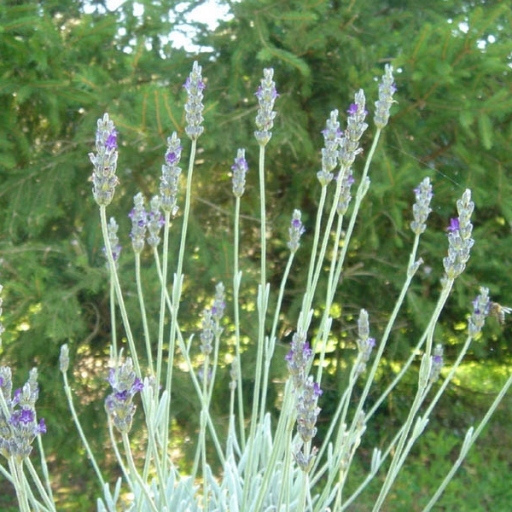
Plant Overview
Often called "Woolly Lavender," this Mediterranean gem is the silver fox of the herb world. Hailing from the rugged, sun-drenched mountains of southern Spain, it swaps the traditional green leaves of its cousins for a dense, velvety coat of silvery-white fuzz. It is highly prized by aromatherapists and perfume makers for its exceptionally deep, balsamic scent that lingers longer than standard lavender varieties.
🔍 How to Identify
- 🌿 The Foliage: The most striking feature is its leaves, which are covered in a thick layer of fine, woolly hairs, giving the plant a soft, almost frosted white appearance.
- 💜 The Flowers: It produces narrow, dark-purple flower spikes that sit atop long, leafless stems, creating a dramatic color contrast against the pale foliage.
- 📏 Growth Habit: It naturally forms a tidy, rounded evergreen mound, typically reaching about 2 to 3 feet in height and width.
🏡 In Your Garden
- 🏜️ Drainage is Vital: Because of those "woolly" leaves, this plant is very sensitive to trapped moisture. It thrives in "lean," rocky, or sandy soil; rich garden soil is actually its enemy as it can lead to root rot.
- ☀️ Sun and Air: It requires the brightest spot in your garden. Good air circulation is essential to prevent the velvet-like leaves from developing mold during humid summer spells or wet winters.
- ✂️ Pruning Nuance: To keep it from becoming "leggy" or woody, give it a light trim after the flowers fade, but be careful not to cut back into the old, leafless wood, as it may not regrow from there.
⚠️ Safety & Toxicity
- 🐾 Pet Safety: Lavender contains small amounts of linalool, which can be mildly toxic to dogs and cats if ingested in large quantities, leading to upset stomachs.
- 🧤 Skin Sensitivity: While the plant is generally safe to touch (and very soft!), the concentrated essential oils can occasionally cause minor skin irritation or allergic reactions in sensitive individuals.
✨ Fun Fact
🧶 What's in a Name?: The specific epithet lanata is Latin for "wool-bearing." These tiny hairs act like a built-in parasol, reflecting intense UV rays and trapping a thin layer of moisture against the leaf to help the plant survive extreme droughts.

Detailed Care Instructions
To grow Lavandula Lanata, also known as Woolly Lavender or Spanish Lavender, you can follow these steps:
- Climate and soil: Lavandula Lanata is well-suited to dry, Mediterranean-like climates. It prefers full sun exposure and well-drained soil with a pH between 6.5 and 7.5. Make sure the soil has good drainage to prevent waterlogging.
- Propagation: You can grow Lavandula Lanata from seeds, cuttings, or by dividing an existing plant. If starting from seeds, sow them in small pots filled with a well-draining potting mix about 8-10 weeks before your region's last frost. Maintain a temperature of around 70°F (21°C) until germination occurs.
- Planting: If starting from seeds, transplant the seedlings when they are about 2-3 inches tall into larger pots or directly into a prepared garden bed. Space plants about 12-18 inches apart to allow them to grow and spread. Water thoroughly after planting.
- Watering: Lavandula Lanata is drought-tolerant and doesn't like excessive moisture. Water sparingly but deeply once a week, allowing the soil to dry out between waterings. Avoid overwatering as it can cause root rot.
- Pruning: Trim the plant in early spring to promote bushy growth and maintain its shape. Cut back spent flower stems to encourage new blooms. Additionally, remove any dead or damaged foliage regularly to keep the plant healthy.
- Mulching: Apply a layer of organic mulch around the base of the plant to suppress weeds, conserve moisture, and regulate soil temperature.
- Fertilization: Lavandula Lanata doesn't require heavy feeding. You can fertilize lightly in early spring with a balanced slow-release fertilizer or use compost as a natural alternative.
- Pests and diseases: This variety of lavender is generally resilient, but it can occasionally be susceptible to aphids, spider mites, or root rot. Monitor the plant closely and take appropriate action if pests or diseases appear.
By following these steps, you should be able to successfully grow and enjoy your Lavandula Lanata plant.

Place in a bright room that is sun drenched almost all day. Or directly in a south-facing window.

Lavandula Lanata is a type of plant that requires regular watering to keep it healthy. When watering this plant, it is important to avoid getting the leaves wet, as this can lead to fungal infections. To water Lavandula Lanata, you should pour water directly onto the soil around the base of the plant, rather than using an overhead sprinkler. You should also make sure that the soil is moist, but not waterlogged.
To determine when your Lavandula Lanata needs watering, you should check the soil regularly for moisture. One way to do this is to insert your finger into the soil up to the first knuckle. If the soil feels dry at this depth, it is time to water the plant. You should also check the soil at the bottom of the pot to make sure it is not too wet, as this can lead to root rot.
When watering Lavandula Lanata, it is important to use lukewarm water, as cold water can shock the plant's roots. You should also avoid watering the plant during the hottest part of the day, as this can cause the water to evaporate too quickly and lead to dehydration. Instead, it is best to water the plant in the early morning or late afternoon when the temperature is cooler.
In summary, watering Lavandula Lanata involves avoiding getting the leaves wet, pouring water directly onto the soil around the base of the plant, checking the soil regularly for moisture, using lukewarm water, and avoiding watering during the hottest part of the day.
To fertilize this plant, use a balanced fertilizer with equal amounts of nitrogen, phosphorus, and potassium. Apply the fertilizer in the early spring before new growth emerges and again in mid-summer after the first flowering. Use a slow-release fertilizer or liquid fertilizer diluted with water. Avoid over-fertilizing, as it can lead to excessive leaf growth at the expense of flower production. Water the plant thoroughly after fertilizing to help nutrients penetrate the soil.
The Lavandula Lanata plant prefers a well-draining soil that is slightly alkaline, but not overly rich in nutrients. It requires a soil with good aeration and water retention qualities. The ideal soil mix for this plant may consist of a combination of sand, perlite, and gravel to improve soil drainage and prevent waterlogging and soil compacting. Additionally, organic matter such as compost or peat moss can be added to provide nutrients and improve soil structure. The pH range of the soil should be between 7.0 and 8.0. Overall, the soil mixture should be light, loose, and well-draining to promote healthy plant growth.
Lavandula Lanata can be propagated through several methods including seed propagation, cuttings, and division.
Seed propagation is usually the easiest way to propagate this plant. You can collect seeds from the dried flowers and then start them in a sterile seedling mix. Keep the soil moist and in a warm, bright location.
Cuttings can be taken in the spring or summer and rooted in a rooting hormone. Cuttings should be taken from the top of the plant and should be about four to six inches long. Remove the lower leaves and plant the cutting in a well-draining potting mix.
Division is another way to propagate Lavandula Lanata. This method is best done in the early spring or fall when the plant is dormant. Dig up the plant and divide it into sections, making sure each section has roots and foliage. Replant the sections in a well-draining mix and keep the soil moist until the plant begins to grow.
Common pests of the woolly lavender include Spider mites, thrips, whiteflies. Make a habit of checking your woolly lavender frequently for pests so that any infestations can be caught and managed early.








