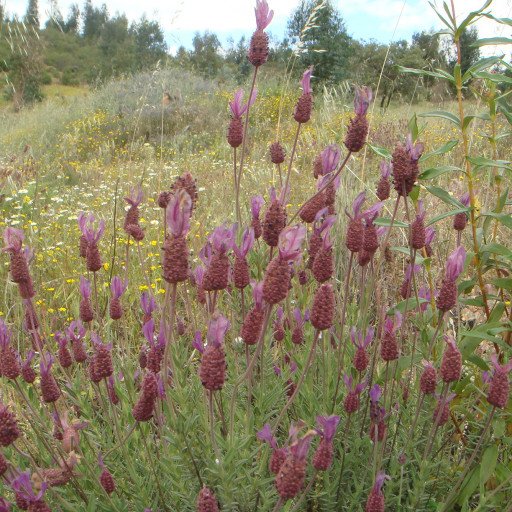
Plant Overview
Often called the "Butterfly Lavender" or "Spanish Lavender," Lavandula pedunculata is the showstopper of the Mediterranean hillsides. Unlike its common English cousin, this variety flaunts dramatic, wing-like bracts that wave in the breeze like a cluster of purple butterflies resting on a stem. It is the quintessential plant for anyone wanting to bring a touch of the sun-drenched Iberian Peninsula to their doorstep.
🔍 How to Identify
- 🦋 The "Butterfly" Bracts: The most striking feature is the tuft of long, upright purple petals (bracts) sitting atop the dense flower head, resembling insect wings.
- 📏 Extremely Long Stems: True to its name (pedunculata refers to the stalk), the flower heads sit on exceptionally long, leafless stems that hold the blooms high above the foliage.
- 🌿 Silvery Foliage: The leaves are narrow, greyish-green, and carry a strong, camphorous scent when bruised, distinct from the sweeter scent of English lavender.
🏡 In Your Garden
- 🏜️ Drainage is Non-Negotiable: This lavender thrives in "lean" or poor soil. If its roots sit in soggy, heavy earth for too long, the plant will quickly succumb to root rot. It is a mountain dweller that demands "dry feet."
- ✂️ The Pruning Rule: To prevent the plant from becoming "leggy" or woody, it needs a light haircut after the first flush of flowers. However, be careful never to cut back into the old, brown wood, as this species rarely regrows from the old base.
⚠️ Safety & Toxicity
- 🐾 Pet Caution: Like most lavenders, it contains linalool and linalyl acetate. While it smells divine to humans, it is mildly toxic to cats, dogs, and horses if ingested, potentially causing nausea or lethargy.
- 👶 Kid-Safe: Generally considered safe for children to touch and smell, though the essential oils can be irritating if applied directly to sensitive skin in large amounts.
✨ Fun Fact
The name "Lavender" comes from the Latin word lavare (to wash), but Lavandula pedunculata was historically favored by ancient soap-makers not just for its scent, but for its antiseptic properties, often being tossed into communal Roman baths to purify the water.

Detailed Care Instructions
To successfully grow Lavandula Pedunculata, also known as the French lavender, follow these steps:
- Choose the right location: French lavender requires full sunlight, so select a spot with at least 6-8 hours of direct sunlight per day. Ensure the soil drains well to prevent waterlogging, as excessive moisture can lead to root rot.
- Prepare the soil: French lavender prefers well-draining soil with a slightly alkaline pH between 6.5 and 7.5. If your soil is clayey or heavy, add some organic matter like compost or peat moss to improve drainage and aeration.
- Planting: Dig a hole slightly larger than the root ball of the plant. Gently remove the lavender from its container and place it in the hole, making sure it sits at the same depth it was previously growing. Backfill the hole with soil, then gently pat it down around the base of the plant to remove any air pockets.
- Watering: Water the plant deeply immediately after planting to help establish its roots. Afterward, allow the soil to dry out slightly between waterings. Overwatering can damage the roots, so strike a balance and avoid keeping the soil constantly wet.
- Mulching: Apply a layer of organic mulch, such as straw or wood chips, around the base of the plant to help retain moisture, suppress weeds, and protect the roots during cold winters.
- Fertilizing: French lavender doesn't require much fertilization. Use a balanced, slow-release fertilizer in spring, or a handful of compost around the base of the plant once a year.
- Pruning: Prune your lavender in early spring or late summer to maintain its shape and encourage bushier growth. Remove any dead or diseased branches and avoid cutting into the woody part of the plant as it may not regrow from there.
- Protecting from frost: French lavender is hardy to about 15°F (-9°C). If you live in a colder climate, cover the plant with a frost cloth or bring it indoors during the winter months to protect it from freezing temperatures.
- Pests and diseases: French lavender is generally resistant to pests and diseases. However, keep an eye out for common lavender pests like aphids, spider mites, or root rot caused by overwatering.
Remember to research the specific care requirements for your lavender variety and adjust the instructions accordingly.

Place in a bright room that is sun drenched almost all day. Or directly in a south-facing window.

When watering this particular plant, it is important to consider its natural habitat and water accordingly. Lavandula Pedunculata typically grows in dry, rocky soil with limited water availability.
To water, pour a slow and steady stream of water directly onto the soil at the base of the plant. Avoid getting water on the leaves and flowers as this can lead to water damage and disease.
It is recommended to water deeply but infrequently, allowing the soil to dry out between watering sessions. This helps encourage deep root growth and improves the plant's overall health and resilience.
During periods of intense heat or drought, it may be necessary to increase the frequency of watering. However, be cautious not to overwater as this plant is sensitive to soggy soil and may develop root rot.
Regular monitoring of the soil moisture level and adjusting watering accordingly is the best way to ensure the Lavandula Pedunculata plant stays hydrated and healthy.
To fertilize this plant, use a slow-release, organic fertilizer in the spring, just before new growth begins. During the growing season, use a balanced, water-soluble fertilizer every 4-6 weeks. Avoid fertilizing in the fall and winter, as the plant enters a period of dormancy. Be sure to follow the recommended application rates on the fertilizer packaging and water the plant thoroughly after fertilizing.
Lavandula Pedunculata is a perennial plant that requires well-draining soil to thrive. The soil should have a pH range of 6.5 to 7.5 and be rich in organic matter. A combination of sand, loam, and perlite is recommended to ensure adequate drainage and aeration. Avoid using heavy soils or those with high clay content as they tend to retain moisture, which can lead to root rot. Before planting, amend the soil with compost or well-aged manure to improve soil fertility and structure. Additionally, this plant prefers a sunny location that receives at least six hours of direct sunlight each day.
To propagate this plant, you can start by collecting seeds from the plant. Wait until the plant has finished flowering and the seed capsules have turned brown and started to dry out. Gently crush the seed capsules to release the seeds and collect them in a container.
Next, prepare a mixture of potting soil and perlite to use as a growing medium. Moisten the mixture with water until it is evenly moist but not waterlogged.
Fill small pots or seed trays with the prepared growing medium. Press the seeds gently into the surface of the soil, spacing them about an inch apart. Cover the seeds with a thin layer of soil and lightly press it down.
Water the pots or trays gently, using a spray bottle or a fine mist from a watering can. Place the containers in a warm, bright location but not in direct sunlight. Keep the soil evenly moist, but not waterlogged, until the seeds germinate.
Once the seedlings have grown their first set of true leaves, transplant them into slightly larger pots or into the garden. Water the young plants regularly and keep them well-fed with a balanced fertilizer. With time, they will grow into mature plants with their own distinct personalities.
Common pests of the french lavender include Spider mites, thrips, whiteflies. Make a habit of checking your french lavender frequently for pests so that any infestations can be caught and managed early.








