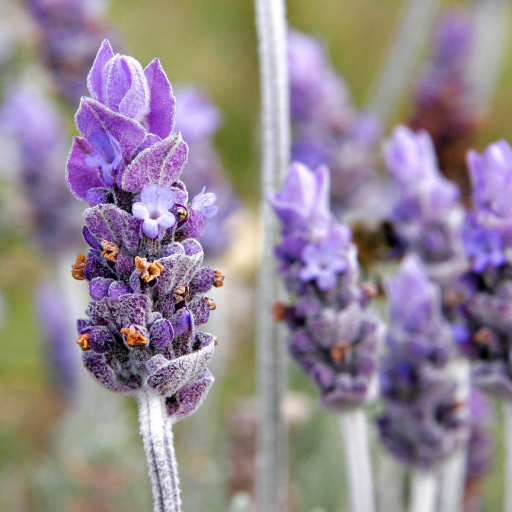
Plant Overview
Often called "Lavandin," this plant is the aromatic powerhouse of the lavender world. It is a natural hybrid born from the marriage of the sweet English Lavender and the rugged Spike Lavender. If you have ever inhaled the scent of a lavender-infused soap or sachet, you were likely smelling the bold, camphorous notes of Lavandula x intermedia.
🔍 How to Identify
- 🌿 Stately Growth: It forms a much larger, more robust shrub than its parents, often reaching a perfectly rounded three feet in height and width.
- 💜 Pointed Spikes: The flower heads are notably longer and more tapered than English lavender, sitting atop exceptionally long, elegant stems that "dance" in the breeze.
- 🍃 Silver Sheen: The narrow, lance-shaped leaves have a distinct silvery-gray felt-like texture, which helps the plant reflect intense sunlight.
🏡 In Your Garden
- ☀️ The "Dry Feet" Rule: This hybrid thrives on what many call "benevolent neglect." It requires exceptionally well-draining soil and will quickly decline if kept in heavy, wet clay or overwatered.
- ✂️ Pruning for Longevity: Because it grows so vigorously, it can become "leggy" or woody in the center. Pruning it back by about one-third after the summer bloom is essential to maintain its shape and prevent the branches from splitting.
- 🐝 Sterile Beauty: Interestingly, because it is a hybrid, it is sterile and cannot be grown from seed. However, its high nectar content makes it a favorite "gas station" for local bees and butterflies.
⚠️ Safety & Toxicity
- 🐾 Pet Caution: While beautiful, the plant contains linalool and linalyl acetate. If ingested in large quantities, it can cause digestive upset in dogs, cats, and horses.
- 🧴 Oil Potency: Its essential oil is much higher in camphor than true lavender. While great for aromatherapy, it should be used with caution on sensitive skin and avoided by those with certain respiratory sensitivities.
✨ Fun Fact
🧪 The Industry Giant: Because Lavandula x intermedia produces up to ten times more essential oil than regular English Lavender, it is the primary variety grown in the world-famous purple fields of Provence, France, for the perfume and cleaning industries!

Detailed Care Instructions
| Humidity | Dry |
| Lighting | Full Sun |
| Difficulty | Easy |
| Hibernation | Cold Period |
| Hardiness Zones | 5 - 8 |
To grow Lavandula X Intermedia plant (also known as English lavender), you can follow these steps:
- Choose the right location: Lavender plants require full sun, so select a spot in your garden that receives at least 6-8 hours of direct sunlight per day. Ensure the soil has good drainage.
- Prepare the soil: Lavender prefers slightly alkaline soil with a pH level between 6.5 and 7.5. If your soil is acidic, you can add lime to raise the pH. Improve drainage by incorporating organic matter, like compost or well-rotted manure, into the soil.
- Planting: Dig a hole slightly larger than the root ball of the lavender plant. Place the plant in the hole, making sure the top of the root ball is level with or slightly above the soil surface. Backfill the hole with soil and firm gently around the plant.
- Watering: Lavender plants are drought-tolerant, so water sparingly. Initially, water deeply after planting to establish the roots. Once established, water only when the soil feels dry to the touch, as overwatering can lead to root rot.
- Pruning: Prune your lavender plants in early spring or late summer to maintain their shape and promote bushier growth. Cut back about one-third of the plant, making sure to leave some new growth at the base of the plant.
- Mulching: Apply a layer of organic mulch, such as straw or wood chips, around the base of the plant to conserve moisture, suppress weeds, and protect the roots during winter.
- Fertilizing: Lavender plants don't require much fertilization. Applying a small amount of balanced organic fertilizer in the spring can help promote healthy growth.
- Protecting from pests and diseases: Lavender is generally resistant to pests and diseases. However, you may occasionally encounter issues like root rot, aphids, or spider mites. Regularly inspect your plants and take appropriate measures if any problems arise.
By following these steps, you can successfully grow Lavandula X Intermedia and enjoy its beautiful fragrance and flowers.

Place in a bright room that is sun drenched almost all day. Or directly in a south-facing window.

To water this plant, it's important to first understand its watering needs. This plant prefers well-draining soil, so it's important to not over-water it. Watering should be done deeply but infrequently to promote healthy root growth.
One way to determine if it's time to water the plant is to check the soil moisture level. This can be done by gently sticking a finger into the soil to a depth of about an inch. If the soil feels dry to the touch, it's time to water.
When watering, it's best to water around the base of the plant rather than the leaves or flowers. This helps prevent fungal growth and disease.
It's also important to water early in the day to allow time for any excess moisture to evaporate and to prevent water from sitting on the leaves overnight, which can also lead to fungal growth.
Overall, proper watering is essential for the health and vitality of this plant. By understanding its watering needs and following these guidelines, it can thrive and produce beautiful blooms year after year.
To fertilize this plant, use a balanced fertilizer with equal amounts of nitrogen, phosphorus, and potassium. Apply the fertilizer once a month during the growing season, from spring to early fall. Be careful not to over-fertilize as it can lead to excess growth and reduced oil production. Water the plant well before and after fertilizing to avoid burning the roots.
The ideal soil for Lavandula X Intermedia plants is a well-draining soil that is sandy and loamy. It should have a pH level between 6.5 and 7.5 and contain organic matter, such as compost or manure. The soil should be able to retain moisture but not stay soggy for extended periods of time, as this can lead to root rot. Adequate sunlight and air circulation are important for the health and growth of this plant. Overall, the soil should be nutrient-rich and well-aerated to promote root growth and healthy foliage.
To propagate this plant, you need to take softwood cuttings in the spring. Choose healthy stems that are about 4-6 inches long and remove the lower leaves, leaving a few at the top. Dip the cut end into rooting hormone powder and plant it in a pot filled with well-draining soil. Water the cutting and cover it with a plastic bag to create a humid environment. Place the pot in bright, indirect light and keep the soil moist. The cutting should root in 3-4 weeks. Once it has rooted, remove the plastic bag and continue to care for the plant as normal.
Common pests of the bastard lavender include Spider mites, thrips, whiteflies. Make a habit of checking your bastard lavender frequently for pests so that any infestations can be caught and managed early.








