Plant Overview
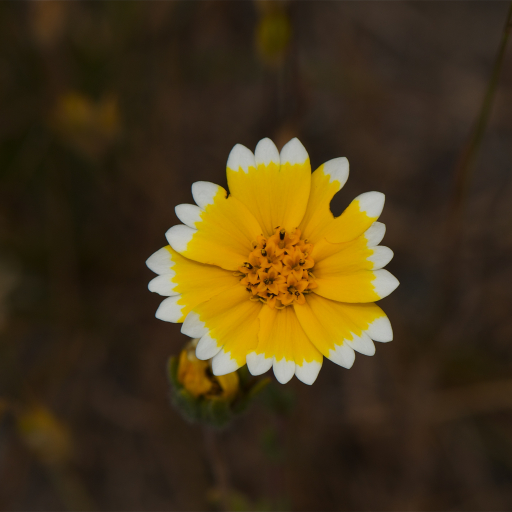
Known as the "Smooth Tidy Tips," this California native looks like a daisy that has been carefully dipped into a pot of white paint. It is a star performer in spring wildflower displays, often painting entire hillsides in shades of gold and cream. While it belongs to the sunflower family, it possesses a delicate, orderly charm that makes it a favorite for native plant enthusiasts.
🔍 How to Identify
- 🌼 The "Tidy" Bloom: Each flower head features bright yellow petals (ray florets) that end in distinct, crisp white tips, giving the plant its famous nickname.
- 🍃 Smooth Foliage: Unlike its "Fremont’s" or "Common" Tidy Tip cousins, this species has leaves that are mostly hairless and smooth to the touch.
- 📏 Compact Stature: It typically grows as a neat, upright annual reaching about 1 to 2 feet in height, with succulent-like green stems.
🏡 In Your Garden
- 🦋 Pollinator Buffet: These flowers are highly attractive to native bees and checkerspot butterflies, serving as a vital nectar source during the spring months.
- 🌞 The "Why" of Sunlight: It craves full sun; in shady spots, the stems will stretch and flop over (lodging) as they hunt for light.
- 🌱 Native Resilience: It thrives in heavy clay soils where other plants might struggle, but it requires a period of winter rain to kickstart its germination cycle.
⚠️ Safety & Toxicity
- ✅ Generally Safe: Smooth Tidy Tips are considered non-toxic to humans and common household pets.
- 🌼 Dermatitis Note: As a member of the Asteraceae family, individuals with specific allergies to daisies or ragweed should wear gloves, as the sap can occasionally cause mild skin irritation.
✨ Fun Fact
The "Tidy Tips" are so consistent in their bi-color pattern that early botanists used them as a "clock" of sorts—the flowers tend to open and close with such precision in response to the sun that you can almost tell the time of day by their movement!

Detailed Care Instructions
To grow Layia chrysanthemoides, also known as tidy tips or goldfields, follow these steps:
- Choose a sunny spot: Select a location in your garden that receives full sun, as Layia chrysanthemoides thrives in bright sunlight.
- Prepare the soil: Layia chrysanthemoides prefers well-draining soil. Before planting, amend the soil with compost or organic matter to improve drainage and fertility.
- Sow the seeds: Scatter the Layia chrysanthemoides seeds directly on the soil surface, as they require light to germinate. Avoid burying the seeds.
- Water regularly: Keep the soil consistently moist until the seeds germinate. After germination, provide water sparingly, allowing the top few inches of soil to dry out between waterings.
- Thin the seedlings: Once the seedlings have a few true leaves, thin them out to provide adequate spacing. Space the plants around 6-12 inches apart to allow for proper growth.
- Mulch and weed: Lay down a layer of organic mulch around the plants to suppress weed growth and conserve moisture in the soil.
- Fertilize: Layia chrysanthemoides generally does not require heavy fertilization. However, you can apply a balanced, slow-release fertilizer once or twice during the growing season to promote healthy growth.
- Deadhead spent flowers: Regularly remove faded flowers to encourage prolonged blooming and prevent self-seeding.
- Protect from pests: Monitor for common garden pests such as aphids or caterpillars. If necessary, use appropriate organic pest control methods or insecticidal soap to manage them.
- Enjoy the blooms: Layia chrysanthemoides produces lovely yellow and white daisy-like flowers in spring and early summer. Additionally, it attracts pollinators such as bees and butterflies.
Remember to follow your region's specific planting guidelines and adjust care accordingly. With the right conditions and care, you can successfully grow Layia chrysanthemoides in your garden.

Place in a bright room that is sun drenched almost all day. Or directly in a south-facing window.

To water this plant, ensure that the soil is completely dry before watering. When it is time to water, use a watering can or hose to slowly and gently water the soil until it is moist but not waterlogged. Avoid getting water on the leaves or flowers, as this could cause damage or disease. Check the plant regularly to make sure it is not drying out too much or becoming waterlogged, and adjust watering frequency accordingly.
To fertilize this plant, use a slow-release fertilizer with a balanced NPK ratio in the early spring, following the package instructions for dosage. Additionally, provide monthly applications of a liquid fertilizer during the growing season, again following the package instructions. Avoid over-fertilizing as this can lead to excessive growth and weaken the plant.
The Layia Chrysanthemoides plant requires well-draining soil and grows best in sandy or loamy soil. The soil should be slightly acidic with a pH level between 6.0 and 7.0. It is recommended to add organic matter such as compost or leaf mold to improve soil quality and fertility. The plant prefers to grow in full sunlight but can tolerate partial shade. The soil should be kept moist but not waterlogged. When planting, it is important to ensure that the soil is not compacted, which can hinder root development and growth.
To propagate this plant, you can start with taking stem cuttings from a mature plant. Select a healthy stem that is about 4-6 inches long and has a few leaves on it. Cut the stem just below a node and remove any leaves from the bottom half of the stem.
Next, dip the cut end of the stem in a rooting hormone powder to encourage root growth. Then, plant the stem cutting in a pot filled with a well-draining soil mix. Water the soil and cover the pot with a plastic bag or a clear plastic container to create a mini greenhouse.
Place the pot in a warm, bright location, but out of direct sunlight. Keep the soil moist, but not overly wet, and mist the cutting occasionally to keep the humidity high inside the plastic cover.
After a few weeks, you should start to see roots growing from the cut end of the stem and new growth appearing on the plant. Once the roots are established, you can transplant the new plant to a larger pot or into your garden.








