Plant Overview
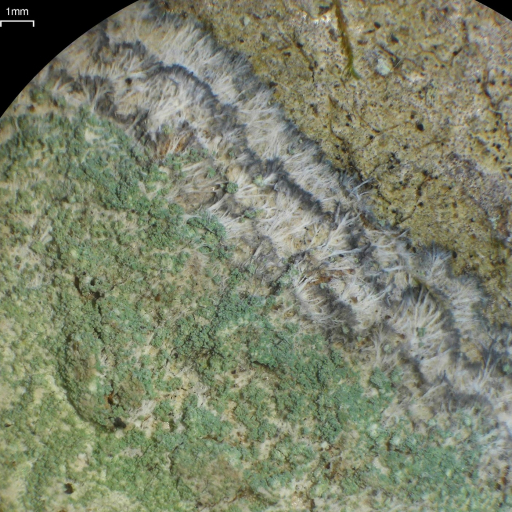
Meet the Mapledust Lichen (Lecanora thysanophora), a subtle masterpiece of the forest’s "living wallpaper." Often mistaken for a splash of pale green paint or a light dusting of flour on a tree trunk, this species is actually a complex symbiotic partnership between a fungus and an alga. It prefers the quiet, shaded corridors of mature forests, acting as a soft, minty-hued blanket for ancient hardwoods.
🔍 How to Identify
- 🎨 The "Dusty" Surface: Its body (thallus) is crustose, meaning it grows flat against the bark like a crust. The surface is covered in fine, powdery granules called soredia, which give it a flour-dusted appearance.
- 🕸️ The Fringed Border: If you look closely at the edges, you’ll see a distinct, white, fibrous-looking border known as a prothallus. This "fringe" is the hallmark of the species.
- 🍏 Pale Palette: It typically displays a soft, muted color palette ranging from minty green to yellowish-gray, which turns a more vivid green when damp.
🌲 Habitat & Ecology
- 🌳 The Hardwood Specialist: While it occasionally ventures onto rock, this lichen is most at home on the bark of deciduous trees, particularly Maples, Oaks, and Birches in the eastern half of North America.
- 🌬️ A Living Sensor: Like many lichens, Lecanora thysanophora is a "bioindicator." It absorbs its nutrients directly from the air and rain; if the air is heavily polluted, this lichen will be the first to disappear, making its presence a sign of a healthy ecosystem.
⚠️ Safety & Toxicity
- 🍄 WARNING: As a member of the fungal kingdom, it should never be consumed. While not known to be "deadly," many lichens contain secondary metabolites (like usnic acid) that can cause severe digestive distress.
- 🐾 Non-Parasitic: Gardeners often worry that lichens are "strangling" their trees. Rest assured, this lichen is not a parasite. It uses the bark only as a home and does not harm the tree’s health in any way.
✨ Fun Fact
📜 Ancient Lace: The name thysanophora literally translates from Greek to "fringe-bearing." In the world of lichenology, it is considered one of the most "elegant" crustose lichens because of that delicate, lace-like white border that surrounds its dusty center!

Detailed Care Instructions
To water the plant, make sure the soil is dry before watering. Fill a watering can with room temperature water and pour it slowly onto the soil until it runs out the bottom of the pot. Allow excess water to drain away, and do not let the plant sit in standing water. Water the plant once a week during the growing season, and reduce watering during the dormant period. Avoid getting water on the leaves or stem, as this can cause damage or rot.
Lecanora Thysanophora requires a well-draining soil with a high organic content. It prefers a slightly acidic pH level between 5.5 and 6.5. It is also important to ensure that the soil is not too compacted as this can inhibit root growth. Adding perlite or sand to the soil can improve drainage and prevent compaction. The soil should be kept consistently moist but not waterlogged. It is recommended to use a soil that is specifically formulated for acid-loving plants.







