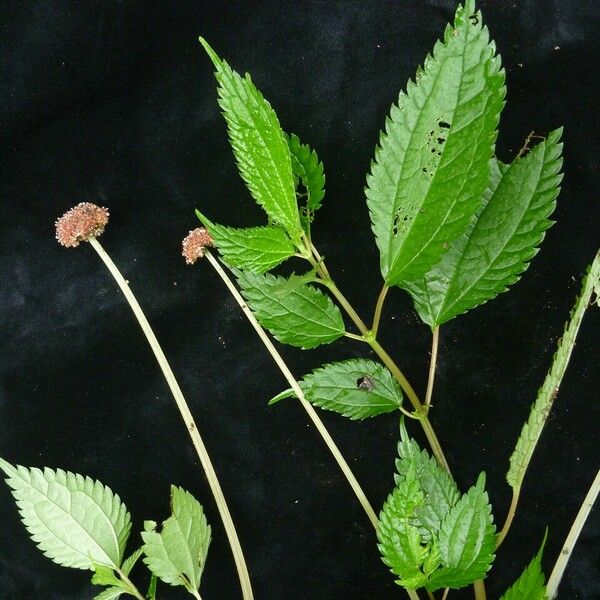
Plant Overview
Known as the "Waterleaf" or simply Lecanthus, this delicate herb looks like a cluster of living glass tucked away in the shadows of a rainforest. Belonging to the nettle family (Urticaceae), it trades the painful stings of its cousins for a lush, translucent beauty that thrives where other plants might drown. It is a favorite of hikers who stumble upon it near misty waterfalls or hidden mountain seeps.
🔍 How to Identify
- 🌿 The Leaves: Usually arranged in opposite pairs, the leaves have deeply "toothed" or serrated edges and prominent veins, giving them a classic nettle-like appearance without the dreaded sting.
- 💧 The Stem: The stems are thick, fleshy, and almost translucent. They are "succulent" in nature, holding onto moisture to survive in humid environments.
- 🌸 The Flowers: Its namesake feature! Tiny, greenish-white flowers grow in flat, disk-shaped clusters atop long, slender stalks called peduncles, which lift the blooms away from the foliage.
🏡 In Your Garden
- ☁️ Humidity is King: This plant is a "moisture lover" to the extreme. If you are growing it at home, it belongs in a terrarium or a bathroom with high steam. It wilts almost instantly if the air becomes too dry.
- 🌑 The Deep Shade Habit: Unlike many flowering plants, Lecanthus peduncularis despises the sun. It has evolved to thrive on the forest floor or on mossy rocks where light is filtered through a thick canopy. Use a very porous, peat-heavy soil to mimic its natural mossy habitat.
⚠️ Safety & Toxicity
- 🟢 Status: Generally safe/Non-toxic.
- 🐾 Details: While it is a member of the Nettle family, Lecanthus peduncularis typically lacks the stinging hairs (trichomes) found on its more aggressive relatives. However, because it is not a common food crop, it is best to keep it out of reach of curious pets to avoid mild stomach upset from ingestion.
✨ Fun Fact
In the wild, this plant is a "pioneer of the splash zone." It is frequently found growing directly on the wet rocks surrounding waterfalls, where it lives in a constant state of mist and spray, acting as a natural sponge for the ecosystem.

Detailed Care Instructions

Place in a bright room that is sun drenched almost all day. Or directly in a south-facing window.

Some plants require more regular watering than others, which should be done every few days. It's critical to maintain the soil moist all of the time. The water requirements of the same plant placed in pots with varying sizes will differ. Because the water in the smaller pot evaporates faster than the water in the larger pot, it will require more watering. Regardless of pot size, the surface should constantly be maintained moist.








