Plant Overview
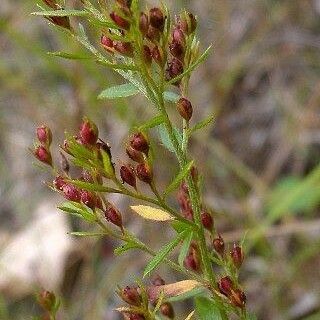
Often called the Thyme-leaf Pinweed, Lechea minor is a delicate, understated native of North America that thrives where other plants quit. This resilient little herb is a master of survival in sandy, nutrient-poor soils, forming dainty, bronze-tinted clusters that look like a miniature, ancient forest floor. It is a quiet hero of the pine barrens and open meadows, providing subtle texture and stability to wild landscapes.
🔍 How to Identify
- 🌿 Leaf Shape: The leaves are tiny, elliptical, and grow closely along the stem, bearing a striking resemblance to common culinary thyme.
- 🌸 Minute Blooms: It produces incredibly small, inconspicuous reddish-brown or purplish flowers that appear in tight clusters at the tips of the branches during mid-to-late summer.
- 🪵 Woody Base: While the upper growth is herbaceous, the base of the plant is often slightly woody and "shrub-like," giving this small plant a sturdy, anchored feel.
🏡 In Your Garden
- 🏜️ The Sandy Specialist: This plant is an excellent candidate for "difficult" spots with sandy or gravelly soil where most garden favorites wilt. It has a deep appreciation for drainage and will struggle or rot in heavy, wet clay.
- ☀️ Sun Seeker: To maintain its compact shape and prevent it from becoming "leggy," it needs a spot with full sun exposure. In the wild, it is often one of the first plants to colonize open, sun-baked patches of earth.
⚠️ Safety & Toxicity
- ✅ Safe Status: Lechea minor is generally considered non-toxic to humans and common household pets like dogs and cats.
- 🧤 Mild Irritation: While it contains no known toxins, the fine, bristly hairs on the stems may cause very mild mechanical irritation to those with extremely sensitive skin if handled roughly.
✨ Fun Fact
The name "Pinweed" is no accident—it refers to the plant's tiny, globose seed capsules. These fruit capsules are roughly the size of a pinhead, making the plant look like it has been decorated with microscopic copper studs once the flowering season ends.

Detailed Care Instructions
To grow Lechea minor plant, also known as broom crowberry or dwarf shrubby pinweed, follow these steps:
- Climate and soil requirements: Lechea minor does well in well-drained acidic to mildly alkaline soil. It prefers full sun but can tolerate partial shade. It is native to dry sandy or rocky areas, so replicating these conditions will help with its growth.
- Obtain seeds or seedlings: You can either collect seeds from existing plants or purchase them from a reputable nursery. Alternatively, you can also look for nursery-grown seedlings. Make sure the plants you obtain are healthy and disease-free.
- Prepare the planting area: Clear the planting area of weeds, rocks, and debris. Dig the soil to loosen it and improve drainage if needed. Add organic matter like compost or peat moss to enhance soil fertility and water retention.
- Sow seeds or plant seedlings: If you have seeds, sow them directly on the prepared soil surface in early spring or fall. Sprinkle a thin layer of soil over them and gently press them down. For seedlings, dig a small hole slightly larger than the root ball, place the plant in it, and gently firm the soil around it.
- Watering and care: While Lechea minor is drought-tolerant once established, it requires regular watering until it establishes a strong root system. Water deeply when the soil is dry, but avoid overwatering to prevent root rot. Mulching around the plants can help conserve moisture and suppress weed growth.
- Pruning and maintenance: Lechea minor generally requires minimal pruning. However, you can trim back any dead or damaged branches in early spring. This will promote healthy growth and maintain a tidy appearance.
- Pest and disease control: Lechea minor is generally not prone to major pest or disease problems. However, keep an eye out for common garden pests like aphids or spider mites. If needed, control them with organic pest control methods.
- Enjoy your Lechea minor plant: With proper care and maintenance, your Lechea minor plants should grow and thrive. In late summer to early fall, they will produce small, inconspicuous flowers that will add beauty to your garden.
Remember to check with your local gardening experts or agricultural extension office for specific recommendations and advice tailored to your region's climate and growing conditions.

Place in a bright room that is sun drenched almost all day. Or directly in a south-facing window.

Some plants require more regular watering than others, which should be done every few days. It's critical to maintain the soil moist all of the time. The water requirements of the same plant placed in pots with varying sizes will differ. Because the water in the smaller pot evaporates faster than the water in the larger pot, it will require more watering. Regardless of pot size, the surface should constantly be maintained moist.
- Choose a balanced fertilizer with equal amounts of nitrogen, phosphorus, and potassium.
- Apply the fertilizer in early spring before new growth appears.
- Use a dilute fertilizer solution to avoid burning the roots.
- Apply the fertilizer evenly around the base of the plant, avoiding direct contact with the foliage.
- Water the plant thoroughly after fertilizing to help the nutrients reach the root system.
- Repeat fertilization once a year in early spring to maintain soil fertility and promote healthy growth.
- Monitor the plant carefully for any signs of nutrient deficiency or over-fertilization, such as yellowing leaves or stunted growth.
For optimal growth and health of this particular plant, it is recommended to use well-draining soil that has a slightly acidic pH level. The soil should be rich in organic matter and have good water retention capabilities while also allowing excess water to drain away easily. A mixture of peat moss, perlite, and vermiculite would be suitable for this plant. It is important to avoid using heavy clay soils or soils that are too alkaline, as this can have a negative impact on the plant's growth and development.
Lechea Minor plant can be propagated through various methods including seed propagation, stem cuttings, and division of the root ball.
Seed Propagation:
Seeds can be collected from the plant when the seed pod turns brown and dry. The seeds can then be sown in a seed tray filled with a well-draining potting mix. The tray should be kept moist and placed in a warm, sunny location. The seeds will germinate within 2-4 weeks. Once the seedlings have grown to a suitable size, they can be transplanted to individual pots or directly into the garden.
Stem Cuttings:
Stem cutting propagation is a quick and easy way to propagate Lechea Minor plant. Cut a 4-6 inch long stem from the plant just below a node. Remove the leaves from the lower half of the stem and dip the cut end in rooting hormone. Place the stem in a pot filled with well-draining soil and keep it moist. The cutting will develop roots within a few weeks and can be transplanted to the garden.
Division of the Root Ball:
Lechea Minor plant can also be propagated by dividing the root ball. Dig up the plant and gently separate the root ball into smaller clumps. Replant the clumps in a suitable location and keep the soil moist until new growth appears.
Regardless of the method used, it's essential to provide the new plant with adequate water and sunlight to encourage healthy growth.








